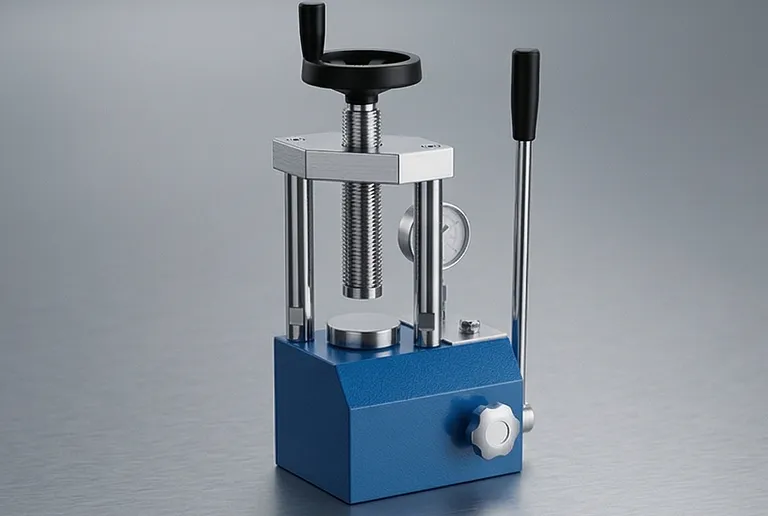
The Invisible Glue of Life
When we press inorganic materials—metal powders or ceramics—we deal with predictable friction. But mycelium is different. It is a biological architecture, a network of life that, under the heat and force of a laboratory press, reverts to its most basic chemical instincts.
Within the cellular walls of mycelium lie proteins and polysaccharides. Under pressure, these are not just structural components; they are biological adhesives. Without a calculated intervention, the very material being studied becomes a permanent part of the machine meant to shape it.
In the world of material science, the release liner is often seen as a consumable afterthought. In mycelium research, however, it is the thin line between a successful data point and a ruined mold.
The Chemistry of the Interface
The Activation of Macromolecules
Mycelium is naturally rich in complex sugars and proteins. When the heated platens of a press close, they do more than provide shape. They trigger a phase change. These macromolecules become mobile, seeking out the microscopic valleys in the surface of a stainless steel mold.
The Physics of High-Heat Bonding
Under intense heat, the bonding is not merely mechanical; it is chemical. Without a barrier, the mycelium "glues" itself to the metal. At this point, the laws of physics turn against the researcher. To remove the sample is to destroy it, as the bond between the mycelium and the mold often exceeds the internal strength of the mycelium itself.
The Cost of the Microscopic Scar
Precision engineering demands surface integrity. When a sample sticks, it leaves behind a microscopic ghost—a residue of carbonized biological material.
- Surface Delamination: The tearing of the sample’s "skin" compromises its structural and aesthetic properties.
- Equipment Pitting: Over time, repeated cleaning of stuck residue leads to abrasion. Even a micron-level scratch on a plunger can lead to future failures.
- Thermal Inconsistency: Residual buildup acts as an unintended insulator, creating "cold spots" in subsequent pressing cycles.
Strategic Selection: Choosing the Barrier
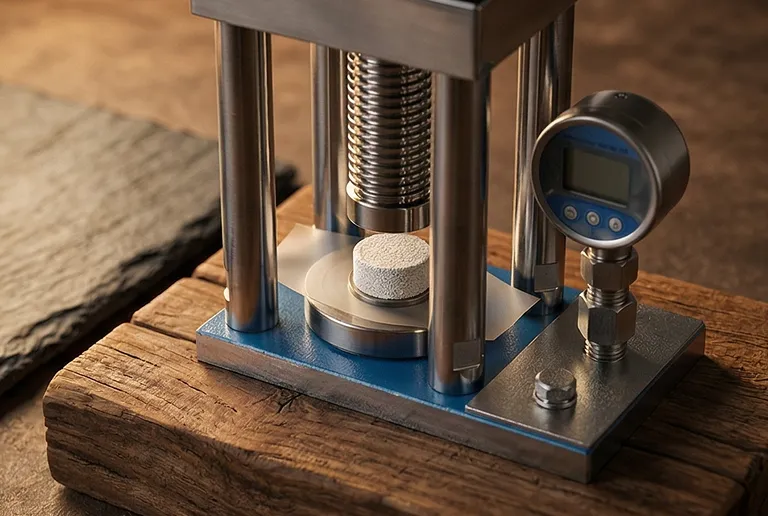
Selecting a release liner is a trade-off between thermal efficiency and surface finish. It is an exercise in balancing the "engineer’s need for precision" with the "material’s need for release."
| Factor | Impact on Pressing | Selection Strategy |
|---|---|---|
| Thermal Transfer | Resistance to heat flow | Use the thinnest possible liner to maintain cycle speed. |
| Surface Energy | How easily the material sheds | Choose high-temperature inert liners for maximum purity. |
| Topography | The final texture of the part | Match the liner finish (matte vs. glossy) to project goals. |
The Systemic View of Material Research
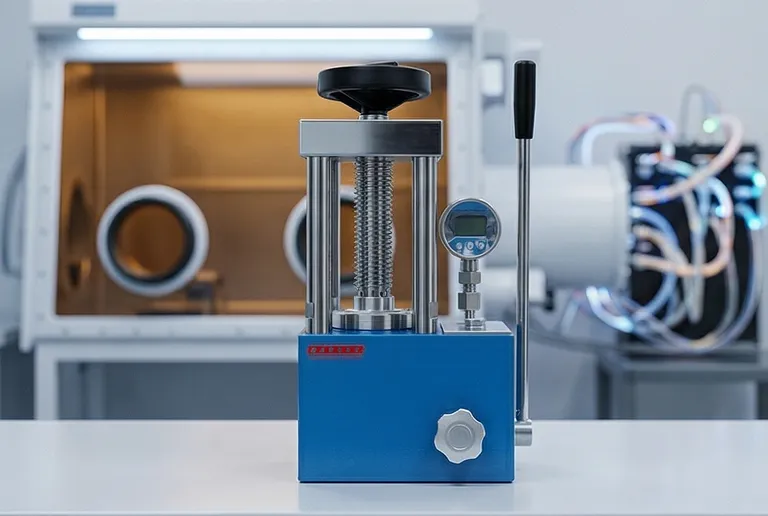
In the narrative of a laboratory, the press is the protagonist. Whether it is an automatic heated model or a manual unit used for rapid prototyping, the press provides the environment where nature is transformed into a functional material.
The use of a release liner is a testament to a disciplined workflow. It acknowledges that biological materials are volatile and that precision equipment is an investment worth protecting. It is about removing the variables of friction and adhesion so that only the data remains.
Engineering the Future of Mycelium
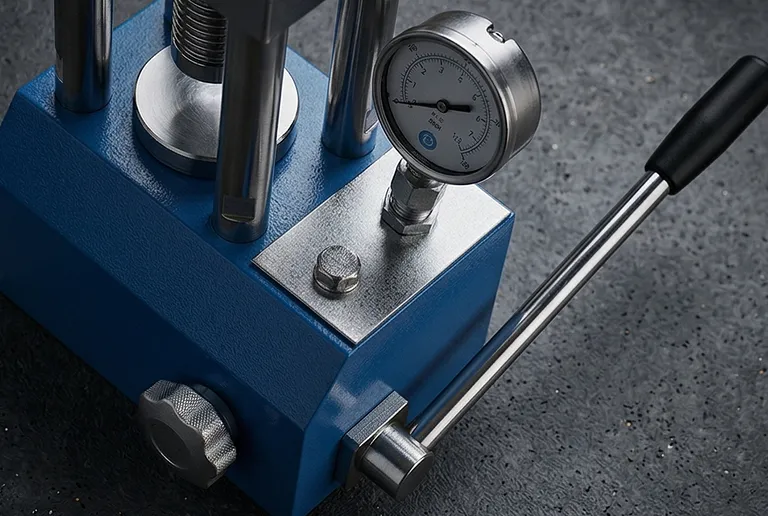
At KINTEK, we understand that the difference between a breakthrough and a failure often lies in the details of the process. Our pressing solutions are designed to handle the complexities of modern material science, providing the stability and control required for sensitive biological composites.
Our comprehensive range includes:
- Manual & Automatic Presses: Designed for repeatable pressure application.
- Heated & Multifunctional Models: Ideal for the complex thermochemistry of mycelium.
- Glovebox-Compatible Systems: For research requiring controlled atmospheres.
- Isostatic Solutions: Leading the way in advanced battery and composite research.
Precision is not just about the force applied; it is about the control of every interface. To optimize your laboratory workflow and protect your high-performance equipment, Contact Our Experts.
Related Products
- Heated Hydraulic Press Machine with Heated Plates for Vacuum Box Laboratory Hot Press
- Automatic High Temperature Heated Hydraulic Press Machine with Heated Plates for Lab
- Heated Hydraulic Press Machine With Heated Plates For Vacuum Box Laboratory Hot Press
- Laboratory Manual Heated Hydraulic Press Machine with Hot Plates
- Laboratory Split Manual Heated Hydraulic Press Machine with Hot Plates
Related Articles
- The Architecture of Slow: Why Physical Precision Dictates Chemical Destiny
- The Architecture of Certainty: Why the Laboratory Press is the Anchor of Material Science
- The Vanishing Boundary: The Hidden Thermodynamics of LTCC Lamination
- The Alchemy of 160°C: Why Precision Pressing is the Silent Backbone of Rubber Science
- The Invisible Forge: Why the Laboratory Press is the Soul of Nano-Composites



















