The Invisible Glue
In the world of materials science, paper is often viewed as a simple web of fibers. But beneath the surface, it is a complex battlefield of molecular forces. The primary challenge for researchers has always been strength—specifically, how to make fibers stick together without drowning the product in synthetic resins.
The answer lies in Lignin. It is nature's own structural adhesive, but it is stubborn. At room temperature, it is a rigid, glassy polymer that refuses to move.
To unlock its potential, we don't need more chemicals. We need the precise application of physics: heat to soften the soul of the wood, and pressure to force a molecular handshake.
The Alchemy of Thermal Activation
Reaching the Glass Transition
Lignin behaves like a biological "glass." When it is cold, it is brittle and unyielding. However, laboratory equipment allows us to push lignin past its Glass Transition Temperature (Tg), typically exceeding 100°C.
The Rubber State
Once the threshold is crossed, a transformation occurs. The lignin transitions from a glassy state to a rubbery, flowable state. In this plasticized condition, the rigid pulp fibers lose their "memory" of being wood and become ready to be reshaped.
The Geometry of Contact
Force in a laboratory setting is not just about power; it is about the elimination of distance. When we apply high pressure—often between 6 MPa and 8 MPa—we are performing a micro-scale surgery on the fiber network.
- Air Exclusion: High pressure drives out the microscopic air pockets that act as insulators between fibers.
- Conformation: Softened fibers are forced to wrap around one another, increasing the "effective contact area."
- The Nip Load Factor: Without consistent hydraulic control, the contact remains superficial. With it, the fibers become one.
Wood Welding: Molecular Interdiffusion
The most profound effect of high-pressure hot-pressing is a phenomenon known as "Wood Welding."
Under the right conditions, the softened lignin polymers don't just touch; they migrate. Through cross-interface interdiffusion, lignin chains from one fiber move into the structure of the adjacent fiber.
This creates a bond so strong that the wet strength of the paper can reach 50% of its dry strength. We are no longer just drying a sheet; we are fusing a composite at the molecular level.
| Mechanism | Technical Action | Resulting Performance |
|---|---|---|
| Thermal Control | Heating >100°C | Softens lignin into a flowable adhesive state |
| Hydraulic Pressure | 6-8 MPa Nip Load | Forces fiber conformation and eliminates voids |
| Interdiffusion | Molecular Migration | Creates covalent bonds and "wood welding" |
| Regulated Cooling | Stress Management | Prevents "spring-back" and internal cracking |
The Fragility of Precision
In engineering, every gain has a cost. The psychology of material research is often about managing these trade-offs.
If the temperature is too high, we risk thermal degradation. The cellulose fibers become brittle, and the paper loses its brightness. If the pressure is released too quickly, internal stresses cause "spring-back," where the fibers attempt to return to their original shape, shattering the newly formed lignin bonds.
Precision is not a luxury; it is the boundary between a high-performance material and a pile of brittle scrap.
Designing Your Experiment
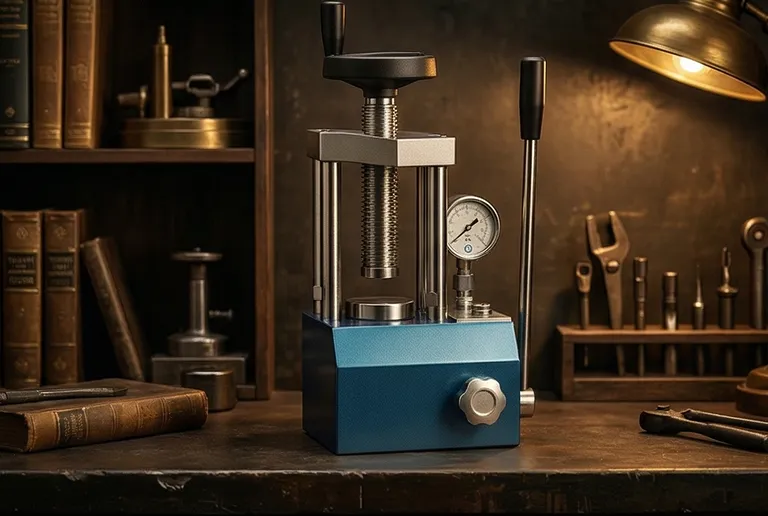
When using laboratory pressing equipment, your strategy should be dictated by your ultimate goal:
- For Maximum Wet Strength: Use temperatures above 120°C and longer "dwell times" to ensure complete molecular fusion.
- For Fiber Flexibility: Focus on the 6 MPa threshold to increase contact area while preserving the bulk of the fiber wall.
- For Chemical Reduction: Maximize mechanical nip loads to replace synthetic wet-strength agents with natural lignin bonds.
Mastering the Press with KINTEK

The difference between a failed experiment and a breakthrough often comes down to the reliability of the system. KINTEK specializes in comprehensive laboratory pressing solutions, providing the thermal and hydraulic precision required to master the glass transition of lignin.
From manual and automatic heated presses to multifunctional and glovebox-compatible models, our equipment is designed for researchers who demand control over every megapascal and every degree. Whether you are advancing battery research or engineering the next generation of sustainable paper, we provide the tools to weld the future.
Ready to enhance your lab's efficiency? Contact Our Experts
Related Products
- 24T 30T 60T Heated Hydraulic Lab Press Machine with Hot Plates for Laboratory
- Laboratory Split Manual Heated Hydraulic Press Machine with Hot Plates
- Heated Hydraulic Press Machine with Heated Plates for Vacuum Box Laboratory Hot Press
- Automatic Heated Hydraulic Press Machine with Hot Plates for Laboratory
- Laboratory Manual Heated Hydraulic Press Machine with Hot Plates
Related Articles
- The Invisible Forge: Why the Laboratory Press is the Soul of Nano-Composites
- The Architecture of Slow: Why Physical Precision Dictates Chemical Destiny
- The Architecture of Density: Why Pressure is the Silent Architect of Solid-State Batteries
- The Physics of Transparency: Why Pressure is the Silent Architect of Spectroscopic Clarity
- The Architecture of Certainty: Why the Laboratory Press is the Anchor of Material Science



















