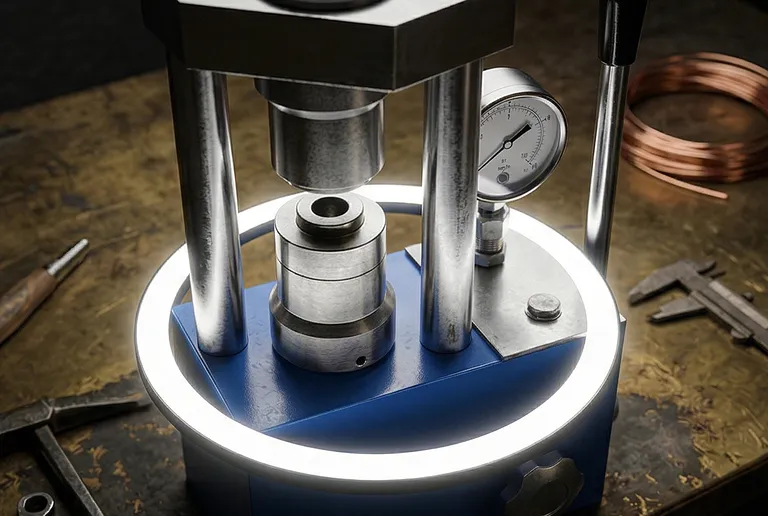
The Psychology of the Sample
In a materials laboratory, the "moment of truth" occurs not during the pressing, but during the demolding.
Hours of precursor preparation can be invalidated in a single second if a sample cracks or bonds to the steel. This is the fundamental tension of hot pressing: we must apply immense force to create density, yet we require absolute gentleness to preserve integrity.
To manage this tension, engineers rely on a binary system: the rigid commander (the mold) and the invisible shield (the release paper).
The Stainless Steel Mold: The Skeleton of Constraint
At 20 MPa, materials want to flow. Without a rigid boundary, precision is impossible. Stainless steel serves as the physical "commander" of the process.
Rigid Dimensional Control
Composite laminates and powders are chaotic under pressure. The high modulus of stainless steel provides a fixed volume, ensuring that fiber layers maintain their intended orientation rather than migrating under load.
The Thermal Bridge
Heat is the catalyst for the polymer's transition from liquid to solid. Because stainless steel possesses high thermal conductivity, it acts as a reservoir of energy, ensuring the sample reaches the curing temperature simultaneously from all sides.
The Mechanics of Densification
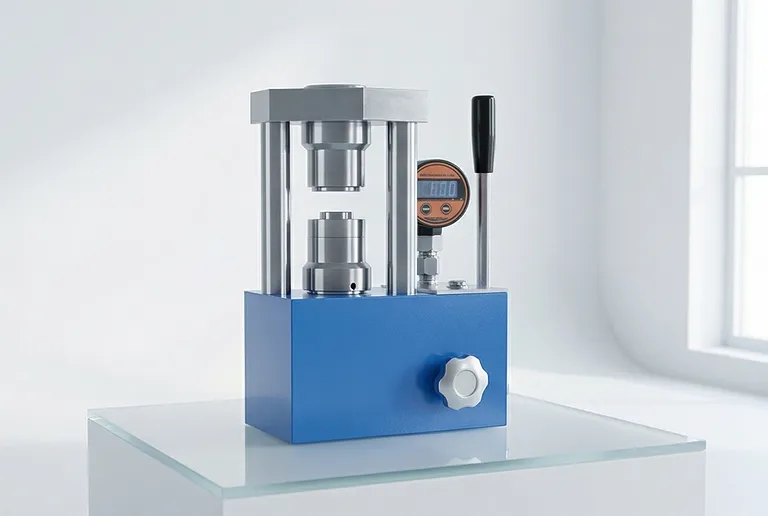
Using a plunger-type design, the mold translates the raw force of a hydraulic press into directional densification. This "squeezing" effect is what expels microscopic air pockets, turning a porous heap of material into a void-free structural component.
Teflon Release Paper: The Art of Non-Attachment
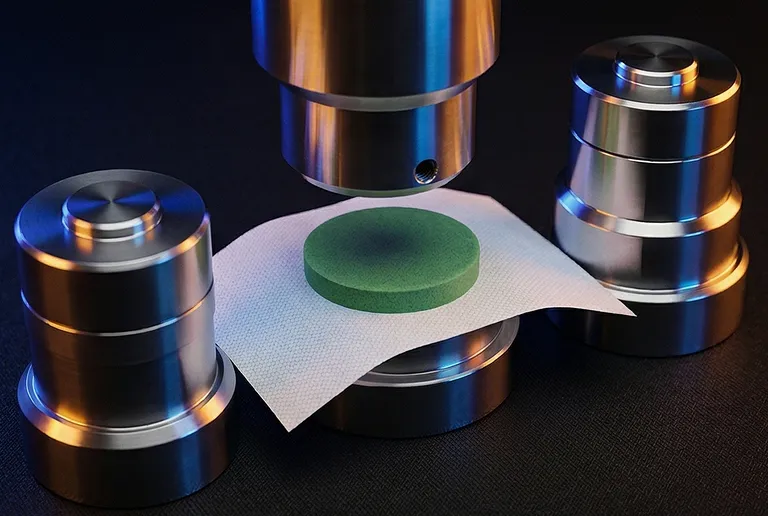
If the mold is the skeleton, Teflon (PTFE) is the skin. It is a material defined by its refusal to participate in the chemistry of the sample.
Defeating Chemical Adhesion
Thermosetting resins are designed to stick to things. As they cure, they form aggressive molecular bonds. Teflon’s low surface energy creates a "chemical dead zone" where these bonds cannot form, protecting the expensive steel surfaces from permanent contamination.
Surface Uniformity
Microscopic imperfections on a metal plunger can transfer to the sample. Teflon paper acts as a sacrificial leveling layer, ensuring the final specimen has a mirror-like finish that is critical for both aesthetic and mechanical testing.
Stress-Free Demolding
The most dangerous phase for a new composite is cooling. As materials contract at different rates, they can seize within the mold. Teflon provides the "slip" necessary for the sample to be extracted without mechanical tearing or edge-cracking.
The Engineering Trade-offs
No system is perfect. In the world of high-pressure research, every choice carries a cost.
| Component | Primary Function | The Trade-off |
|---|---|---|
| Stainless Steel Mold | Structural Constraint | Thermal Lag: Takes longer to heat and cool than aluminum. |
| Teflon Paper | Interfacial Barrier | Temperature Ceiling: Degrades if pushed beyond its thermal limits. |
The Thermal Lag Dilemma
The mass of a stainless steel mold provides stability, but it also creates "thermal inertia." It holds heat long after the press has been turned off. For researchers, this means cycle times must be carefully calculated to account for the time it takes the core to reach equilibrium.
The Maintenance Loop
While Teflon protects the mold, it is not a cure-all. Over hundreds of cycles, microscopic resin seepage can occur. A systematic cleaning protocol is essential; otherwise, the "commander" eventually loses its precision.
Designing the Perfect Pressing Environment
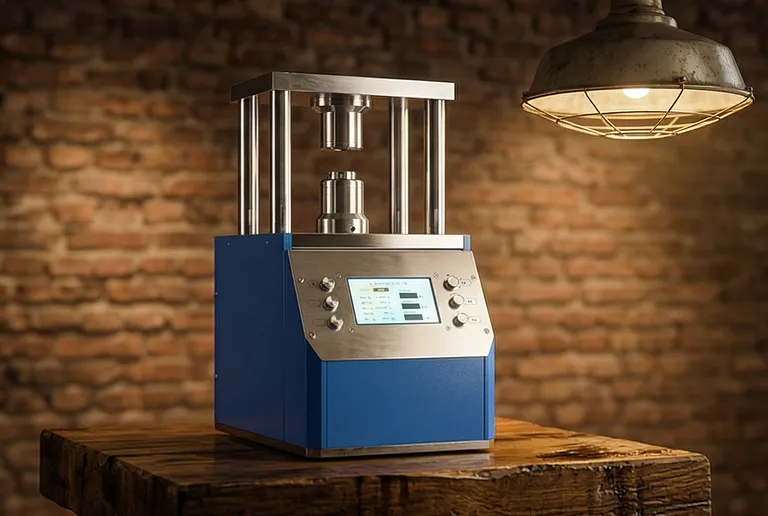
Achieving repeatable results requires more than just high-quality consumables; it requires a press capable of managing the variables.
- For Dimensional Precision: Use heavy-walled stainless steel molds to eliminate lateral expansion.
- For Surface Integrity: Replace Teflon paper every cycle. A single wrinkle in the paper becomes a permanent scar on the composite.
- For Systemic Control: Match your mold mass to your press's heating capacity to minimize thermal gradients.
At KINTEK, we design our laboratory solutions to handle these complexities. Whether you are working with manual heated presses or sophisticated glovebox-compatible systems for battery research, the goal remains the same: total control over the architecture of pressure.
Ready to achieve void-free, high-density results in your next composite project? Contact Our Experts
Related Products
- Automatic High Temperature Heated Hydraulic Press Machine with Heated Plates for Lab
- Heated Hydraulic Press Machine with Heated Plates for Vacuum Box Laboratory Hot Press
- Automatic Heated Hydraulic Press Machine with Hot Plates for Laboratory
- Heated Hydraulic Press Machine With Heated Plates For Vacuum Box Laboratory Hot Press
- Laboratory Split Manual Heated Hydraulic Press Machine with Hot Plates
Related Articles
- The Architecture of Slow: Why Physical Precision Dictates Chemical Destiny
- The Architecture of Certainty: Why the Laboratory Press is the Anchor of Material Science
- The Vanishing Boundary: The Hidden Thermodynamics of LTCC Lamination
- The Alchemy of 160°C: Why Precision Pressing is the Silent Backbone of Rubber Science
- The Invisible Forge: Why the Laboratory Press is the Soul of Nano-Composites



















