The Invisible Wall in Battery Research
In the search for the next generation of solid-state batteries, researchers often encounter a frustrating ghost in the machine. A material like $Li_8SiSe_6$ shows brilliant potential in theoretical simulations, yet the experimental data comes back underwhelming.
The culprit is rarely the chemistry itself. It is the interface.
In its powder form, even the most advanced fast ion conductor is a collection of islands. For an ion to move, it must jump across massive physical gaps. Without structural integrity, the data you collect isn't measuring the material—it’s measuring the air trapped inside it.
The Engineering Logic of the Pellet
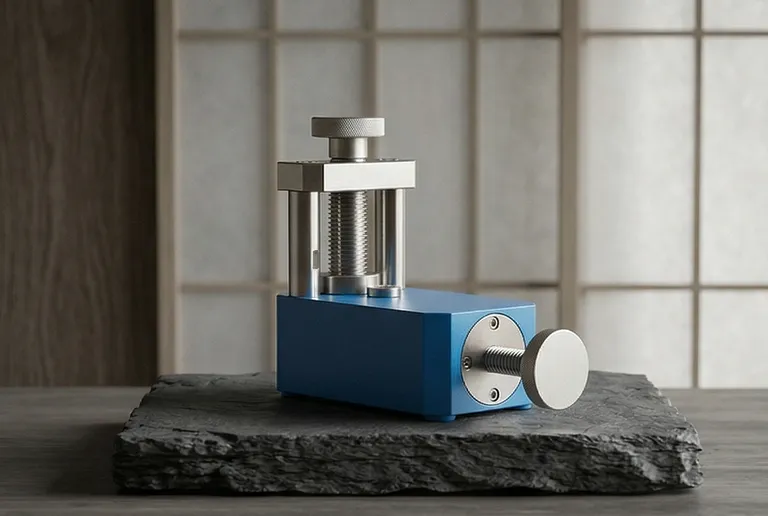
The transition from a loose powder to a high-performance ceramic pellet is not merely a change in shape. It is a fundamental engineering requirement to minimize Grain Boundary Resistance.
Minimizing the Obstacle Course
In a loose powder, ions face a tortuous path. High-pressure compaction forces particles into intimate contact, reducing the electrical resistance that occurs at the boundaries.
Reaching Theoretical Limits
Air pockets act as insulators. By applying pressures that can reach up to 347 MPa, laboratory hydraulic presses eliminate macro-physical voids. The goal is to push the sample density toward its theoretical limit, ensuring the ions move through a crystal lattice rather than navigating around holes.
The Perfect Surface for EIS
Electrochemical Impedance Spectroscopy (EIS) requires a flawless interface between the electrolyte and the electrode. A hydraulic press ensures a uniform, flat surface, providing the contact quality necessary for reliable, repeatable data.
Aligning Reality with Simulation
Modern materials science relies heavily on Ab Initio Molecular Dynamics (AIMD). These simulations predict how ions should move in a perfect world.
To validate these models, the physical sample must be as perfect as the math.
| Feature | Impact on Validation | Technical Requirement |
|---|---|---|
| High Compaction | Reduces grain boundary "noise" | 250–350 MPa pressure |
| Geometric Uniformity | Ensures consistent thickness calculations | Precision-ground die sets |
| Density Gradient Control | Prevents internal micro-fractures | Slow-dwell pressure release |
The Psychology of Pressure: Uniaxial vs. Isostatic
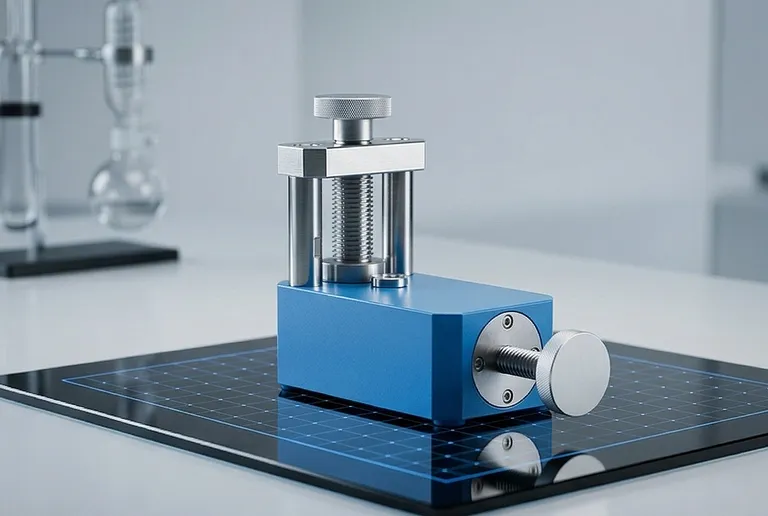
Choosing how to apply force is as critical as the force itself.
Uniaxial pressing is efficient and fast, ideal for initial material screening. However, it can create density gradients—areas where the top of the pellet is denser than the middle.
Isostatic pressing, which applies pressure equally from all directions, is the "engineer’s romance" with symmetry. It eliminates internal porosity and ensures that the measured lithium-ion migration energy barrier is a characteristic of the material’s chemistry, not a flaw in its preparation.
Managing the Trade-offs
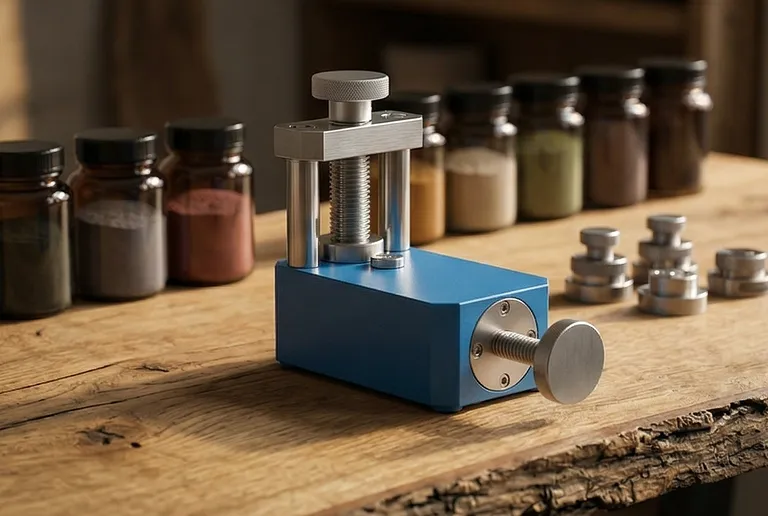
More pressure is not always better. The process requires a delicate balance:
- Under-pressing: Results in "green bodies" that are too fragile to handle or too porous to provide accurate readings.
- Over-pressing: Can induce phase changes or micro-fractures in sensitive materials like thio-selenides, skewing conductivity downward.
- Thermal Synergy: Compaction is often the precursor to sintering. If the initial press is inconsistent, the heat of the furnace will only amplify those flaws, leading to warped or cracked ceramics.
Precision Tools for Solid-State Frontiers
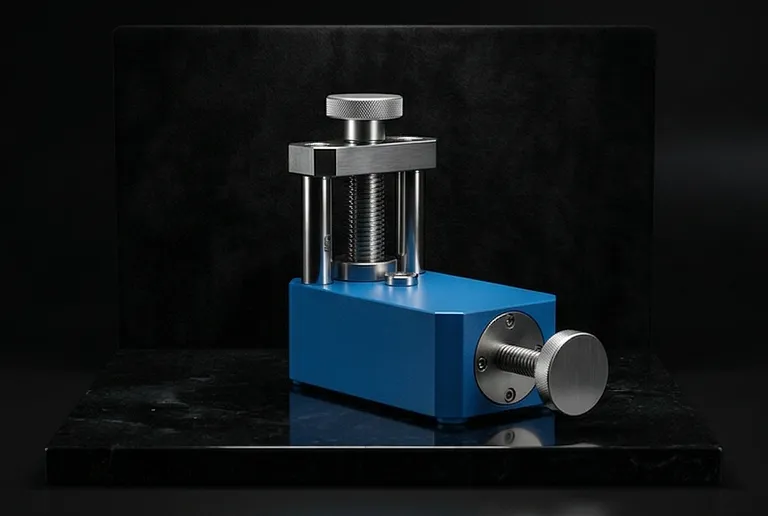
At KINTEK, we understand that a laboratory press is not just a piece of hardware; it is the bridge between a theoretical breakthrough and a functional battery.
Whether you are working within the constraints of a glovebox or seeking the absolute density of an isostatic press, your equipment should never be the bottleneck in your research. We offer a comprehensive suite of solutions tailored for the rigors of fast ion conductor validation:
- Automatic & Manual Pellet Presses for standardized consistency.
- Heated & Multifunctional Models for complex synthesis.
- Isostatic Solutions for the highest level of density uniformity.
- Glovebox-Compatible Designs for air-sensitive solid-state electrolytes.
To ensure your experimental results reflect the true potential of your materials, Contact Our Experts.
Related Products
- Laboratory Hydraulic Press 2T Lab Pellet Press for KBR FTIR
- Laboratory Hydraulic Press Lab Pellet Press Machine for Glove Box
- Electric Lab Cold Isostatic Press CIP Machine
- Automatic Lab Cold Isostatic Pressing CIP Machine
- Laboratory Hydraulic Press Lab Pellet Press Button Battery Press
Related Articles
- The Physics of Transparency: Why Pressure is the Silent Architect of Spectroscopic Clarity
- The Architecture of Density: Why Pressure is the Silent Architect of Solid-State Batteries
- The Architecture of Heat: Why Sample Density Dictates the Truth in Metal Hydride Research
- The Geometry of Electrons: Why Surface Precision is the Silent Partner in SECM Research
- The Geometry of Ionic Flow: Why Precision Pressing Dictates Material Truth



















