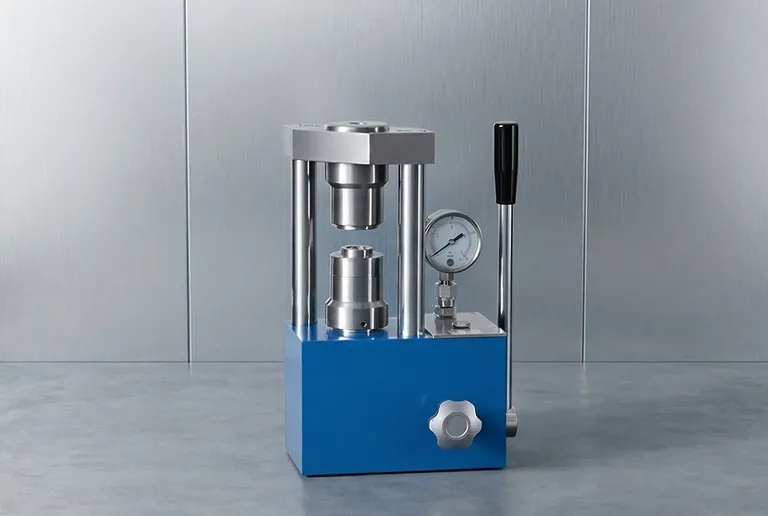
The Subtractive Trap
For centuries, we have treated wood surface preparation as a war of attrition. To make a surface smooth, we destroy it.
Traditional sanding is a subtractive process. It grinds away the very material we worked to grow, turning solid structure into hazardous airborne dust. It is a system built on waste—waste of raw material, waste of energy, and a compromise on worker health.
But there is a more elegant logic: instead of removing the surface to find smoothness, we can reorganize the surface to create it.
From Cutting to Compacting
Thermal densification via hot pressing represents a psychological shift in manufacturing. It moves us from a mindset of "taking away" to a mindset of "rearranging."
When wood is subjected to synchronized heat and pressure, we aren't just flattening it. We are performing a physical modification that preserves every milligram of volume.
Why Densification Wins
- Zero Waste: No material loss. The wood fibers stay where they belong.
- Clean Environments: Dust is a systemic failure of sanding. Pressing eliminates it entirely.
- Surface Integrity: Instead of leaving "open" pores that are prone to damage, pressing creates a high-density "skin" that resists impacts.
The Chemistry of Plasticization
Wood is not a static block of carbon; it is a complex polymer of lignin and hemicellulose. At specific temperatures, these components undergo a phase transition.
In the heat of a precision press, the cell walls do not fracture—they soften. They become "plasticized." This allows the microscopic cavities of the wood to collapse and reorganize into a dense, resilient matrix.
This isn't just a surface treatment; it is a structural transformation. The result is a material that is harder, more stable, and significantly more resistant to the degrading effects of UV light and time.
The 50% Arithmetic
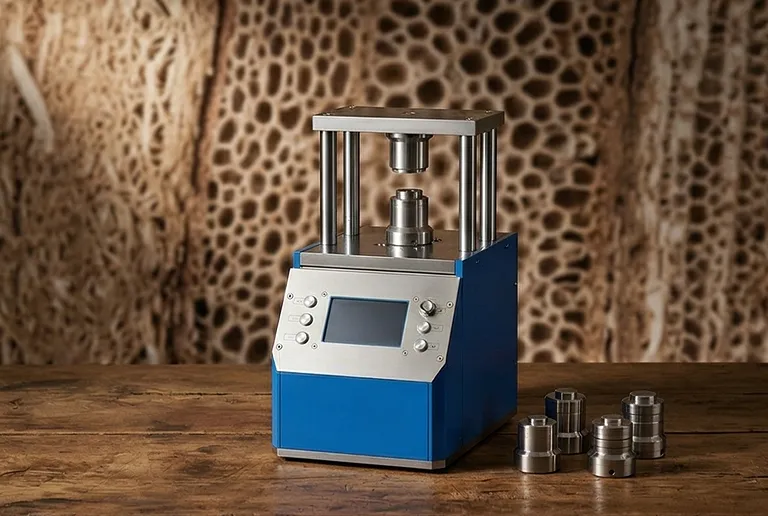
In the world of manufacturing, a 5% efficiency gain is a victory. A 50% gain is a revolution.
Because hot-pressed surfaces are compact and non-porous, they lose their "thirst" for expensive coatings. Traditional sanded wood acts like a sponge, soaking up varnish into its open grain.
Comparative Efficiency Table
| Feature | Traditional Sanding | Thermal Densification (Hot Pressing) |
|---|---|---|
| Material Impact | Subtractive (Loss of wood) | Additive/Compactive (Volume preserved) |
| Varnish Consumption | High (Open-pore absorption) | ~50% Reduction (Dense surface) |
| Dust Pollution | High (Respiratory risk) | Zero |
| Surface Hardness | Base material strength | Significantly enhanced |
| Aging Stability | Reactive to environmental factors | Improved UV and color stability |
The Precision Requirement
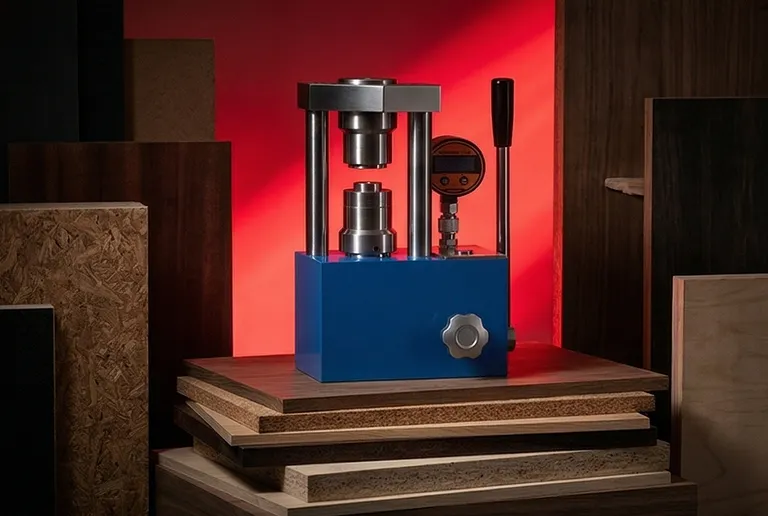
The beauty of thermal densification lies in its predictability. Unlike the variability of a sanding belt, a hot press can be integrated into digital systems for absolute repeatability.
However, this precision requires the right tools. The depth of the densified layer is a delicate balance of temperature, moisture content, and pressure cycles. If the temperature is off by a few degrees, you risk scorching; if the pressure is uneven, the surface integrity fails.
This is where the engineer's romance with equipment begins. To master the material, you must first master the environment in which it is formed.
Redefining the Laboratory Standard
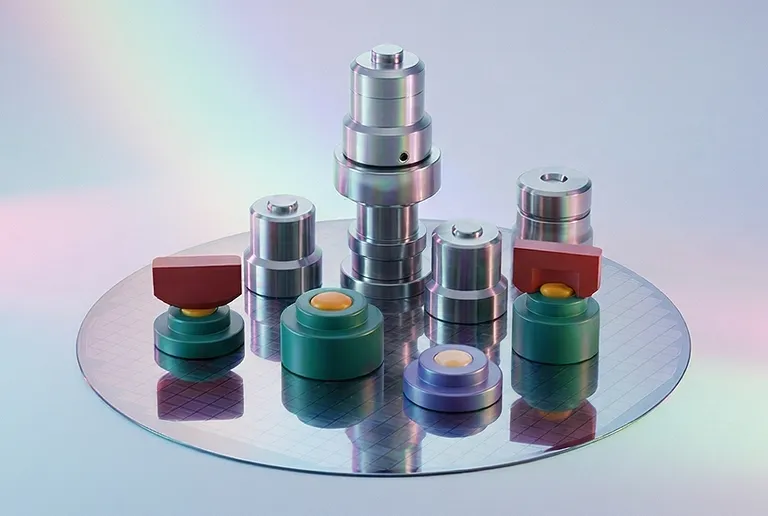
At KINTEK, we understand that the future of material science is built on the foundation of precision. Whether you are researching the next generation of sustainable wood products or developing high-performance battery components, the principles of pressure and temperature remain the same.
Our comprehensive range of laboratory solutions is designed for those who refuse to accept the status quo of "subtractive" waste:
- Heated Presses (Manual & Automatic): Engineered for the exact thermal cycles required for cellular plasticization.
- Multifunctional Systems: Designed to adapt to diverse research workflows, from wood densification to advanced ceramics.
- Specialized Isostatic Presses: For applications requiring uniform pressure from every direction, critical in battery and high-tech material research.
The transition from sanding to pressing is more than a technical upgrade; it is a commitment to efficiency, durability, and a cleaner way of creating.
Related Products
- Automatic High Temperature Heated Hydraulic Press Machine with Heated Plates for Lab
- Heated Hydraulic Press Machine with Heated Plates for Vacuum Box Laboratory Hot Press
- Automatic Heated Hydraulic Press Machine with Hot Plates for Laboratory
- Heated Hydraulic Press Machine With Heated Plates For Vacuum Box Laboratory Hot Press
- Laboratory Split Manual Heated Hydraulic Press Machine with Hot Plates
Related Articles
- The Architecture of Slow: Why Physical Precision Dictates Chemical Destiny
- The Architecture of Certainty: Why the Laboratory Press is the Anchor of Material Science
- The Vanishing Boundary: The Hidden Thermodynamics of LTCC Lamination
- The Alchemy of 160°C: Why Precision Pressing is the Silent Backbone of Rubber Science
- The Invisible Forge: Why the Laboratory Press is the Soul of Nano-Composites



















