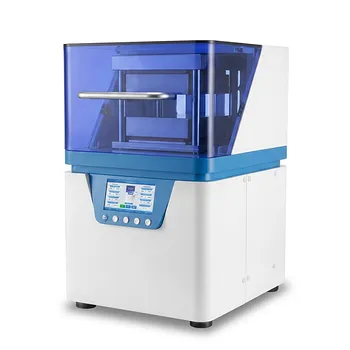
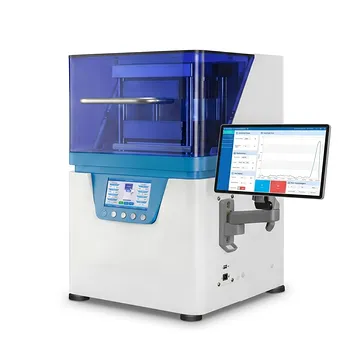
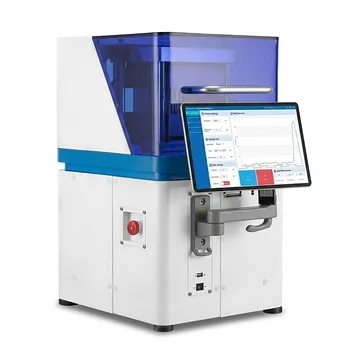
Benchtop hydraulic presses are engineered for precision applications requiring substantial force within a compact footprint. They are most suitable for laboratory and small-scale industrial tasks, specifically pelletizing, fluid extraction, pressure forming, and destructive testing.
Core Takeaway While industrial presses handle massive manufacturing loads, benchtop models are specialized for precision and space efficiency. They are the standard choice for sample preparation, material characterization, and educational demonstrations where high pressure must be applied to small quantities of material.
Primary Applications in the Laboratory
Sample Preparation for Spectroscopy
One of the most frequent uses of benchtop presses is creating samples for spectroscopic analysis.
The press compresses powder mixtures into uniform pellets or thin films. This is essential for creating KBr pellets for FTIR (Fourier Transform Infrared Spectroscopy) and sample pellets for XRF (X-ray Fluorescence) analysis.
Fluid Extraction
Benchtop models are highly effective for extracting fluids from various organic and inorganic materials.
By applying high pressure to a sample held within a specific die or vessel, the press forces liquid out for separation and analysis. This is critical in biological research and natural product chemistry.
Pressure Forming and Molding
These presses allow researchers to shape materials under controlled conditions.
Whether using a standard cold press or a heated hydraulic press, users can mold polymers, ceramics, or composites. This is vital for prototyping small components or testing how materials behave when shaped under high pressure.
Material Testing and Education
Destructive and Tension Testing
Despite their small size, benchtop presses generate enough force to test the limits of materials.
They are used for destructive testing to determine the breaking point of a sample. Additionally, they facilitate tension testing, where materials are pulled apart to evaluate strength and durability.
Educational Demonstrations
Because they are compact and often feature user-friendly controls, benchtop presses are ideal for academic environments.
They allow instructors to safely demonstrate concepts regarding material properties, compression techniques, and the physics of hydraulic force to students without requiring industrial-grade infrastructure.
Understanding the Trade-offs
Footprint vs. Throughput
The primary advantage of a benchtop press is its space-efficient design, making it perfect for crowded labs.
However, this compactness limits the volume of material you can process at once. If your application requires high-volume manufacturing or processing large workpieces, a floor-standing industrial model is necessary.
Manual vs. Automatic Operation
The benchtop range includes both hand-operated and automatic models.
Manual models offer tactile control and lower cost but can result in operator fatigue and slight inconsistencies. Automatic models ensure repeatability and ease of use but come at a higher capital cost.
Making the Right Choice for Your Goal
To select the right equipment, you must match the press's capabilities to your specific workflow requirements.
- If your primary focus is Spectroscopic Analysis: Prioritize a press known for precise force control to ensure consistent transparency and homogeneity in KBr or XRF pellets.
- If your primary focus is Material Research: Consider a heated hydraulic press variant to test temperature-sensitive materials alongside pressure variables.
- If your primary focus is Education: Choose a manual benchtop model, which is cost-effective and provides students with a hands-on understanding of hydraulic mechanics.
The ideal benchtop press balances the specific force requirements of your application with the available workspace in your facility.
Summary Table:
| Application Category | Primary Tasks | Key Benefits |
|---|---|---|
| Spectroscopy | KBr pellets for FTIR, XRF sample disks | Ensures sample homogeneity & transparency |
| Material Testing | Destructive, tension, and breaking point tests | High force in a compact, bench-friendly footprint |
| Material Processing | Fluid extraction, molding polymers/ceramics | Precise control over pressure and (if heated) temperature |
| Education | Demonstrating hydraulic physics & material science | Safe, user-friendly, and cost-effective for labs |
Elevate Your Laboratory Precision with Kintek
Maximize your research efficiency with KINTEK’s comprehensive laboratory pressing solutions. Whether you require manual or automatic control, heated platens for material molding, or glovebox-compatible models for sensitive environments, our benchtop presses deliver the precision your data demands. From battery research to advanced material characterization, our range—including cold and warm isostatic presses—is designed to fit your specific workflow.
Ready to optimize your sample preparation? Contact KINTEK today to find the perfect press for your application!
Related Products
- Automatic Hydraulic Heat Press Machine with Multi Stage Programmable Control and Integrated Water Cooling Plate Size 180x180mm
- Automatic Hydraulic Hot Press with Large Plate and Precision Temperature Control for Advanced Material Sample Preparation and Industrial Research
- Automatic Heated Hydraulic Press Machine with Heated Plates for Laboratory
- Automatic High Temperature Heated Hydraulic Press Machine with Heated Plates for Lab
- Laboratory Hydraulic Press 2T Lab Pellet Press for KBR FTIR
People Also Ask
- How does a laboratory hydraulic heat press facilitate the molding of cellulose composite specimens? Precision Molding
- How is a hydraulic heat press used for sample preparation? Achieve Uniform, Void-Free Samples for Lab Analysis
- What is the role of a hydraulic heat press in material testing? Unlock Superior Data for Research & QC
- What is a hydraulic heat press? Discover Precision Material Bonding and Sample Preparation
- What are the industrial applications of a hydraulic heat press? Powering Lamination, Bonding, and R&D Efficiency