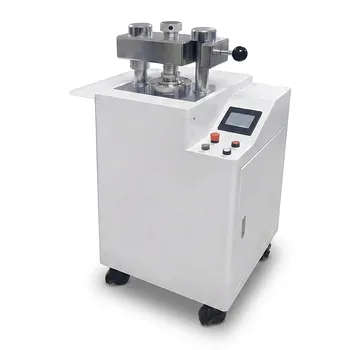
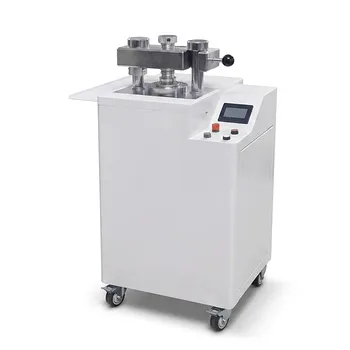
Lab pellet presses serve as critical instruments in pharmaceutical development and quality control by compressing powdered drugs into uniform, solid pellets. These precise samples are essential for validating drug properties through dissolution testing, stability studies, and bioavailability assessments, directly influencing the reliability of data used for regulatory submissions.
Core Takeaway: The value of a lab pellet press lies not just in compaction, but in consistency. By creating perfectly uniform samples, researchers eliminate variables in testing, ensuring that data regarding drug release and stability is accurate, reproducible, and robust enough for regulatory approval.
The Role in Research and Quality Control
Ensuring Data Integrity for Regulatory Submissions
The primary function of these presses is to support the creation of rigorous data. Regulatory bodies require proof that a drug performs consistently.
By creating pellets with exact dimensions and density, laboratories can produce reproducible test results. This uniformity is the foundation of a successful regulatory submission.
Dissolution and Bioavailability Testing
Once a powder is compressed into a pellet, it undergoes dissolution testing. This process simulates how the drug breaks down in the human body.
The press allows researchers to assess bioavailability, determining how much of the drug is absorbed and how quickly it enters the bloodstream.
Stability and Shelf-Life Studies
Compressed pellets are also subjected to stability studies. Researchers monitor how the physical form of the drug holds up over time under various conditions.
This data is vital for establishing expiration dates and storage guidelines for the final pharmaceutical product.
Manufacturing and Material Characterization
Prototyping and Tablet Formulation
Beyond testing, laboratory presses are used for small-scale pill making. They compress powders and granules into solid tablets with precise weights and dimensions.
This allows formulation scientists to prototype different tablet shapes and densities before moving to mass production.
Encapsulation and Drug Synthesis
Heated lab presses offer specialized capabilities for drug synthesis and encapsulation. The application of heat alongside pressure facilitates the encapsulation of drugs into specific carriers.
This technique helps enhance drug delivery systems and improves the distribution of active ingredients within the tablet.
Material Property Analysis
Understanding the physical limits of a tablet is crucial. Hydraulic presses are employed to test the strength and durability of pharmaceutical materials.
By simulating high-pressure environments, researchers can identify fracture points and elasticity, ensuring the final pill creates the desired physical characteristics without crumbling during transport.
Spectroscopic Sample Preparation
For chemical analysis, such as infrared spectroscopy, samples must be homogeneous and smooth.
Manual hydraulic presses create high-quality pellets suitable for spectral analysis, allowing for the precise identification of chemical compounds and impurities.
Understanding the Trade-offs
The Necessity of Calibration
Precision is the greatest asset of a lab press, but it is also its vulnerability. If the force gauge is not calibrated regularly, the applied pressure will be inaccurate.
Inaccurate pressure leads to inconsistent pellet density, which renders dissolution and stability data invalid.
Maintenance Requirements
These machines are durable but require strict maintenance protocols. Hydraulic fluids degrade and must be replaced to prevent system failure.
Furthermore, moving parts must be lubricated and hoses inspected for leaks. Neglecting these basics leads to excessive vibration or pressure loss, compromising sample quality.
Making the Right Choice for Your Goal
To select the right equipment for your laboratory, you must align the press's capabilities with your specific pharmaceutical stage.
- If your primary focus is Regulatory Compliance: Prioritize a press with high-precision force control to ensure the uniformity required for reproducible dissolution and stability data.
- If your primary focus is Formulation R&D: Look for heated lab presses that offer flexibility for drug synthesis, encapsulation, and tablet prototyping.
- If your primary focus is Chemical Analysis: Choose a manual hydraulic press capable of producing smooth, homogeneous pellets specifically for spectroscopic applications.
Ultimately, the right lab pellet press transforms variable powders into consistent data, acting as the bridge between raw ingredients and a verifiable, safe pharmaceutical product.
Summary Table:
| Application | Purpose | Benefit |
|---|---|---|
| Dissolution Testing | Simulates drug breakdown in the body | Ensures accurate bioavailability data |
| Stability Studies | Monitors physical integrity over time | Establishes shelf-life and storage guidelines |
| Formulation R&D | Prototyping tablet shapes and densities | Optimizes pill design before mass production |
| Material Analysis | Tests strength and fracture points | Prevents crumbling during transport |
| Spectroscopy | Sample preparation for chemical ID | Ensures homogeneous samples for IR analysis |
Elevate Your Pharmaceutical Research with KINTEK Precision
Consistency is the cornerstone of regulatory approval. At KINTEK, we specialize in comprehensive laboratory pressing solutions designed to transform variable powders into robust, reproducible data. Whether you are conducting stability studies or material characterization, our equipment delivers the precision your lab demands.
Our Specialized Range Includes:
- Manual & Automatic Presses: For versatile sample preparation.
- Heated & Multifunctional Models: Ideal for drug synthesis and encapsulation.
- Glovebox-Compatible & Isostatic Presses: Advanced solutions for sensitive battery and pharmaceutical research.
Don't let inconsistent samples compromise your regulatory submissions. Contact KINTEK today to find the perfect press for your laboratory's needs.
Related Products
- Automatic Fluorescence Sample Preparation Press 40 Ton Lab Pellet Press for XRF Analysis
- Automatic Laboratory Hydraulic Press Lab Pellet Press Machine
- Laboratory Hydraulic Press 2T Lab Pellet Press for KBR FTIR
- Laboratory Hydraulic Pellet Press for XRF KBR FTIR Lab Press
- Laboratory Hydraulic Press Lab Pellet Press Machine for Glove Box
People Also Ask
- What is the general process for preparing a sample pellet for XRF? Master Consistency for Accurate Analysis
- What are the advantages of preparing a sample as a dense pellet for XRF? Unlock High-Precision Trace Element Analysis
- What are the common operational types of lab pellet presses? Choosing the Right Manual, Automatic, or Hydraulic System
- What are the emerging trends in the design and materials of lab pellet presses? Modernize Your Lab Efficiency
- What are common lab pellet press issues? Expert Troubleshooting Guide for Reliable Material Research