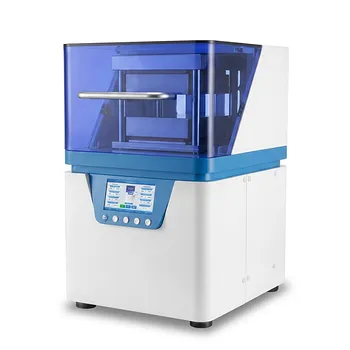
The engineering of high-performance EPDM composites depends on precise thermopressure control. A high-precision heated plate vulcanizing press ensures bonding quality by simultaneously applying stable high temperatures (typically 160°C) and constant pressure (e.g., 10 MPa) to trigger chemical cross-linking. This process forces the anti-ablation, thermal insulation, and adhesive layers into intimate contact, eliminating interfacial voids and transforming the materials into a singular, integrated structure.
Core Takeaway: The vulcanizing press acts as a catalyst for both chemical and physical integration, using controlled heat to build a three-dimensional molecular network while utilizing high pressure to purge defects and fuse distinct material layers into a high-strength composite.
The Role of Thermal Energy in Molecular Bonding
Triggering the Vulcanization Reaction
High-precision presses provide the specific thermal energy required to initiate the cross-linking, or vulcanization, of Ethylene Propylene Diene Monomer (EPDM). This heat facilitates a chemical transformation where linear polymer chains are bridged to form a stable three-dimensional spatial network.
Ensuring Chemical Uniformity
Stable thermal fields, often maintained around 160°C, ensure that the peroxide-initiated or sulfur-based reactions occur at a uniform rate throughout the composite. Without this temperature stability, the internal density of the rubber would vary, leading to localized weak points and inconsistent mechanical properties.
Optimizing Curing Time
Precise temperature control allows engineers to determine the ideal vulcanization time. This is critical for ensuring the rubber reaches its peak elasticity and thermal resistance without suffering from thermal degradation or incomplete curing.
Mechanical Pressure and Interfacial Integrity
Eliminating Interfacial Voids
During the molding stage, constant pressure (often reaching 10 MPa or 150 kgf) is applied to the multilayer stack. This force physically compresses the anti-ablation, insulation, and adhesive layers together, eliminating air bubbles and internal voids that would otherwise compromise the bond.
Facilitating Material Flow
Under high pressure and heat, the rubber compound enters a temporary molten state. This allows the material to flow into the microscopic textures of the adjacent layers and the steel mold, ensuring a mechanical interlock that supplements the chemical bonding.
Establishing Geometric Precision
The use of steel molds in conjunction with high-precision hydraulic pressure ensures the final composite meets strict thickness and geometric specifications. This precision is vital for the structural integrity of components used in high-temperature or high-stress environments.
The Importance of Uniform Distribution
Reducing Internal Stresses
Uniform heat and pressure distribution across the entire surface of the plates help to eliminate internal material stresses. If one section of the plate is cooler or under less pressure, the resulting "mismatch" in the cross-linking density can cause the composite to warp or delaminate.
Creating High-Density Structures
The synchronized application of heat and pressure results in a dense internal structure characterized by high strength and elasticity. This density is a primary factor in the material's ability to resist ablation and provide thermal insulation in extreme conditions.
Understanding the Trade-offs
The Risk of Over-Vulcanization
While high temperatures are necessary for bonding, excessive heat or prolonged exposure can lead to over-curing. This makes the EPDM brittle, reducing its elasticity and causing the bond between layers to fail under mechanical stress.
Pressure Gradients and Edge Effects
If the heated plates are not perfectly calibrated, pressure gradients can occur across the surface. This often leads to "edge effects" where the perimeter of the composite is less dense or thinner than the center, compromising the overall reliability of the part.
Thermal Lag in Multilayer Stacks
In thick multilayer structures, the center of the stack may take longer to reach the target temperature than the surfaces. Failing to account for this thermal lag can result in a composite that is fully cured on the outside but under-cured at the critical internal interfaces.
How to Apply This to Your Project
Recommendations for Process Optimization
Success in EPDM bonding requires aligning your equipment capabilities with your specific material requirements.
- If your primary focus is Maximum Bond Strength: Prioritize a press with high-precision pressure calibration to ensure all interfacial air is purged before the cross-linking reaction peaks.
- If your primary focus is Thermal Resistance: Focus on maintaining a stable, uniform thermal field (±1°C) to ensure the formation of a consistent three-dimensional molecular network across all layers.
- If your primary focus is Geometric Accuracy: Use high-stiffness steel molds and a press with a slow-closing feature to allow the molten compound to fill the cavity uniformly without trapping gases.
The synergy of controlled thermal energy and mechanical force is what transforms a collection of separate layers into a high-performance, inseparable EPDM composite.
Summary Table:
| Key Factor | Function in Process | Resulting Benefit |
|---|---|---|
| Thermal Energy | Triggers vulcanization at ~160°C | 3D molecular cross-linking |
| Mechanical Pressure | Compresses layers at 10+ MPa | Eliminates voids & interfacial defects |
| Uniform Distribution | Ensures consistent heat/pressure | Prevents warping & delamination |
| Precision Molds | Defines geometric shape | Strict dimensional accuracy |
Elevate Your Material Research with KINTEK
Maximize the strength and integrity of your composite structures with KINTEK’s high-precision laboratory pressing solutions. We specialize in providing comprehensive equipment tailored for advanced material science and battery research, including:
- Manual & Automatic Heated Presses for precise vulcanization control.
- Multifunctional & Glovebox-Compatible Models for sensitive environments.
- Cold & Warm Isostatic Presses for uniform density in complex parts.
Ready to enhance your lab's efficiency and achieve superior bonding results? Contact KINTEK today to find the perfect pressing solution for your specific application.
References
- Jingwen Ren, Zhuangzhuang Li. Influence of composite structure design on the ablation performance of ethylene propylene diene monomer composites. DOI: 10.1515/epoly-2021-0015
This article is also based on technical information from Kintek Solution Knowledge Base .
Related Products
- Automatic High Temperature Heated Hydraulic Press Machine with Heated Plates for Lab
- Split Automatic Heated Hydraulic Press Machine with Heated Plates
- 24T 30T 60T Heated Hydraulic Lab Press Machine with Hot Plates for Laboratory
- Laboratory Manual Heated Hydraulic Press Machine with Hot Plates
- Laboratory Split Manual Heated Hydraulic Press Machine with Hot Plates
People Also Ask
- How does a laboratory heated hydraulic press facilitate PBN sample prep for WAXS? Achieve Precise X-Ray Scattering
- Why is a laboratory hydraulic press with heating plates required for PLA/TEC films? Achieve Precise Sample Integrity
- How is the temperature of the hot plate controlled in a hydraulic lab press? Achieve Thermal Precision (20°C-200°C)
- Function of a Laboratory Hydraulic Press with Heated Platens in SSE? Enhance Battery Density & Conductivity
- What are the primary functions of a hydraulic press with heated platens in TP-RTM? Master Composite Manufacturing