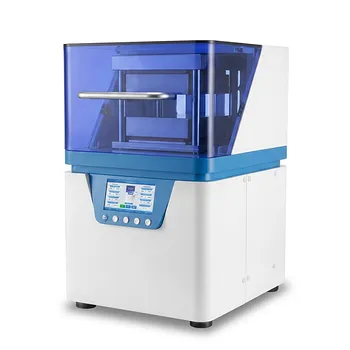
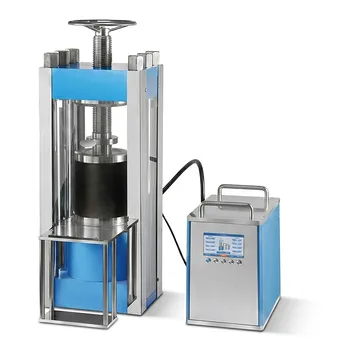
A hot press machine improves operational performance by drastically reducing the time required for heat conduction while simultaneously ensuring a uniform thermal profile. This dual approach accelerates production cycles for materials under specific thickness thresholds and guarantees superior structural bonding by stabilizing the adhesive curing process.
The core advantage of hot press technology lies in its ability to heat materials uniformly from the inside out, improving adhesive strength without generating excessive internal heat that could degrade the workpiece.
Maximizing Heating Efficiency
Accelerated Heat Conduction
The primary driver of efficiency in a hot press machine is the significant reduction in heat conduction time. By transferring thermal energy more directly and effectively, the machine minimizes the lag time usually associated with bringing a workpiece up to temperature.
Independence from Thickness
For workpieces under twenty millimeters thick, the material's thickness has minimal impact on the heating process. This allows for consistent, rapid cycle times even as material dimensions vary slightly within this range, removing a common variable from production planning.
Elevating Product Quality
Uniform Thermal Distribution
High-quality results are secured through consistent heating of both the interior and exterior of the product. This prevents the warping, stressing, or surface defects that are often caused by uneven thermal gradients in other heating methods.
Optimized Adhesive Curing
Because the workpiece itself does not generate excessive heat, the thermal environment remains strictly controlled. This stability directly improves the curing strength of adhesives, ensuring the final bond is durable and reliable.
Operational and Environmental Benefits
Hygiene and Safety
Beyond mechanical performance, the process is designed to ensure hygiene and safety for operators. It provides a cleaner manufacturing environment compared to alternative methods that might produce more waste or volatile byproducts.
Eco-friendly Operation
The method is considered eco-friendly. By optimizing heat transfer and reducing the likelihood of defective bonding, it minimizes energy waste and material scrap.
Understanding the Limitations
The Thickness Threshold
It is critical to note that the efficiency gains regarding conduction time are specifically cited for workpieces under twenty millimeters.
If your production involves materials significantly thicker than this threshold, the "thickness independence" benefit may diminish. You must evaluate if the heating dynamics change for bulkier items, as this could impact your projected cycle times.
Making the Right Choice for Your Goal
To leverage a hot press machine effectively, match your production criteria to its specific strengths:
- If your primary focus is Speed: Prioritize materials under 20mm to fully exploit the benefit of reduced heat conduction time.
- If your primary focus is Structural Integrity: Rely on the machine’s uniform heating capability to maximize adhesive curing strength and prevent internal defects.
- If your primary focus is Sustainability: Utilize the machine to improve workplace hygiene and reduce energy waste associated with inefficient heat transfer.
Uniform heating and controlled conduction are the keys to balancing speed with superior bonding quality.
Summary Table:
| Feature | Performance Impact | Key Benefit |
|---|---|---|
| Heat Conduction | Reduced lag time | Faster production cycles |
| Thermal Profile | Uniform internal/external heating | Prevents warping & defects |
| Adhesive Curing | Controlled thermal environment | Maximized bonding strength |
| Material Thickness | Thickness-independent (<20mm) | Consistent, rapid processing |
| Environmental | Optimized energy transfer | Reduced waste & eco-friendly |
Elevate Your Material Research with KINTEK Precision Pressing
Maximize your lab's potential with KINTEK’s comprehensive laboratory pressing solutions. Whether you are advancing battery research or developing new composites, our range of manual, automatic, heated, and multifunctional models—including specialized cold and warm isostatic presses—delivers the uniform thermal profiles and structural integrity your work demands.
Ready to optimize your heating efficiency and bonding quality? Contact KINTEK today for a customized consultation and find the perfect press for your specific application.
Related Products
- Automatic High Temperature Heated Hydraulic Press Machine with Heated Plates for Lab
- Automatic Hydraulic Heat Press Machine with Multi Stage Programmable Control and Integrated Water Cooling Plate Size 180x180mm
- Heated Hydraulic Press Machine with Heated Plates for Vacuum Box Laboratory Hot Press
- Automatic Heated Hydraulic Press Machine with Hot Plates for Laboratory
- Laboratory Split Manual Heated Hydraulic Press Machine with Hot Plates
People Also Ask
- Function of a Laboratory Hydraulic Press with Heated Platens in SSE? Enhance Battery Density & Conductivity
- How does a laboratory heated hydraulic press facilitate PBN sample prep for WAXS? Achieve Precise X-Ray Scattering
- What are the requirements for electrode pressing with high-viscosity ionic liquids like EMIM TFSI? Optimize Performance
- What are the industrial applications of heated hydraulic presses? Master Heat & Force for Precision Manufacturing
- Why is a laboratory hydraulic press with heating plates required for PLA/TEC films? Achieve Precise Sample Integrity