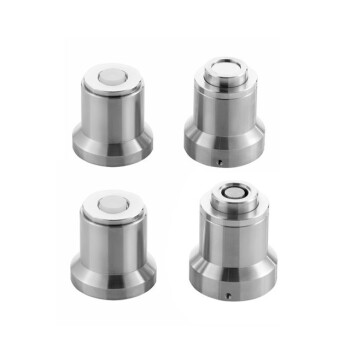
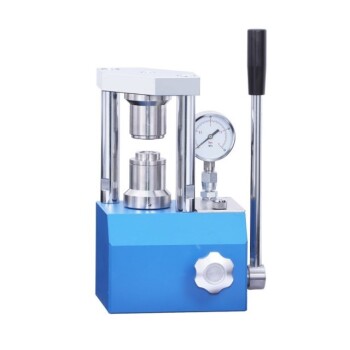
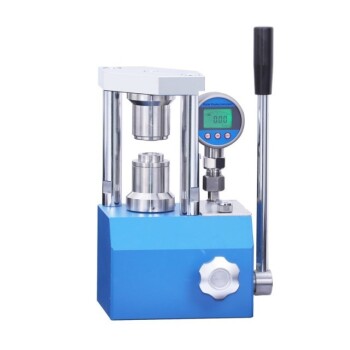
A sealed battery mold serves as a critical stabilization tool for assembling and testing asymmetric supercapacitors using Vanadium Dioxide (VO2). It utilizes a threaded mechanical design to create a secure, airtight environment that applies consistent pressure across the device stack. This setup is essential for evaluating the performance of a VO2(M) cathode paired with an anode, such as MXene, by eliminating physical variables that could skew electrochemical data.
Core Takeaway The sealed battery mold transforms a loose stack of materials into a reliable test unit. Its primary value lies in applying stable mechanical pressure to minimize contact resistance and prevent electrolyte leakage, thereby ensuring that test results reflect the true chemistry of the materials rather than assembly defects.
The Physics of Reliable Assembly
Establishing Optimal Physical Contact
In an asymmetric supercapacitor, energy storage depends on the interaction between the electrodes and the electrolyte.
The sealed mold uses a threaded mechanism to clamp the VO2 cathode, the separator, and the anode together. This mechanical pressure forces the components into intimate contact, reducing the distance ions must travel.
Minimizing Contact Resistance
Poor contact between layers creates high internal resistance (impedance).
By maintaining a tight, uniform compression, the mold drastically reduces contact resistance. This ensures that the voltage drops observed during testing are actual properties of the VO2 material, not artifacts of a loose connection.
Protecting the Electrochemical Environment
Preventing Electrolyte Leakage
Supercapacitors typically utilize liquid or gel electrolytes that must remain saturated within the separator.
The airtight nature of the sealed mold prevents these fluids from leaking out or evaporating. This is vital for long-duration testing, where electrolyte loss would cause the device to fail prematurely.
Creating a Standardized Test Cell
Research requires reproducibility.
The mold provides a fixed volume and geometry for every test. This standardization means that when you compare a VO2 cathode against an MXene anode, you can be confident the results are reproducible across multiple trials.
Understanding the Trade-offs
Mechanical Sensitivity
While the threaded design provides necessary pressure, it introduces the risk of human error.
Over-tightening the mold can crush delicate separators or damage the electrode structure. Conversely, under-tightening will result in high resistance and noisy data.
Limitation to Lab-Scale Testing
The sealed mold is a characterization tool, not a production prototype.
It is excellent for studying the fundamental properties of Vanadium Dioxide. However, it does not perfectly mimic the form factor or thermal dissipation characteristics of commercial pouch or cylindrical cells.
Making the Right Choice for Your Goal
To get the most out of your asymmetric supercapacitor testing, consider the following approach:
- If your primary focus is fundamental material analysis: Rely on the sealed mold to minimize noise and resistance, ensuring the data reflects the true capability of the VO2(M) cathode.
- If your primary focus is long-term cycling: Ensure the mold is sealed tightly to prevent electrolyte evaporation, which is the leading cause of failure in unsealed test setups.
The sealed battery mold is the industry standard for converting raw material potential into verifiable scientific data.
Summary Table:
| Feature | Benefit for VO2 Supercapacitor Testing |
|---|---|
| Threaded Design | Applies consistent mechanical pressure for optimal electrode contact. |
| Airtight Sealing | Prevents electrolyte leakage and evaporation during long-duration cycling. |
| Low Impedance | Drastically reduces contact resistance for accurate electrochemical data. |
| Standardization | Ensures reproducible results by providing fixed geometry and volume. |
Maximize the Accuracy of Your Battery Research
Precise electrochemical data starts with superior assembly. KINTEK specializes in comprehensive laboratory pressing solutions, offering a versatile range of manual, automatic, heated, and multifunctional presses, as well as cold and warm isostatic models specifically designed for advanced battery research.
Whether you are testing VO2 cathodes or developing next-generation MXene anodes, our equipment ensures the consistent pressure and airtight environments necessary for reproducible results.
Ready to elevate your lab's performance? Contact KINTEK today to find the perfect pressing solution for your research.
References
- K.L. Gurunatha, Ashok Kumar S. Unravelling the Polymorph Dependant Electrochemical Behaviour of VO2 for Advanced Supercapacitor Applications.. DOI: 10.26434/chemrxiv-2025-bbd03
This article is also based on technical information from Kintek Solution Knowledge Base .
Related Products
- Lab Button Battery Disassembly and Sealing Mold
- Lab Button Battery Tablet Press Sealing Mold
- Manual Button Battery Sealing Machine for Battery Sealing
- Carbide Lab Press Mold for Laboratory Sample Preparation
- Button Battery Sealing Machine for Button Batteries
People Also Ask
- What is the function of specialized battery molds and sealing consumables? Optimize Your In-situ XRD Testing Today
- How does the geometry of laboratory molds influence mycelium-based composites? Optimize Density and Strength
- Why are specialized battery test molds used? Ensure Peak Performance for All-Solid-State Sodium Batteries (ASSIBs)
- What role do battery testing molds play in electrolyte performance? Exploring Pressure vs. Viscoelasticity
- Why are high-precision laboratory molds and specific compaction processes required? Ensure Data Integrity in Soil Research