
In short, a hot press machine is classified by its physical structure and heating method (the machine type) and by the bonding material it is designed to handle (the bonding medium). The primary machine types are constant heat (thermostatic) and pulse heat, with variations like duplex or benchtop models, while the main bonding media for electronics are materials like anisotropic conductive film (ACF), anisotropic conductive paste (ACP), and traditional solder.
The specific classification that matters most is the distinction between constant heat and pulse heat technology. This single factor dictates the machine's precision, its suitability for heat-sensitive components, and its primary application, especially in modern electronics manufacturing.
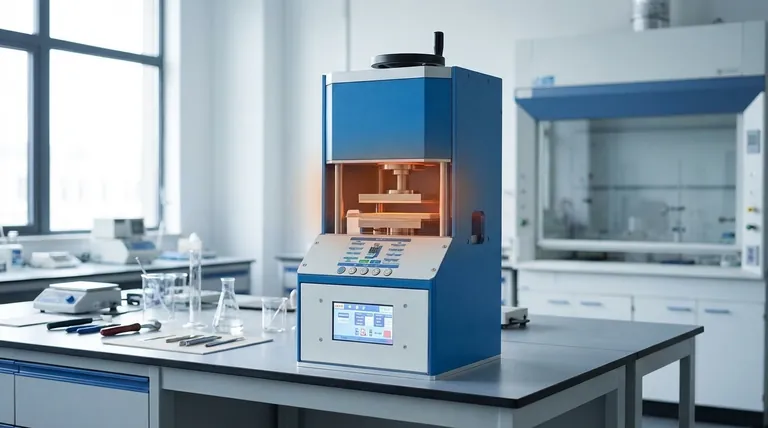
The Core Function: How a Hot Press Works
Before exploring the types, it's essential to understand the machine's fundamental goal: to apply precise heat and pressure over a specific duration to create a reliable mechanical or electrical bond.
The Role of the Press Head (Indenter)
The press head, or thermode/indenter, is the critical component that transfers heat and force to the workpiece. It is typically made from a material like titanium alloy to ensure heat is distributed evenly and rapidly across the bonding surface.
Precision Heating and Cooling
The machine's control system manages the heating profile. This can be a simple constant temperature or a complex multi-stage cycle where temperature ramps up and cools down at a controlled rate. Advanced systems use rapid sampling (e.g., every 0.1 seconds) to maintain pinpoint accuracy.
Applying Controlled Pressure
A pneumatic or oil-pressure system applies a specific, adjustable force. In some processes, a vacuum is also used to remove air and ensure a void-free bond, especially with laminated materials. The combination of heat, pressure, and time is what defines the process.
Classification by Machine Type: How Heat is Applied
The most significant differentiator between hot press machines is the method they use to generate and apply heat.
Constant Heat (Thermostatic) Presses
These machines heat the thermode to a set temperature and keep it there. The press head is always hot. While simpler and often faster for certain high-volume applications, they expose the component to prolonged thermal stress, making them unsuitable for delicate electronics.
Pulse Heat Presses: The Standard for Electronics
Pulse heat technology is the modern standard for fine-pitch applications. The thermode starts at room temperature, rapidly heats to the precise bonding temperature when in contact with the part, holds it for a set time, and then rapidly cools down before retracting.
This "pulse" of heat minimizes the thermal impact on the component, preventing damage to sensitive parts nearby. It is essential for bonding flexible printed circuits (FPCs), wires, and other delicate components.
Structural Variations: Duplex, Dual-Head, and Benchtop
These terms describe the machine's physical configuration, not its core heating technology.
- Dual-Head or Duplex presses have two press heads, allowing for simultaneous or sequential bonding operations to increase throughput.
- Benchtop models are smaller, more compact units designed for laboratory use, prototyping, or small-scale production.
Classification by Bonding Medium: The Joining Material
The machine is also defined by the material it uses to create the bond. The choice of medium depends entirely on the application's electrical and mechanical requirements.
Anisotropic Conductive Film/Paste (ACF/ACP)
ACF is a film adhesive containing microscopic conductive particles. When heat and pressure are applied, the film cures, and the particles form an electrical connection only in the vertical (Z-axis) direction. This is perfect for connecting fine-pitch circuits where horizontal shorting must be avoided, such as bonding an LCD driver to the glass panel.
Hot Melt Adhesive Film (TBF)
TBF, or thermoplastic bonding film, is a non-conductive adhesive. It is used purely for structural bonding. When heated, it melts and flows; upon cooling, it solidifies to create a strong mechanical connection between two surfaces.
Traditional Tin Soldering
Some hot press machines are configured for "hot bar soldering." In this process, the heated thermode reflows pre-applied solder paste or melts solder wire to connect components, such as attaching a flexible circuit to a PCB.
Understanding the Trade-offs: Pulse Heat vs. Constant Heat
Choosing the right technology requires understanding the direct trade-offs between the two primary heating methods.
Precision and Thermal Stress
A pulse heat system offers unparalleled precision, delivering a controlled thermal dose directly to the bond site and nowhere else. This is non-negotiable for heat-sensitive components. Constant heat subjects the entire area to high temperatures for a longer duration, risking damage.
Cycle Time and Throughput
At first glance, a constant heat press may seem faster because there is no heating/cooling ramp time. However, in a real production line, the time saved by a pulse heat system in preventing component damage and increasing yield often results in higher overall throughput.
Cost and Complexity
Constant heat machines are mechanically simpler and therefore generally have a lower initial cost. Pulse heat systems require more sophisticated power supplies and control systems, making them a larger capital investment.
Making the Right Choice for Your Application
Your selection should be guided by your end goal, balancing the need for precision against cost and volume constraints.
- If your primary focus is high-precision, fine-pitch electronics (FPC to PCB, LCDs): A pulse heat press is the only reliable choice, typically used with ACF or for hot bar soldering.
- If your primary focus is high-volume structural bonding of non-sensitive parts: A constant heat press using a hot melt adhesive (TBF) can be a highly cost-effective solution.
- If you are performing rework or lab-scale prototyping: A benchtop pulse heat system provides the necessary process control in a smaller footprint.
Ultimately, aligning the machine's heating method and media capabilities with your component's specific requirements is the key to a successful bonding process.
Summary Table:
| Classification Type | Key Features | Common Applications |
|---|---|---|
| Constant Heat | Maintains steady temperature; cost-effective for high-volume | Structural bonding with hot melt adhesives (TBF) |
| Pulse Heat | Rapid heating/cooling; minimizes thermal stress | Fine-pitch electronics with ACF/ACP or soldering |
| Bonding Media | Materials like ACF, ACP, TBF, solder | Electronics assembly, LCD bonding, prototyping |
Need a reliable hot press machine for your lab? KINTEK specializes in lab press machines, including automatic, isostatic, and heated models, delivering precision, efficiency, and durability for your bonding needs. Contact us today to discuss how our solutions can enhance your processes and boost productivity!
Visual Guide

Related Products
- Automatic High Temperature Heated Hydraulic Press Machine with Heated Plates for Lab
- Heated Hydraulic Press Machine with Heated Plates for Vacuum Box Laboratory Hot Press
- Automatic Heated Hydraulic Press Machine with Hot Plates for Laboratory
- Laboratory Split Manual Heated Hydraulic Press Machine with Hot Plates
- Heated Hydraulic Press Machine With Heated Plates For Vacuum Box Laboratory Hot Press
People Also Ask
- Function of a Laboratory Hydraulic Press with Heated Platens in SSE? Enhance Battery Density & Conductivity
- How does a laboratory heated hydraulic press facilitate PBN sample prep for WAXS? Achieve Precise X-Ray Scattering
- What are the requirements for electrode pressing with high-viscosity ionic liquids like EMIM TFSI? Optimize Performance
- What are the industrial applications of heated hydraulic presses? Master Heat & Force for Precision Manufacturing
- Why is a laboratory hydraulic press with heating plates required for PLA/TEC films? Achieve Precise Sample Integrity



















