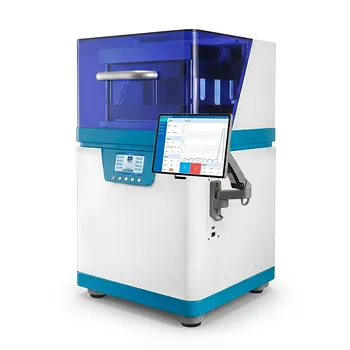
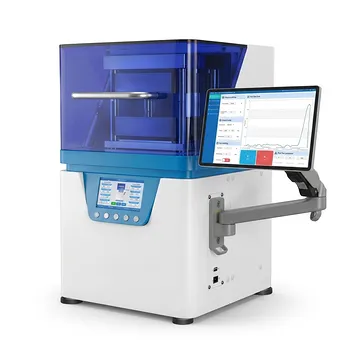
The control of a vulcanization motor hinges on an optimized electro-hydraulic drive system designed to regulate pressure application accurately during the curing process. This system integrates automatic adjustments, such as pressure compensation, with precise timing mechanisms to maintain target force levels while actively preventing mechanical overload.
Effective control combines automatic pressure compensation with energy-efficient drive designs, ensuring consistent curing results while minimizing power consumption and mechanical stress.
The Electro-Hydraulic Drive Architecture
Prioritizing Energy Efficiency
The motor is typically managed by an optimized electro-hydraulic drive. This design is engineered to lower energy consumption significantly without sacrificing the hydraulic force required for vulcanization.
Preventing System Overload
A primary function of the control logic is overload protection. The system monitors the motor's output to ensuring it applies precise pressure without exceeding the machine's mechanical limits.
Critical Operational Features
Automatic Pressure Compensation
During the curing cycle, materials may settle, causing a drop in force. The control system utilizes automatic pressure compensation to detect these drops and immediately engage the motor to restore the set pressure.
Pressure Keeping and Delay Stop
Once the target pressure is achieved, the motor enters a pressure keeping mode to maintain steady force. A delay stop feature ensures the motor ceases operation only after the specific timing requirements of the cure are met.
Multi-Level Pressure Management
Modern control systems allow operators to set and display multiple pressure levels. This capability supports complex curing recipes that may require different force applications at various stages of the process.
Customizable Exhaust Actions
The motor control is synchronized with exhaust actions. These can be customized to vent gases at specific intervals, preventing air pockets or defects in the final product.
Understanding the Trade-offs
Calibration vs. Stability
While features like automatic pressure compensation ensure quality, they introduce control complexity. If the system is not calibrated correctly, the motor may cycle on and off too frequently (hunting) in an attempt to maintain exact pressure, potentially leading to premature wear.
Optimizing Your Vulcanization Process
To get the most out of your hydraulic press, align the control settings with your specific production goals.
- If your primary focus is product consistency: Prioritize the calibration of automatic pressure compensation to ensure uniform density even if the material settles during curing.
- If your primary focus is energy efficiency: Maximize the use of the delay stop and optimized drive settings to reduce power draw during the static holding phases.
Precise motor control is the bridge between raw hydraulic power and the delicate chemistry required for high-quality vulcanization.
Summary Table:
| Feature | Control Mechanism | Key Benefit |
|---|---|---|
| Pressure Stability | Automatic Compensation | Maintains consistent force as material settles |
| Energy Use | Optimized Drive & Delay Stop | Reduces power draw during static holding phases |
| System Safety | Overload Protection | Prevents mechanical stress and motor damage |
| Process Quality | Exhaust Actions & Multi-Level Pressure | Eliminates air pockets and supports complex recipes |
Elevate Your Material Research with KINTEK
Precise motor control is essential for high-quality results. KINTEK specializes in comprehensive laboratory pressing solutions, offering a versatile range of manual, automatic, heated, multifunctional, and glovebox-compatible models, alongside advanced cold and warm isostatic presses.
Whether you are pioneering battery research or optimizing rubber vulcanization, our equipment provides the accuracy and reliability your lab demands. Let our experts help you select the ideal system tailored to your specific pressure and temperature requirements.
Contact us today to find your perfect pressing solution
Related Products
- Automatic Laboratory Hydraulic Press for XRF and KBR Pellet Pressing
- Laboratory Hydraulic Press 2T Lab Pellet Press for KBR FTIR
- Automatic Hydraulic Hot Press with Large Plate and Precision Temperature Control for Advanced Material Sample Preparation and Industrial Research
- Laboratory Hydraulic Press Lab Pellet Press Machine for Glove Box
- Manual Laboratory Hydraulic Press Lab Pellet Press
People Also Ask
- Why is pressing powder into a pellet critical before sintering? Ensure Dense, Conductive Solid-State Electrolytes
- What is the role of a laboratory pressure machine and KBr in FTIR? Master Sample Preparation for Flame Retardants
- What are the advantages of using a laboratory automatic hydraulic press for HEA green compact forming?
- What are the advantages of using a lab automatic hydraulic press for HEA green body molding? Ensure Material Integrity
- What are the advantages of using an automatic laboratory hydraulic press? Enhance Precision in Sample Preparation