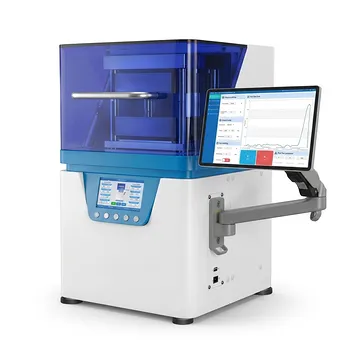
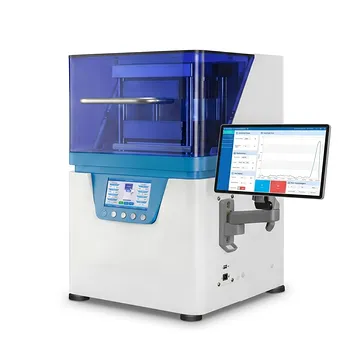
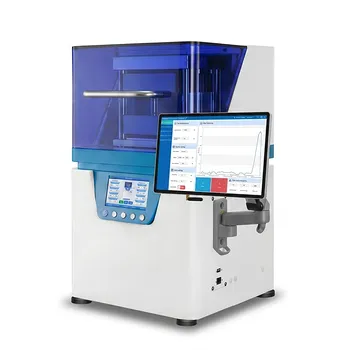
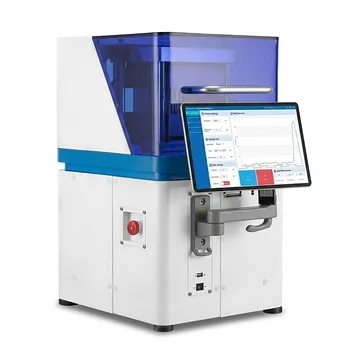
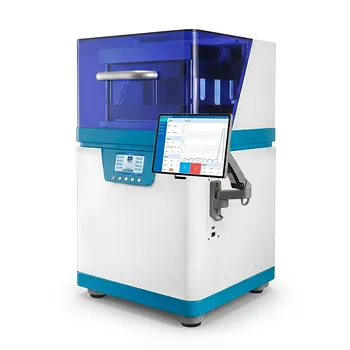
Laboratory hydraulic presses allow for significant customization regarding force application, thermal control, and physical dimensions to suit specific research needs. Key technical parameter options typically range from 0 to 60 tons of pressure, variable piston diameters between 95mm and 150mm, and heating capabilities that can reach 500°C.
Core Takeaway The technical specifications of a laboratory press define its suitability for specific analytical techniques, such as FTIR or XRF sample preparation. Successfully configuring these units requires balancing maximum force and platen size against the thermal requirements of your material testing protocols.
Force and Mechanical Specifications
To accommodate different material densities and compressibility, hydraulic presses offer distinct mechanical configurations.
Pressure Ranges
The most critical parameter is the maximum force the unit can apply. Common options include ranges of 0-24.0 tons, 0-30.0 tons, and 0-60.0 tons.
Piston Diameter
The diameter of the hydraulic piston dictates the distribution of force. Available technical options typically include 95mm, 110mm, and 150mm diameters.
Precision and Durability
These mechanical components are designed for high precision to ensure uniform pellet creation. This durability enables the machine to handle repetitive high-pressure tasks required for material property studies.
Thermal Control and Regulation
For applications involving thermoplastic materials or temperature-dependent curing, thermal parameters are a primary consideration.
Heating Capabilities
Standard units often operate at room temperature, but advanced options allow for mold heating. Temperature ceilings usually include options up to 300.0°C or 500.0°C.
Cooling Systems
To manage cycle times and material setting, presses can be equipped with quick water cooling systems. This allows researchers to rapidly cool the sample after a heating cycle.
Insulation Technology
To maintain thermal efficiency and safety, specific insulation methods are available. Options often include specialized components such as imported insulation boards to isolate the heated zones.
Work Area and Power Configuration
The physical interface where the sample sits, and the energy required to run the machine, vary by model.
Platen Dimensions
The "hot platen" size determines the maximum surface area for the sample or mold. Common available dimensions include 100x100mm, 180x180mm, and 200x200mm.
Power Supply Ratings
Depending on the heating and pressure capabilities selected, the power requirements will shift. Typical power ratings available are 600W, 1000W, or 1200W.
Operational Considerations
Beyond the raw performance specs, the physical footprint and user experience are key technical factors.
Space Efficiency
Laboratory presses are often designed with a minimal footprint. This allows powerful hydraulic capabilities to fit into smaller laboratories where floor space is at a premium.
Noise and Maintenance
These units are engineered for low noise levels and low maintenance requirements. This ensures the equipment disrupts neither the laboratory environment nor the workflow.
Understanding the Trade-offs
Selecting the highest specifications is not always the optimal technical strategy.
Tonnage vs. Sensitivity
While a 60-ton press offers maximum power, it may lack the fine control necessary for delicate samples that require lower pressure ranges. Over-specifying tonnage can lead to unnecessary equipment bulk and cost.
Thermal Range vs. Energy Consumption
Opting for a 500°C heating capacity and larger 200x200mm platens will significantly increase the power supply requirement (up to 1200W). You must ensure your lab's electrical infrastructure supports this load, whereas a standard room-temperature unit is far less demanding.
Making the Right Choice for Your Goal
To select the correct technical parameters, you must map the specifications to your intended application.
- If your primary focus is FTIR or XRF sample preparation: Prioritize precision and uniform pressure distribution (e.g., 24-30 tons) rather than extreme heating capabilities.
- If your primary focus is polymer synthesis or material curing: Essential options include high-temperature platens (up to 300°C or 500°C) and water cooling systems to control phase changes.
- If your primary focus is testing large composite samples: Select larger platen sizes (200x200mm) and ensure the piston diameter (e.g., 150mm) is sufficient to distribute force evenly across the wider area.
Your final selection should balance the maximum force required by your hardest material with the thermal precision required by your most temperature-sensitive sample.
Summary Table:
| Technical Parameter | Available Options & Ranges |
|---|---|
| Pressure Force | 0-24 tons, 0-30 tons, up to 0-60 tons |
| Piston Diameter | 95mm, 110mm, or 150mm |
| Heating Capacity | Room temperature up to 300°C or 500°C |
| Platen Dimensions | 100x100mm, 180x180mm, or 200x200mm |
| Power Supply | 600W, 1000W, or 1200W |
| Cooling Method | Quick water cooling systems available |
Maximize Your Research Precision with KINTEK
Choosing the right technical specifications is critical for success in battery research and material science. KINTEK specializes in comprehensive laboratory pressing solutions, offering a versatile range of manual, automatic, heated, multifunctional, and glovebox-compatible models, alongside high-performance cold and warm isostatic presses.
Whether you need precise thermal control for polymer synthesis or high-tonnage force for XRF sample preparation, our experts are ready to help you configure the perfect system for your workflow.
Ready to elevate your lab's capabilities?
Contact KINTEK today for a customized consultation.
Related Products
- Laboratory Hydraulic Press Lab Pellet Press Button Battery Press
- Laboratory Hydraulic Press 2T Lab Pellet Press for KBR FTIR
- Laboratory Hydraulic Press Lab Pellet Press Machine for Glove Box
- 24T 30T 60T Heated Hydraulic Lab Press Machine with Hot Plates for Laboratory
- Automatic Laboratory Hydraulic Press Lab Pellet Press Machine
People Also Ask
- How is a laboratory hydraulic press used for HAP composite gels? Master Mineral Substrate Standardization
- What role does a laboratory hydraulic press play in reaction pellets? Optimizing Lunar Soil and Metal Fuel Density
- What role does a laboratory hydraulic press play in the preparation of piezoelectric ceramic discs for DC-PG? | KINTEK
- What role does a laboratory hydraulic press play in the assembly of all-solid-state battery test cells? Expert Guide
- Why is a laboratory hydraulic press required for PBAT and PLA sample preparation? Achieve Flawless Characterization