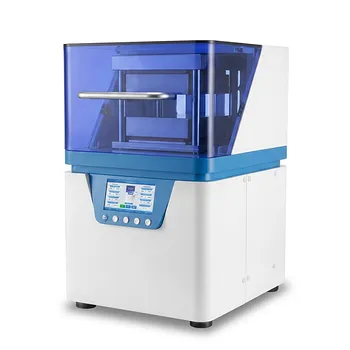
Hydraulic presses are fundamental to modern industry, primarily serving applications that require immense compressive force. The most common industrial uses include metal forming processes like forging and stamping, molding materials such as plastics and composites, assembly operations for press-fitting components, and material testing to verify strength and durability.
Core Takeaway The hydraulic press is defined by its versatility; it is equally effective at applying raw, destructive power for recycling as it is at delivering the precise, controlled force required for aerospace manufacturing and laboratory testing.
Metal Forming and Fabrication
The most prevalent application of hydraulic presses is in the manipulation of metal. These machines provide the necessary pressure to alter the shape of rigid materials without breaking them.
Heavy-Duty Shaping
Hydraulic presses are standard equipment for forging, stamping, and bending metal sheets. In heavy industry, they are used to straighten metal beams or shear metal components.
Precision Manufacturing
In the automotive and aerospace sectors, presses are critical for creating complex body panels, turbine blades, and structural components. Processes like deep drawing and punching allow manufacturers to turn metal billets into intricate, finished parts.
Specialized Craftsmanship
Beyond mass production, these presses are utilized in niche metalworking applications, such as sword-making, where controlled force is used to shape heated metal.
Molding and Compacting
Hydraulic presses are not limited to metal; they are essential for compressing softer or granular materials into dense, solid forms.
Compression Molding
Presses are widely used to compress plastics, rubber, and composites into specific shapes using molds. This is a primary method for producing consumer goods and industrial parts.
Powder Compacting
A specific application involves powder compacting, where powdered materials are compressed into solid shapes. This technique is used in ceramics manufacturing to produce tiles and bricks at room temperature.
Food Industry Applications
Demonstrating their adaptability, hydraulic presses are even used in the food industry to compress cocoa beans, producing fat-free cocoa powder.
Assembly and Joining
In manufacturing lines, hydraulic presses provide the force needed to join separate parts into a single assembly.
Press-Fitting
They are frequently used to force bearings, fittings, and shafts into place. The press applies steady pressure to ensure a tight, secure fit that manual assembly cannot achieve.
Fastening Operations
Presses handle deformation-based assembly tasks, such as riveting, crimping, and clinching. These processes permanently join materials by deforming a fastener or the material itself.
Testing and Recycling
Hydraulic presses serve critical roles at both the beginning and end of a product's lifecycle.
Material Testing
In laboratory settings, presses apply controlled forces to perform concrete compression testing and tensile strength verification. This ensures materials meet safety standards before construction begins.
Waste Management
At the end of the lifecycle, heavy-duty presses are used for scrap baling. They crush large objects, such as cars and loose metal scrap, into dense bales for easier transport and recycling.
Understanding the Trade-offs
While hydraulic presses are powerful, understanding the distinction between force and precision is critical for application success.
Force vs. Control
For applications like scrap baling, the primary requirement is raw compressive power to crush objects into denser forms. In contrast, applications like aerospace forming or lab testing require the machine to deliver that force with extreme precision to avoid damaging the workpiece or skewing test results.
Versatility Limits
While a press is versatile, a single machine is rarely suitable for all tasks. A press designed for the massive tonnage of forging may lack the delicate control needed for sample preparation in a lab.
Making the Right Choice for Your Goal
To select the right hydraulic press application for your needs, identify your primary objective:
- If your primary focus is Metal Fabrication: Prioritize presses designed for forging, stamping, and deep drawing to shape rigid billets and sheets.
- If your primary focus is Component Assembly: Look for presses specialized in press-fitting and crimping to ensure secure, permanent joints.
- If your primary focus is Material Science: Utilize presses capable of powder compacting and precision testing to verify material properties.
- If your primary focus is Waste Management: Focus on high-tonnage crushing capabilities for compacting scrap and recycling materials.
Ultimately, the hydraulic press is the industrial standard for any operation requiring the transformation of materials through high-pressure compression.
Summary Table:
| Application Category | Typical Processes | Industries Served |
|---|---|---|
| Metal Forming | Forging, Stamping, Bending, Deep Drawing | Automotive, Aerospace, Metalworking |
| Molding & Compacting | Compression Molding, Powder Compacting | Plastics, Rubber, Ceramics, Food |
| Assembly & Joining | Press-fitting, Riveting, Crimping | Electronics, Mechanical Engineering |
| Testing & Recycling | Concrete Testing, Scrap Baling | Construction, Waste Management |
| Material Science | Sample Preparation, Pelletizing | R&D, Laboratory Research |
Elevate Your Laboratory Precision with KINTEK
Maximize your research efficiency and material accuracy with KINTEK’s comprehensive laboratory pressing solutions. As specialists in high-performance equipment, we offer a diverse range of manual, automatic, heated, multifunctional, and glovebox-compatible models, as well as cold and warm isostatic presses—all widely utilized in cutting-edge battery research and material science.
Whether you need delicate control for sample preparation or robust force for powder compacting, our experts are ready to match you with the perfect press. Contact KINTEK today to find the ideal solution for your specific laboratory needs!
Related Products
- Automatic Hydraulic Hot Press with Large Plate and Precision Temperature Control for Advanced Material Sample Preparation and Industrial Research
- Automatic Hydraulic Heat Press Machine with Multi Stage Programmable Control and Integrated Water Cooling Plate Size 180x180mm
- Automatic Heated Hydraulic Lab Press with Programmable Touch Screen Controls and Precision Temperature Regulation
- Manual Heated Hydraulic Lab Press with Integrated Hot Plates Hydraulic Press Machine
- Automatic High Temperature Heated Hydraulic Press Machine with Heated Plates for Lab
People Also Ask
- What are the specific features and applications of hydraulic hot press machines? Precision Solutions for Modern Labs
- How does an automatic hydraulic press operate? Achieve Precision and Consistency in Lab Pelleting
- What are the advantages and common applications of an automatic hydraulic press? Elevate Your Lab's Precision
- What is the technical significance of setting a precise dwell time? Achieve Peak Material Density and Stability
- When is an automatic hydraulic press more suitable than a manual press? Scale Your Lab with Precision & Speed