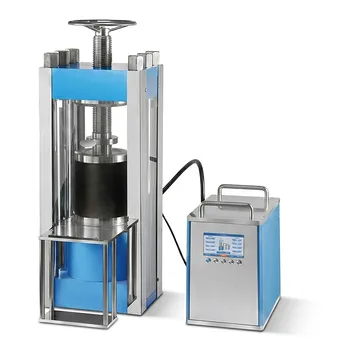
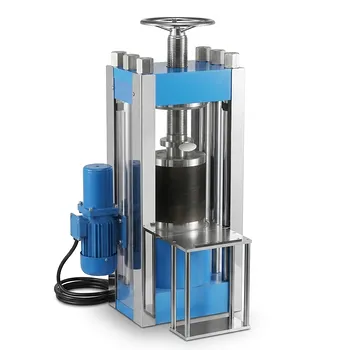
Operating a laboratory hot press requires strict adherence to safety protocols to prevent severe thermal and mechanical injuries. The most critical precautions include wearing heat-resistant personal protective equipment (PPE), strictly avoiding contact with moving components to prevent crushing, ensuring proper electrical grounding, and maintaining adequate ventilation to manage hazardous fumes.
Core Takeaway Safe operation relies on a triad of discipline: rigid adherence to temperature and pressure limits, the exclusive use of the machine by trained personnel, and a commitment to regular maintenance to prevent catastrophic mechanical failure.
Mitigating Physical and Environmental Risks
Thermal Protection
The high temperatures required for pressing create an immediate burn hazard. Operators must wear heat-resistant gloves whenever interacting with the machine. Avoid touching hot surfaces, particularly the platens, even after the active cycle is complete.
Crush Hazard Prevention
Laboratory presses exert tremendous force. You must keep hands and all body parts strictly clear of moving components while the machine is active. Utilizing safety guards and flat pressing surfaces adds a necessary layer of protection against accidental crushing injuries.
Chemical and Air Quality Safety
Heating materials often releases volatile byproducts. You must ensure adequate ventilation in the operating area to disperse any fumes. If handling specific chemicals like potassium bromide (KBr) powder, standard PPE must include safety glasses and chemical-resistant gloves.
Operational Protocols and Limits
Respecting Machine Limits
Never exceed the manufacturer's designed temperature and pressure limits. Pushing the machine beyond its rated capacity risks catastrophic failure of the frame or hydraulic components.
The "Trained Eyes Only" Rule
Only trained personnel should operate the device. An untrained user may not recognize subtle signs of failure or understand the specific start-up and shut-down sequences required for safety.
Electrical Grounding and Emergency Stops
Ensure the equipment is properly grounded to prevent electrical shock. Furthermore, every operator must know the exact location and function of the emergency stop button before initiating a cycle.
Supervision Requirements
Never leave the machine unattended during operation. If a hydraulic leak occurs or temperature controls fail, an operator must be present to cut power immediately.
The Critical Role of Maintenance
Hydraulic System Integrity
Regularly inspect the press for leaking hoses, seals, or cracks. Hydraulic fluids degrade over time and must be replaced with the correct oil type to prevent pressure failures or combustion risks.
Component Inspection and Lubrication
Check for excessive vibration and keep working parts clean and lubricated. Verify that heating elements and temperature sensors are functioning correctly, as faulty sensors can lead to dangerous overheating.
Calibration and Cleanliness
Periodically calibrate temperature and pressure sensors to ensure the readings on the display match reality. Keep the platen surfaces clean to ensure consistent heat transfer and keep the surrounding area dry to reduce slip and electrical hazards.
Common Pitfalls and Trade-offs
Pressure vs. Force Confusion
A common error is confusing pressure readings with applied force. If your press only displays pressure, you must convert this value to force using the effective surface area of the internal ram. Failing to do so can result in applying significantly more force than intended, endangering the operator and the sample.
The Risk of Uneven Loading
To ensure safety and accurate results, all sample slabs must be of the same size and shape. Broken or uneven slabs can cause side-loading on the ram. This uneven stress can damage the press mechanics and create unpredictable structural failures under high loads.
Making the Right Choice for Your Goal
- If your primary focus is Personnel Safety: Prioritize the use of safety guards, heat-resistant PPE, and strict "hands-off" protocols during the compression cycle.
- If your primary focus is Equipment Longevity: Adhere to a rigid schedule of hydraulic fluid replacement, lubrication, and leak inspection.
- If your primary focus is Experimental Accuracy: Ensure platen cleanliness, verify sample uniformity, and regularly calibrate force and temperature sensors.
Treat the laboratory press with the respect due to high-energy equipment; complacency is the leading cause of preventable laboratory accidents.
Summary Table:
| Safety Category | Essential Precautions & Actions |
|---|---|
| Thermal Protection | Wear heat-resistant gloves; avoid platen contact during/after cycles. |
| Mechanical Safety | Keep hands clear of moving parts; use safety guards; avoid uneven loading. |
| Environment | Ensure adequate ventilation for fumes; maintain proper electrical grounding. |
| Operational Limits | Never exceed rated pressure/temperature; trained personnel only. |
| Maintenance | Regular hydraulic leak inspections; calibrate sensors; lubricate moving parts. |
Secure Your Lab with Professional Pressing Solutions
Don’t compromise on safety or precision. KINTEK specializes in comprehensive laboratory pressing solutions designed with advanced safety features and robust engineering. Whether you require manual, automatic, heated, or multifunctional models—including glovebox-compatible and isostatic presses for battery research—we provide the expertise to keep your team safe and your results accurate.
Ready to upgrade your laboratory safety and efficiency?
Contact KINTEK Today for Expert Guidance
Related Products
- Laboratory Split Manual Heated Hydraulic Press Machine with Hot Plates
- 24T 30T 60T Heated Hydraulic Lab Press Machine with Hot Plates for Laboratory
- Heated Hydraulic Press Machine with Heated Plates for Vacuum Box Laboratory Hot Press
- Automatic Hydraulic Hot Press with Large Plate and Precision Temperature Control for Advanced Material Sample Preparation and Industrial Research
- Laboratory Manual Heated Hydraulic Press Machine with Hot Plates
People Also Ask
- Why is a laboratory hydraulic press with heating plates required for PLA/TEC films? Achieve Precise Sample Integrity
- Why reduce load when applying composite strengthening tabs? Protect Specimen Integrity and Data Accuracy
- What role does a laboratory heated hydraulic press play in LTCC? Essential for High-Density Ceramic Lamination
- Why is a laboratory heated hydraulic press required? Ensure Precise Vulcanization for NBR/EPDM Nanocomposites
- What is the primary function of a laboratory heated hydraulic press? Mastering Thermoplastic Carbon Fiber Composites