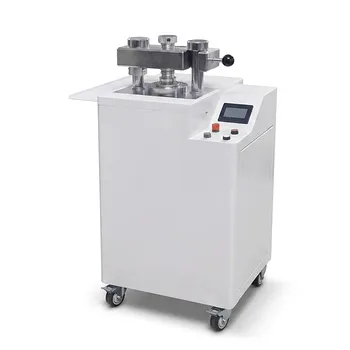
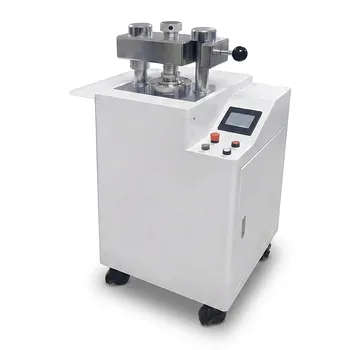
XRF sample preparation relies on three specific pelletizing methods, each designed to address different material properties. You can press the raw powder by itself, mix the powder with a binding agent (such as cellulose wax), or press the sample into an aluminum cup for external structural support.
The goal of pressing a pellet is to eliminate void spaces and create a homogeneous surface, which significantly enhances the accuracy and sensitivity of the analysis, especially for trace elements. While pressing pure powder offers the highest signal intensity, most samples require a binder or a supporting cup to ensure the pellet remains durable and stable during the analysis.
The Three Primary Pressing Methods
Method 1: Pure Powder Pressing
This is the most direct approach, where the sample powder is pressed without any additives.
This method is ideal when you need to avoid sample dilution, which helps maintain high signal intensities.
However, it is only viable for materials that naturally adhere to themselves under pressure. If the material does not bind well, the pellet will crumble or stratify.
Method 2: Pressing with a Binder
For samples that are brittle, hard, or lack natural cohesion—such as many geological materials—mixing the powder with a binding agent is essential.
Common binders include cellulose wax or boric acid. The binder improves particle flow and adhesion, resulting in a robust, durable pellet.
This method minimizes surface irregularities, but because you are adding a non-analyte material, slight sample dilution occurs.
Method 3: Aluminum Cup Backing
In this method, the sample is pressed into a pre-formed aluminum cup.
The cup acts as a physical support structure, framing the bottom and sides of the pellet.
This is an excellent strategy for samples that are cohesive enough to be pressed but too fragile to be handled or stored without a rigid backing.
Operational Considerations for XRF
Standard Dimensions
For XRF instrumentation, pellets are typically pressed to a diameter of 32 mm or 40 mm.
This size ensures there is sufficient surface area for the X-ray beam to interrogate the sample effectively.
Pressure and Load Requirements
Applying the correct load is critical for density and reproducibility.
A load of 10 to 20 tonnes is generally sufficient for standard samples in a 40 mm die. However, difficult or resistant samples may require loads of up to 40 tonnes to achieve the necessary compaction.
Understanding the Trade-offs
Dilution vs. Durability
Using a binder makes your pellet mechanically stronger and less likely to break inside the instrument.
However, the binder dilutes the concentration of the elements of interest. While this improves the physical pellet, it may slightly reduce the intensity of the X-ray signal compared to a pure powder pellet.
Homogeneity vs. Preparation Time
Pressed pellets offer a massive advantage over loose powders by eliminating void spaces and particle size effects.
However, this requires the sample to be ground to a very fine powder before pressing. If the grinding is insufficient, the pellet will not be homogeneous, leading to reduced precision and potential segregation of elements.
Making the Right Choice for Your Goal
To select the correct pressing method, assess the physical characteristics of your sample material.
- If your primary focus is maximum signal intensity: Attempt to press the pure powder first to avoid dilution, provided the sample adheres well.
- If your primary focus is sample durability: Use a cellulose wax binder to ensure the pellet remains solid and does not flake or crack during handling.
- If your primary focus is handling fragile samples: Press the sample into an aluminum cup to provide a permanent rigid backing for storage and analysis.
By matching the pressing method to the structural needs of your material, you ensure both the physical integrity of the sample and the analytical accuracy of your results.
Summary Table:
| Method | Best For | Key Advantage | Trade-off |
|---|---|---|---|
| Pure Powder | Self-adhering materials | Maximum signal intensity | Fragile; prone to crumbling |
| With Binder | Brittle/hard materials | High durability & cohesion | Slight sample dilution |
| Aluminum Cup | Fragile samples | Permanent structural support | Requires specialized consumables |
| Parameters | 32mm or 40mm Pellets | 10 to 40 Tonne Load Range | Fine grinding required |
Optimize Your XRF Analysis with KINTEK
Precision in X-ray Fluorescence starts with a flawless sample pellet. At KINTEK, we specialize in comprehensive laboratory pressing solutions designed for researchers who demand accuracy and reproducibility. Whether you are conducting battery research or geological assays, our diverse range of equipment—including manual, automatic, heated, multifunctional, and glovebox-compatible models, as well as cold and warm isostatic presses—provides the perfect load control for your specific materials.
Enhance your lab’s efficiency and data integrity today. Contact our specialists to find the ideal pressing solution tailored to your research goals.
Related Products
- Automatic XRF Pellet Press for Laboratory Spectrometry Sample Preparation
- Automatic Fluorescence Sample Preparation Press 40 Ton Lab Pellet Press for XRF Analysis
- XRF KBR Plastic Ring Lab Powder Pellet Pressing Mold for FTIR
- Lab XRF Boric Acid Powder Pellet Pressing Mold for Laboratory Use
- XRF KBR Steel Ring Lab Powder Pellet Pressing Mold for FTIR
People Also Ask
- How can contamination occur during the preparation of pressed pellets for XRF analysis? Expert Prevention Guide
- How does the sample material influence the required pressing load for making an XRF pellet? Find the Optimal Pressure
- What are the advantages of preparing a sample as a dense pellet for XRF? Unlock High-Precision Trace Element Analysis
- What is the primary purpose of using an automatic pellet press? Achieve Precise Geopolymer Analysis Results
- What are the advantages of automating the pellet pressing process? Boost Lab Throughput and Data Consistency