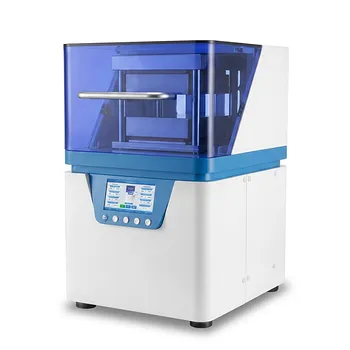
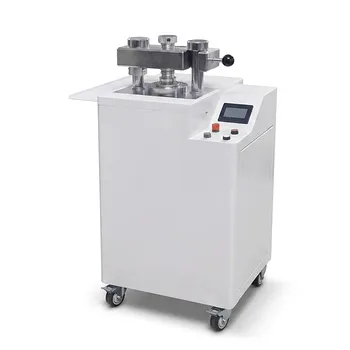
Electric hydraulic presses utilize an electric motor to automate the compression process, replacing manual pumping with consistent, motor-driven force. This configuration serves users who require the high force output of a hydraulic system combined with the convenience and repeatability of automated operation.
Core Takeaway While manual presses rely on operator effort, electric hydraulic presses prioritize process consistency and workflow efficiency. Their value lies in programmable features that remove human error, making them the standard for high-volume sample preparation and precision industrial applications.
Automation and Efficiency
The primary advantage of an electric hydraulic press is the shift from manual labor to motorized automation.
Motor-Driven Operation
Unlike manual presses that require physical effort to generate pressure, these units use an electric motor. This automation significantly reduces operator fatigue, particularly in facilities producing large volumes of identical products or pellets.
Streamlined Workflow
Automated operation allows for a faster throughput. Operators can initiate a cycle and attend to other tasks, increasing overall laboratory or manufacturing efficiency.
Precision Control and Programmability
Electric hydraulic presses distinguish themselves through advanced control features, often managed via LED touchscreens. This digital interface provides a level of precision that manual gauges cannot match.
Custom Programmable Cycles
Users can program specific pressing cycles tailored to their material needs. This includes setting precise timer functions, ensuring that pressure is held for the exact duration required without operator intervention.
The Auto Top-Up Feature
A critical feature for material testing is the "auto top-up" function. If a sample yields or relaxes under pressure, the system detects the drop and automatically re-engages the motor to maintain a consistent load.
Step Functionality
For delicate operations, these presses offer a "step function." This allows for a gradual increase in load, applying pressure in increments rather than a sudden spike, which is essential for creating defect-free thin films or sensitive laminates.
Applications and Versatility
The combination of high force and programmable logic makes these presses suitable for complex technical tasks.
specialized Sample Preparation
The programmable consistency is ideal for industrial XRF (X-ray fluorescence) sample preparation. Identical pressure and dwell times ensure that the analysis pellets are uniform, leading to more accurate data.
Material Engineering
Beyond basic crushing, these features support hot embossing, lamination, and polymer film creation. The ability to control the rate of pressure application ensures high-quality results in these sensitive processes.
Understanding the Trade-offs
While electric hydraulic presses offer superior control, there are operational considerations to keep in mind.
Power Dependency
Unlike manual presses, which are completely standalone, these units require a reliable electrical power source. This limits their portability and makes them dependent on grid stability.
Complexity and Maintenance
The addition of motors, electronic sensors, and touchscreens introduces more components than a simple manual system. While durable, this complexity may require more specialized maintenance over the lifespan of the machine compared to a purely mechanical alternative.
Making the Right Choice for Your Goal
To determine if an electric hydraulic press is the right investment for your facility, consider your specific output requirements.
- If your primary focus is high-volume sample production: The automated motor and programmable cycles are essential for reducing fatigue and ensuring high throughput.
- If your primary focus is data consistency and precision: The auto top-up and step functions are critical for eliminating operator variability and ensuring identical results across every test.
- If your primary focus is simple, occasional compression: A manual press may suffice, as the advanced features of an electric model may exceed your basic needs.
The electric hydraulic press is not just a tool for applying force; it is an instrument for ensuring repeatability in your most critical processes.
Summary Table:
| Feature | Key Benefit | Typical Application |
|---|---|---|
| Motorized Operation | Eliminates manual labor and operator fatigue | High-volume industrial production |
| Programmable Cycles | Ensures precise dwell times and repeatability | XRF sample pellet preparation |
| Auto Top-Up | Maintains constant load if samples relax | Material testing & yielding studies |
| Step Function | Gradual pressure increase for delicate tasks | Thin films & sensitive laminates |
| Digital Interface | High-precision control via LED touchscreens | Research and development labs |
Optimize Your Lab Workflow with KINTEK Precision
Ready to elevate your sample preparation with unmatched consistency? KINTEK specializes in comprehensive laboratory pressing solutions, offering manual, automatic, heated, multifunctional, and glovebox-compatible models, as well as cold and warm isostatic presses widely applied in battery research.
Whether you need to eliminate operator error with programmable automation or require specialized pressure control for advanced materials, our team is here to help you select the perfect system.
Contact KINTEK today to find your ideal pressing solution!
Related Products
- Laboratory Hydraulic Split Electric Lab Pellet Press
- Automatic Hydraulic Heat Press Machine with Multi Stage Programmable Control and Integrated Water Cooling Plate Size 180x180mm
- Automatic Hydraulic Hot Press with Large Plate and Precision Temperature Control for Advanced Material Sample Preparation and Industrial Research
- Automatic Laboratory Hydraulic Press Lab Pellet Press Machine
- Automatic Heated Hydraulic Lab Press with Programmable Touch Screen Controls and Precision Temperature Regulation
People Also Ask
- What are the emerging trends in the design and materials of lab pellet presses? Modernize Your Lab Efficiency
- How do lab pellet presses support customization and flexibility? Optimize Your Sample Prep for Any Material
- What are common lab pellet press issues? Expert Troubleshooting Guide for Reliable Material Research
- What are the common operational types of lab pellet presses? Choosing the Right Manual, Automatic, or Hydraulic System
- Why use a laboratory pellet press for solid-state battery evaluation? Ensure Accuracy in Interface Stability Testing