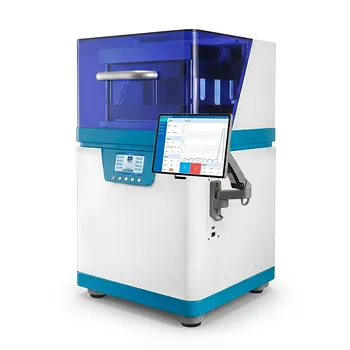
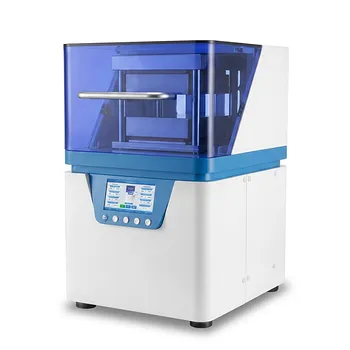
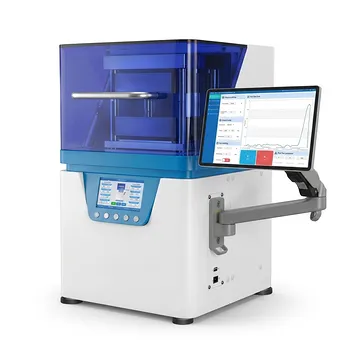
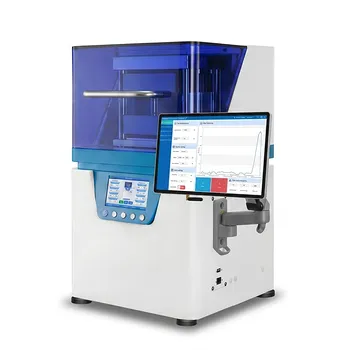
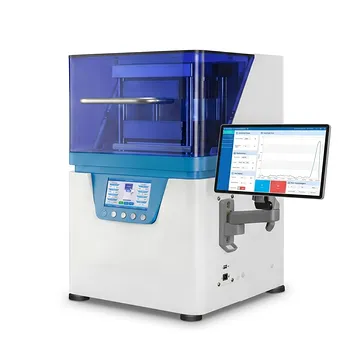
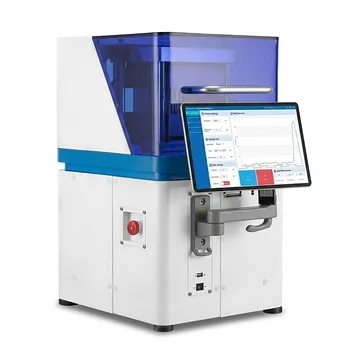
The C-frame hydraulic press is defined by its distinctive, single-column "C" shaped structure. This integral welded design provides the necessary rigidity to maintain high precision and stability, while its open configuration creates a spacious operating area that maximizes accessibility for handling large or complex materials.
The C-frame design solves the specific challenge of balancing structural stiffness with operator accessibility. It delivers the rigidity required for accurate laboratory and industrial tasks while occupying minimal floor space and allowing unrestricted access to the work area.
Structural Integrity and Precision
The Power of the Integral Welded Structure
The core of the C-frame press is its integral welded fuselage. This construction method ensures the frame remains sufficiently rigid, resisting deformation under pressure.
Maintaining Accuracy Under Load
Rigidity is not just about durability; it is essential for accuracy and stability. By preventing frame flex, the press ensures that force is applied consistently, leading to repeatable and precise results.
Guide Performance and Speed
Beyond static strength, the single-column design supports excellent guide performance. This contributes to the machine's overall speed and operational precision, making it a reliable tool for consistent workflows.
Operational Efficiency and Accessibility
Maximizing the Operation Space
The most visible advantage of the C-frame construction is its open design. Unlike enclosed four-post presses, the C-frame leaves three sides accessible, providing a surprisingly large operation space relative to the machine's size.
Streamlining Material Handling
This open architecture significantly enhances efficiency. Operators can easily load, unload, and manipulate larger or awkwardly shaped samples without navigating around obstructive support columns.
Reducing Physical Footprint
Despite offering a spacious work area, the machine itself is compact. The single-column structure requires minimal floor space, making it an ideal solution for laboratories or facilities where real estate is at a premium.
Understanding the Trade-offs
Application Suitability
While the C-frame is sufficiently rigid for many applications, the single-column design is best suited for small to medium operations. For extremely high-tonnage applications requiring absolute zero deflection, a 4-column design might be necessary, though it would sacrifice accessibility.
Structural Symmetry
The "C" shape is inherently asymmetrical compared to a box frame. While the welded structure compensates for this to ensure stability, operators should ensure their specific application aligns with the capacity limits of a single-column design to maintain peak accuracy.
Making the Right Choice for Your Goal
To determine if a C-frame hydraulic press is the correct tool for your needs, evaluate your specific constraints:
- If your primary focus is workflow efficiency: The open design allows for faster sample manipulation and easier access, significantly speeding up repetitive tasks.
- If your primary focus is space optimization: The compact, single-column footprint offers high-performance pressing capabilities without dominating your floor plan.
- If your primary focus is versatile testing: The combination of rigidity and open access makes this ideal for handling a wide variety of complex sample shapes and sizes.
The C-frame press represents a smart engineering compromise, offering a high degree of stiffness and precision without sacrificing the usability required for a dynamic work environment.
Summary Table:
| Feature | Advantage | Benefit |
|---|---|---|
| Integral Welded Frame | High Rigidity & Stability | Ensures repeatable accuracy under load |
| Open "C" Shape | Three-sided Accessibility | Easy handling of large or complex samples |
| Single-column Design | Compact Footprint | Maximizes work area while saving floor space |
| High-speed Guides | Smooth Operation | Improves workflow speed and process precision |
Elevate Your Lab's Productivity with KINTEK Pressing Solutions
Are you looking to optimize your research workflow? KINTEK specializes in a comprehensive range of laboratory pressing solutions tailored for precision and ease of use. Whether you need the accessibility of a C-frame press, the power of an automatic system, or the specialized capabilities of isostatic and glovebox-compatible models, we have the expertise to support your battery research and material science goals.
Why choose KINTEK?
- Versatile Range: From manual to multifunctional heated presses.
- Precision Engineering: Designed for high-tonnage accuracy and long-term durability.
- Expert Support: Our team helps you select the right equipment to minimize your lab footprint while maximizing output.
Contact KINTEK Today for a Professional Consultation
Related Products
- Automatic Hydraulic Hot Press with Large Plate and Precision Temperature Control for Advanced Material Sample Preparation and Industrial Research
- Automatic Hydraulic Heat Press Machine with Multi Stage Programmable Control and Integrated Water Cooling Plate Size 180x180mm
- Automatic Large Format Laboratory Heated Hydraulic Press 400x400mm Plate Capacity
- Laboratory Hydraulic Press Lab Pellet Press Machine for Glove Box
- Automatic Heated Hydraulic Lab Press 120x120mm Plate Fully Automated Material Research Press
People Also Ask
- What are the specific features and applications of hydraulic hot press machines? Precision Solutions for Modern Labs
- How does an automatic hydraulic press operate? Achieve Precision and Consistency in Lab Pelleting
- What are the advantages and common applications of an automatic hydraulic press? Elevate Your Lab's Precision
- What is the technical significance of setting a precise dwell time? Achieve Peak Material Density and Stability
- When is an automatic hydraulic press more suitable than a manual press? Scale Your Lab with Precision & Speed