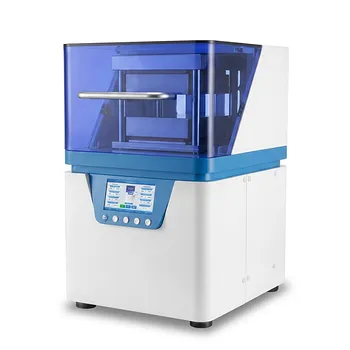
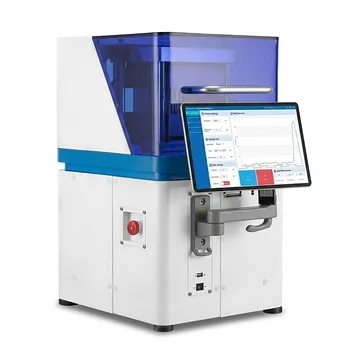
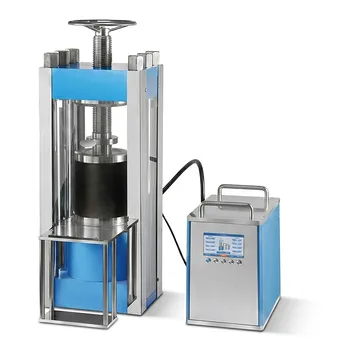
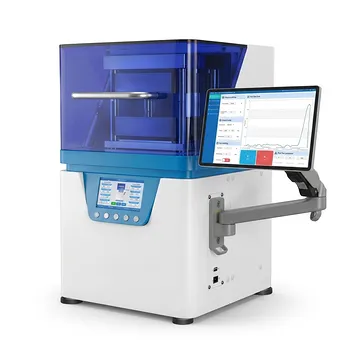
A hot press machine is defined by its ability to apply precise heat and pressure simultaneously through a rigid, high-tech framework. Its core features include a stable four-column, three-plate structure, pulse heating technology with a rapid sampling frequency of 0.1 seconds, and stroke-adjustable cylinders for accurate positioning. These machines are further distinguished by advanced operational controls, including multi-stage temperature profiles, real-time monitoring curves, and integrated CCD vision systems for precise alignment.
The true value of a hot press machine lies in its capacity to resolve workpiece deformation through the synchronization of high pressure and low temperature. By combining robust hydraulic force with micro-second thermal regulation, it ensures consistent bonding and shaping for complex manufacturing tasks.
Structural Integrity and Precision Mechanisms
The Four-Column Framework
The foundation of a high-quality hot press is typically a four-column and three-plate structure. This design provides exceptional rigidity, ensuring that the machine remains stable under high pressure and minimizing the risk of mechanical deflection.
Stroke-Adjustable Cylinders
To achieve accurate positioning, these machines utilize stroke-adjustable cylinders. This feature allows operators to fine-tune the distance the press travels, ensuring the pressure is applied exactly where needed without damaging the workpiece.
Indexing and Alignment
Advanced models incorporate a silicone belt indexing mechanism to move products smoothly through the process. Additionally, a CCD (Charge-Coupled Device) vision system is often integrated to ensure accurate alignment of parts before pressure is applied, which is critical for complex assemblies.
Thermal Control and Monitoring
Pulse Heating Technology
Precise temperature control is achieved through pulse heating technology. This system utilizes a high sampling frequency—typically checking the temperature every 0.1 seconds—to make rapid adjustments and maintain exact heat levels.
Multi-Stage Temperature Control
The machine allows for multi-stage temperature rise control. This enables the creation of specific heating profiles where temperature increases in controlled steps rather than a single spike, which is essential for materials sensitive to thermal shock.
Real-Time Data Visualization
Operators can monitor the bonding or shaping process through a real-time temperature curve display. This feature provides immediate visual feedback, allowing for quick detection of any inconsistencies in the heating cycle.
Operational Versatility
Diversified Working Modes
Hot press machines are designed to fit various production workflows. They offer multiple platform configurations, including single working platforms, rotating platforms for continuous loading, or left-right moving platforms to accommodate different operational speeds and part sizes.
Power Sources
While the control is electronic, the force is typically generated through a combination of oil pressure (hydraulics) and compressed air. This hybrid approach delivers the high, balanced pressure required for industrial applications.
Safety and Protection Systems
Manual Safety Interlocks
Operator safety is prioritized through the inclusion of two-hand start buttons. This forces the operator to have both hands away from the crushing zone during the activation cycle.
Emergency Mechanisms
Emergency stop switches are prominently placed to halt operations instantly in case of a malfunction.
Physical and Sensor Barriers
The machine workspace is enclosed by three-sided sealed safety doors to contain heat and debris. Furthermore, safety hand gratings (light curtains) detect if an object or hand breaches the safety zone, automatically stopping the machine.
Understanding the Trade-offs
Complexity of Maintenance
While the combination of hydraulics, pneumatics, and precision electronics offers high performance, it increases maintenance complexity. Hydraulic systems require monitoring for oil leaks and pressure consistency, while the pulse heating sensors need regular calibration to maintain that 0.1s accuracy.
Setup Time vs. Throughput
The versatility of multi-stage temperature controls and adjustable strokes allows for high precision but can increase setup time. Rapid production relies on optimizing these settings; incorrect configuration can lead to "short film pressure time" issues or inadequate bonding if the thermal profile doesn't match the material's thermodynamics.
Making the Right Choice for Your Goal
Selecting the right feature set depends on your specific manufacturing bottleneck.
- If your primary focus is Assembly Precision: Prioritize machines with CCD vision systems and pulse heating, as these ensure exact alignment and thermal regulation for delicate electronics or bonding.
- If your primary focus is Production Speed: Look for rotating or left-right moving platforms, which allow for simultaneous loading and processing to maximize throughput.
- If your primary focus is Structural Bonding: Ensure the machine features the four-column structure and stroke-adjustable cylinders to guarantee uniform pressure application across large surface areas.
Ultimately, the most effective hot press machine is one that balances rigid mechanical force with the sensitivity of real-time thermal monitoring.
Summary Table:
| Feature Category | Key Component | Primary Benefit |
|---|---|---|
| Structural | Four-Column / Three-Plate | High rigidity and mechanical stability under pressure |
| Heating | Pulse Heating (0.1s Sampling) | Micro-second thermal regulation and precise control |
| Alignment | CCD Vision System | Accurate positioning for complex assemblies |
| Mechanism | Stroke-Adjustable Cylinders | Fine-tuned travel distance for exact pressure application |
| Safety | Light Curtains & Interlocks | Enhanced operator protection and emergency halting |
Optimize Your Lab Pressing Solutions with KINTEK
Elevate your research and production standards with KINTEK’s advanced laboratory pressing technology. Whether you are conducting sensitive battery research or high-pressure material synthesis, our comprehensive range of equipment is designed to deliver unmatched precision.
Our value to you:
- Versatile Range: From manual and automatic to heated and multifunctional models.
- Specialized Systems: Glovebox-compatible designs and high-performance cold/warm isostatic presses.
- Precision Engineering: Built for uniform pressure and stable thermal profiles.
Ready to find the perfect fit for your application? Contact us today to speak with a specialist and discover how our expertise can drive your results forward.
Related Products
- Automatic High Temperature Heated Hydraulic Press Machine with Heated Plates for Lab
- Automatic Hydraulic Heat Press Machine with Multi Stage Programmable Control and Integrated Water Cooling Plate Size 180x180mm
- Heated Hydraulic Press Machine with Heated Plates for Vacuum Box Laboratory Hot Press
- Automatic Heated Hydraulic Press Machine with Hot Plates for Laboratory
- Laboratory Split Manual Heated Hydraulic Press Machine with Hot Plates
People Also Ask
- Function of a Laboratory Hydraulic Press with Heated Platens in SSE? Enhance Battery Density & Conductivity
- What are the requirements for electrode pressing with high-viscosity ionic liquids like EMIM TFSI? Optimize Performance
- How does a laboratory heated hydraulic press facilitate PBN sample prep for WAXS? Achieve Precise X-Ray Scattering
- What are the industrial applications of heated hydraulic presses? Master Heat & Force for Precision Manufacturing
- Why is a laboratory hydraulic press with heating plates required for PLA/TEC films? Achieve Precise Sample Integrity