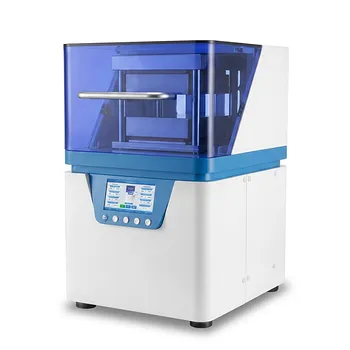
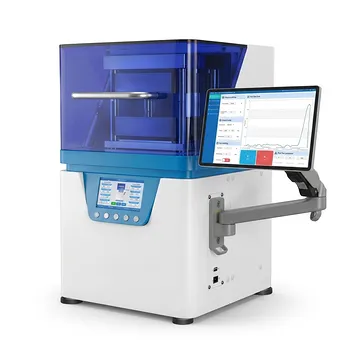
The primary advantages of hydraulic press machines lie in their unique ability to deliver immense force with high precision, consistency, and minimal physical effort. These machines are favored in both industrial and laboratory settings because they offer a cost-effective, compact solution for applying uniform pressure, ensuring repeatability in critical tasks like sample preparation and material forming.
The true value of a hydraulic press is not just its power, but its control and repeatability. By maintaining consistent pressure parameters, these machines eliminate variability in testing and production, ensuring that every cycle yields the same high-quality result.
Precision and Process Consistency
Achieving Uniform Results
The most critical advantage of a hydraulic press is the ability to apply consistent pressure throughout the operation. In laboratory settings, this repeatability is vital; it ensures that sample production is uniform, which directly correlates to reliable testing data.
Precise Control
Unlike manual alternatives, hydraulic systems allow operators to fine-tune the force applied. You can adjust the pressure to meet specific requirements, providing the delicate control needed for sensitive materials or the raw power required for heavy-duty crushing.
Simultaneous Heat and Pressure
For specialized applications, such as hydraulic hot presses, the system provides a dual advantage. By applying heat and pressure simultaneously, these machines reduce overall processing time and improve the bonding quality of the final product.
Efficiency and Operational Versatility
High Force with Minimal Effort
Hydraulic presses are designed to exert a large amount of force while requiring significantly less physical effort from the operator. This reduction in manual strain improves operator ergonomics and allows for sustained usage without fatigue.
Speed and Throughput
These machines significantly increase process speed, particularly in high-volume environments. In hand-fed systems, the design facilitates faster sample switching, making them highly efficient for repetitive preparation tasks.
Broad Application Range
The versatility of hydraulic presses is unmatched. They are capable of handling a wide variety of materials—from metals and plastics to rubber—and can be configured to bend, straighten, stamp, or flatten billets into desired shapes.
Design and Economic Benefits
Cost-Effectiveness
Despite their advanced capabilities, hydraulic presses are often a cost-effective option for laboratories and workshops. They generally require minimal maintenance, which lowers the long-term total cost of ownership.
Compact Footprint
Many models, including the "mini press" variants, feature a compact design. This allows facilities with limited floor space to implement high-force capabilities without dedicating large areas to machinery.
Accessible Workspace
Variants like the C-frame press offer specific structural advantages. Their design provides a large, open operational space, making it easier for operators to load materials and access the workspace compared to enclosed frame designs.
Understanding the Trade-offs
Maintenance of Hydraulic Systems
While generally low-maintenance, these machines rely on hydraulic fluid and pumps. To ensure longevity and prevent leaks, you must adhere to a regular maintenance schedule to monitor seals, hoses, and fluid levels.
Safety Considerations
The immense force generated by these machines presents inherent risks. While modern units are designed with safety features to prevent overloading, operators must remain vigilant and strictly follow safety protocols to prevent injury during high-pressure operations.
Making the Right Choice for Your Goal
To maximize the benefits of a hydraulic press, align the machine's specific strengths with your operational targets.
- If your primary focus is Laboratory Testing: Prioritize a machine that offers repeatability and precision control to ensure your experimental data remains valid and consistent.
- If your primary focus is High-Volume Production: Look for a system that emphasizes speed and ease of sample switching to maximize your daily throughput.
- If your primary focus is Material Bonding: Select a hydraulic hot press to leverage the efficiency of simultaneous heating and compression.
By selecting the right configuration, you transform raw hydraulic power into a precision tool that drives predictable, high-quality outcomes.
Summary Table:
| Advantage Category | Key Feature | Laboratory & Industrial Benefit |
|---|---|---|
| Precision | Consistent Pressure | Ensures high repeatability and reliable testing data. |
| Control | Fine-tuned Force | Allows delicate handling of sensitive materials. |
| Efficiency | Minimal Physical Effort | Improves ergonomics and enables high-speed throughput. |
| Design | Compact Footprint | Ideal for facilities with limited laboratory space. |
| Versatility | Thermal Integration | Simultaneous heat and pressure for superior bonding. |
Elevate Your Laboratory Precision with KINTEK
Maximize your research accuracy with KINTEK’s comprehensive laboratory pressing solutions. Whether you are working on battery research or advanced material forming, our range of manual, automatic, heated, and multifunctional presses—including glovebox-compatible and isostatic models—delivers the uniform pressure and repeatability your work demands.
Why choose KINTEK?
- Tailored Solutions: From mini presses for tight spaces to cold/warm isostatic presses.
- Expert Support: Specialized equipment designed for the rigorous needs of modern scientists.
- Unmatched Durability: High-force capabilities with minimal maintenance requirements.
Ready to transform your sample preparation? Contact KINTEK today to find your perfect press!
Related Products
- Automatic Hydraulic Hot Press with Large Plate and Precision Temperature Control for Advanced Material Sample Preparation and Industrial Research
- Automatic Hydraulic Heat Press Machine with Multi Stage Programmable Control and Integrated Water Cooling Plate Size 180x180mm
- Automatic High Temperature Heated Hydraulic Press Machine with Heated Plates for Lab
- Automatic Heated Hydraulic Lab Press with Programmable Touch Screen Controls and Precision Temperature Regulation
- Manual Heated Hydraulic Lab Press with Integrated Hot Plates Hydraulic Press Machine
People Also Ask
- What are the specific features and applications of hydraulic hot press machines? Precision Solutions for Modern Labs
- How does an automatic hydraulic press operate? Achieve Precision and Consistency in Lab Pelleting
- What are the advantages and common applications of an automatic hydraulic press? Elevate Your Lab's Precision
- What is the technical significance of setting a precise dwell time? Achieve Peak Material Density and Stability
- When is an automatic hydraulic press more suitable than a manual press? Scale Your Lab with Precision & Speed