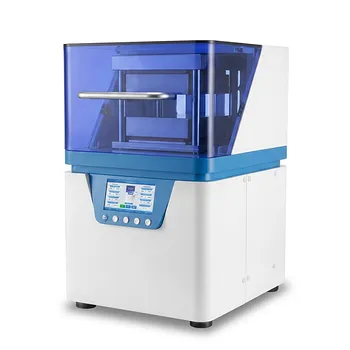
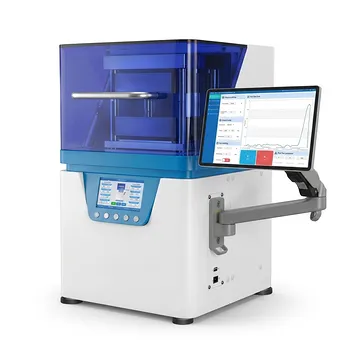
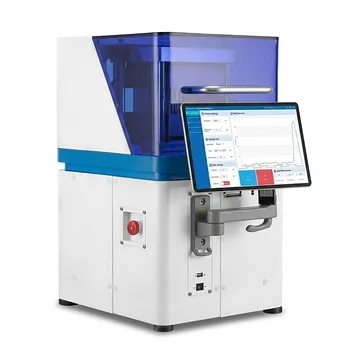
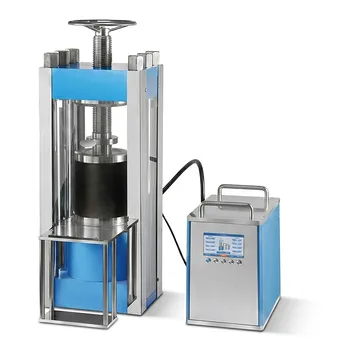
Vacuum hot pressing creates superior material integrity by combining thermal energy and mechanical pressure within a controlled, gas-free environment. The primary advantage of this method is the elimination of trapped gases, which directly results in significantly improved material density, reduced porosity, and enhanced performance characteristics such as electrical conductivity, thermal stability, and mechanical strength.
Core Insight: The definitive value of vacuum hot pressing lies in its ability to remove atmospheric interference during the sintering process. By eliminating the gas phase while applying pressure, it achieves a level of densification and microstructural uniformity that traditional pressureless sintering cannot match, all while maintaining a lower cost profile than isostatic alternatives.
Achieving Superior Material Properties
Elimination of Gas-Induced Defects
The vacuum environment is the critical differentiator in this process. By evacuating the chamber, the process removes gases that would otherwise become trapped within the material.
This elimination prevents the formation of voids and pores. The result is a highly dense, compact polycrystalline structure with superior mechanical integrity.
Enhanced Conductivity and Stability
Because the material has fewer voids and tighter grain boundaries, physical properties are optimized.
The reduction in porosity creates a more continuous material path. This directly translates to better electrical conductivity and higher thermal stability compared to loosely sintered materials.
Prevention of Oxidation
High temperatures usually invite oxidation, which degrades material quality. The vacuum environment effectively creates a shield against this.
This allows for the processing of oxygen-sensitive materials like specific metals and ceramics without compromising their chemical purity or surface finish.
Operational Efficiency and Precision
Cost-Effective Densification
While high-performance materials often require expensive processing, vacuum hot pressing offers a distinct economic advantage.
The initial equipment investment is significantly lower compared to Hot Isostatic Pressing (HIP). It provides a high-quality densification solution that balances performance requirements with capital expenditure.
Uniform Heating and Control
Modern vacuum hot press systems often integrate IT technology for precise management of the densification process.
This ensures uniform heating across the workpiece, limiting longitudinal heat flow. This thermal uniformity is essential for minimizing internal stresses and ensuring consistent properties throughout the material.
Near-Net Shape Manufacturing
The combination of heat and pressure allows for the formation of complex geometries with high precision.
This capability enables the production of intricate shapes that require minimal post-processing. This reduces material waste and machining costs, making it ideal for components with tight tolerances.
Understanding the Trade-offs
Uniaxial vs. Isostatic Pressure
It is important to distinguish between Vacuum Hot Pressing and Hot Isostatic Pressing (HIP).
Vacuum hot pressing typically applies pressure in a single direction (uniaxial). While effective for many shapes, it may not achieve the extreme omnidirectional densification of HIP.
HIP applies high-pressure gas from all directions, capable of closing residual micro-pores to achieve densities over 98%. However, this comes at a higher cost and complexity than vacuum hot pressing.
Making the Right Choice for Your Goal
To determine if vacuum hot pressing is the correct solution for your specific application, consider the following decision drivers:
- If your primary focus is Material Purity: The vacuum environment is essential for preventing oxidation and eliminating gas inclusions in sensitive alloys or ceramics.
- If your primary focus is Cost-Efficiency: Vacuum hot pressing offers a lower capital investment than Hot Isostatic Pressing (HIP) while still delivering superior density over standard sintering.
- If your primary focus is Geometry: This method is ideal for producing intricate, near-net shapes that require tight tolerances and minimal secondary machining.
Vacuum hot pressing represents the optimal intersection of material quality, process control, and production efficiency for high-performance manufacturing.
Summary Table:
| Advantage | Key Benefit | Technical Outcome |
|---|---|---|
| Vacuum Environment | Eliminates trapped gases | Reduced porosity and zero oxidation |
| Pressure + Heat | Simultaneous application | Superior density and microstructural uniformity |
| Cost Efficiency | Lower CAPEX than HIP | High-performance densification at a lower cost |
| Precision Control | Uniform thermal management | Minimized internal stress and near-net shapes |
| Material Integrity | Enhanced physical properties | Improved electrical and thermal conductivity |
Elevate Your Material Research with KINTEK
Unlock the full potential of your materials with KINTEK’s precision laboratory pressing solutions. Whether you are advancing battery research or developing high-performance ceramics, our comprehensive range of manual, automatic, and isostatic presses ensures superior density and purity every time.
Why choose KINTEK?
- Versatile Range: From heated and multifunctional models to specialized glovebox-compatible systems.
- Expert Engineering: Tailored solutions for vacuum hot pressing, cold, and warm isostatic pressing.
- Proven Reliability: Trusted by leading research facilities for consistent, high-accuracy results.
Ready to optimize your densification process? Contact us today to find the perfect press for your lab!
Related Products
- Heated Hydraulic Press Machine with Heated Plates for Vacuum Box Laboratory Hot Press
- Heated Hydraulic Press Machine With Heated Plates For Vacuum Box Laboratory Hot Press
- Automatic Hydraulic Hot Press with Large Plate and Precision Temperature Control for Advanced Material Sample Preparation and Industrial Research
- Automatic Hydraulic Heat Press Machine with Multi Stage Programmable Control and Integrated Water Cooling Plate Size 180x180mm
- Automatic High Temperature Heated Hydraulic Press Machine with Heated Plates for Lab
People Also Ask
- How does a laboratory heated hydraulic press facilitate PBN sample prep for WAXS? Achieve Precise X-Ray Scattering
- What are the requirements for electrode pressing with high-viscosity ionic liquids like EMIM TFSI? Optimize Performance
- What are the industrial applications of heated hydraulic presses? Master Heat & Force for Precision Manufacturing
- Function of a Laboratory Hydraulic Press with Heated Platens in SSE? Enhance Battery Density & Conductivity
- How are heated hydraulic presses utilized in the preparation of thin films? Key Mechanisms and Applications