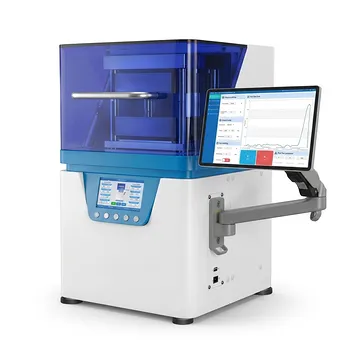
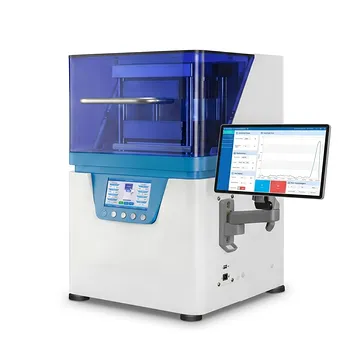
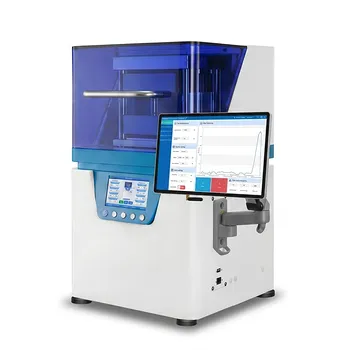
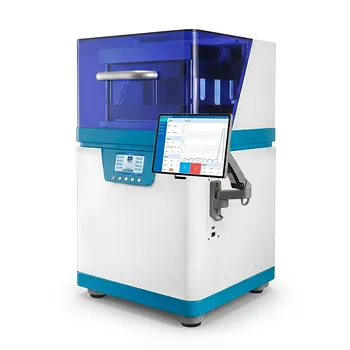
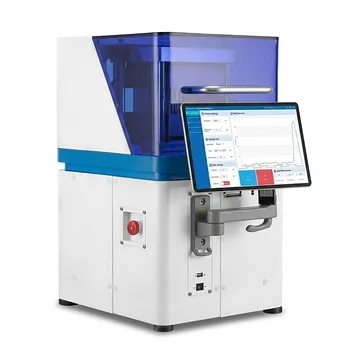
Laboratory hydraulic presses are primarily utilized for high-precision sample preparation and material testing. These versatile instruments apply controlled, high-pressure force to create uniform pellets for spectroscopic analysis (such as FTIR and XRF) and to rigorously evaluate the physical properties of materials under compression. They serve as the foundational tool for research, quality control, and development in fields ranging from pharmaceuticals to material science.
The core value of a laboratory press is not just the force it generates, but the repeatability it offers; accurate analytical data in spectroscopy relies entirely on the creation of consistent, homogenous samples.
Sample Preparation for Analytical Chemistry
Spectroscopic Pellet Creation
The most frequent application of laboratory presses is preparing solid samples for analysis. By compressing powder mixtures into solid pellets, researchers create a stable medium for spectroscopy.
FTIR Analysis
For Infrared (IR) spectroscopy, presses are used to fuse samples within a Potassium Bromide (KBr) matrix. The press creates a transparent pellet essential for accurate transmission sampling.
X-Ray Fluorescence (XRF)
In XRF spectroscopy, the press creates robust briquettes from inorganic samples. This process ensures the surface flatness and density required for high-precision elemental analysis.
Polymer Thin Films
When equipped with heated platens, hydraulic presses can compress polymer beads or chips into thin films. These films are utilized for IR transmission sampling or general physical characterization of the polymer's optical properties.
Material Characterization and R&D
Studying Material Behavior
Beyond preparation, the press itself is a testing environment. Researchers use them to observe how new materials deform, fracture, or densify under specific high-pressure conditions.
Pharmaceutical Development
In drug formulation, presses are used for pill making and establishing the compaction properties of active pharmaceutical ingredients. This is vital for determining how a drug tablet will hold together during manufacturing and transport.
Bomb Calorimetry
Presses are employed to compact samples into pellets for bomb calorimetry. This ensures the material burns evenly and completely, providing accurate measurements of the heat of combustion.
Understanding the Trade-offs
Consistency vs. Manual Effort
While manual hydraulic presses are cost-effective and compact, they rely on the operator for pressure consistency. For highly sensitive quantitative analysis, this introduces a variable of human error regarding the exact load and dwell time applied.
Force Capacity Limitations
Laboratory presses are designed for precision, not heavy industrial volume. While they can generate immense force relative to their size, they are limited by their frame capacity. Overloading a lab press for tasks better suited to industrial machinery can compromise the alignment and durability of the unit.
Making the Right Choice for Your Goal
To select the correct press configuration, you must align the machine's capabilities with your specific data requirements:
- If your primary focus is FTIR/XRF Spectroscopy: Prioritize a press with verified pressure stability to ensure every pellet has identical density for comparable spectral data.
- If your primary focus is Material Science/R&D: Look for presses with heated platens and programmable pressure cycles to test materials under varying thermal and compressive loads.
- If your primary focus is Pharmaceutical Piloting: Ensure the press is compatible with various die sizes and offers precise force control to simulate production-scale compaction.
Precision in the press leads to precision in the result; choose the tool that guarantees the integrity of your sample.
Summary Table:
| Application Category | Primary Use Case | Key Benefit |
|---|---|---|
| Spectroscopy | FTIR & XRF Pelletizing | Ensures sample homogeneity and transparency |
| Material Science | Thin Film & Material Testing | Evaluates deformation and physical properties |
| Pharmaceuticals | Pill Making & Compaction | Tests API stability and manufacturing feasibility |
| Analytical Chemistry | Bomb Calorimetry | Guarantees even combustion for accurate heat data |
| Polymer Research | Thin Film Creation | Facilitates optical and transmission characterization |
Elevate Your Research with KINTEK Precision Solutions
Consistency in sample preparation is the foundation of accurate analytical data. KINTEK specializes in comprehensive laboratory pressing solutions designed to meet the rigorous demands of modern research. Whether you are conducting advanced battery research, pharmaceutical piloting, or elemental analysis, our diverse range of equipment offers the reliability you need:
- Manual & Automatic Presses: For flexible lab use or high-throughput repeatability.
- Heated & Multifunctional Models: Perfect for polymer thin films and thermal material testing.
- Glovebox-Compatible & Isostatic Presses: Specialized solutions for sensitive environments and uniform material densification.
Don't let manual inconsistency compromise your results. Contact KINTEK today to find the perfect hydraulic press for your specific application and experience the difference in precision engineering.
Related Products
- Laboratory Hydraulic Press Lab Pellet Press Machine for Glove Box
- Laboratory Hydraulic Press 2T Lab Pellet Press for KBR FTIR
- 24T 30T 60T Heated Hydraulic Lab Press Machine with Hot Plates for Laboratory
- Laboratory Hydraulic Press Lab Pellet Press Button Battery Press
- Laboratory Hydraulic Pellet Press for XRF KBR FTIR Lab Press
People Also Ask
- How does a laboratory hydraulic press contribute to the preparation of Li3-3xScxSb samples? Optimize Ionic Conductivity
- What is the function of a laboratory hydraulic press in FT-IR of curcumin-coated MWCNTs? Achieve Optical Clarity.
- Why is a laboratory hydraulic press required for compression molding boron-siloxane? Solve High-Loading Density Challenges
- What role does a laboratory hydraulic press play in reaction pellets? Optimizing Lunar Soil and Metal Fuel Density
- What role does a laboratory hydraulic press play in the preparation of piezoelectric ceramic discs for DC-PG? | KINTEK