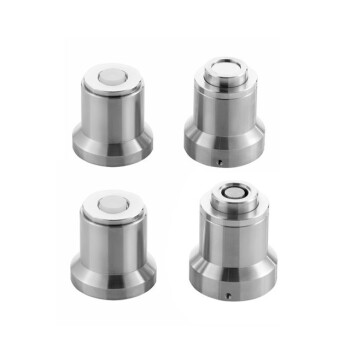
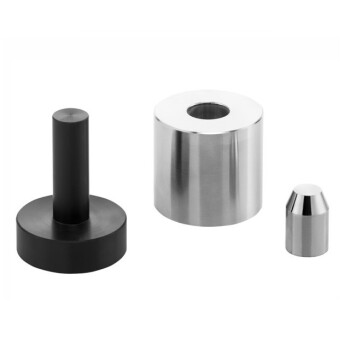
The primary functional advantages of using airtight mechanical battery molds for MgBi alloy solid-state batteries are the preservation of chemical stability and the management of physical stress. These molds provide a hermetic seal to protect sensitive hydride-based electrolytes from degradation while simultaneously applying constant mechanical pressure to buffer the significant volume expansion of the anode during cycling.
The success of MgBi solid-state testing relies on solving two specific failure modes: chemical oxidation and mechanical delamination. An airtight mechanical mold is not a passive container, but an active tool that maintains the necessary vacuum and physical pressure to ensure valid experimental data.
Preserving Chemical Integrity
Preventing Electrolyte Failure
The most critical function of these molds is providing exceptional sealing capabilities. Hydride-based solid-state electrolytes are chemically sensitive and highly reactive.
If exposed to ambient air, these electrolytes degrade rapidly, leading to immediate cell failure. The airtight mold creates an isolated environment that prevents atmospheric intrusion, ensuring the chemical baseline of the experiment remains pure.
Managing Physical Stress
Buffering Volume Expansion
The MgBi alloying process involves substantial physical changes during operation. As the battery cycles, the anode undergoes significant volume expansion and contraction.
Mechanical molds utilize internal springs or bolts to apply a pre-tightening force. This active compression buffers the volume changes, preventing the internal structure of the cell from fracturing or deforming under stress.
Maintaining Interface Contact
Reliable solid-state performance depends on the physical connection between layers. Expansion and contraction can cause "interfacial peeling," where the electrode separates from the electrolyte.
By maintaining stable stacking pressure, the mold ensures tight physical contact is never lost. This constant pressure mitigates the risk of delamination, preserving the conductive pathway required for ion transport.
Ensuring Data Reliability
Accuracy in Long-Term Cycling
Data is only as good as the stability of the test environment. Because the mold stabilizes both the chemistry (via sealing) and the mechanics (via pressure), the resulting data is far more consistent.
This stability is essential for acquiring accurate impedance spectra and cycle life data. It ensures that observed performance degradation is due to the electrochemical properties of the materials, not artifacts caused by poor contact or air leaks.
Understanding the Trade-offs
Mechanical Complexity vs. Sealing
While these molds are necessary, they introduce operational complexity. The design must balance the need for high pressure with the need for a perfect seal.
If the internal pressure generated by volume expansion is too high, it can theoretically compromise the seal if the mold is not robust. Therefore, the assembly process requires precision to ensure the "pre-tightening" force does not exceed the mechanical limits of the sealing gaskets.
Making the Right Choice for Your Goal
When selecting a mold for your MgBi alloy experiments, consider your specific testing parameters:
- If your primary focus is long-term cycle life: Prioritize molds with internal spring mechanisms rather than static bolts, as springs can dynamically adjust to the repetitive volume expansion of the MgBi alloy without losing pressure.
- If your primary focus is electrolyte characterization: Prioritize molds with verified high-vacuum sealing ratings to ensure that no atmospheric contamination skews the impedance data of the hydride-based electrolyte.
The correct mechanical mold transforms your setup from a simple test cell into a stabilized environment capable of delivering reproducible, high-fidelity results.
Summary Table:
| Feature | Functional Advantage | Impact on MgBi Battery Testing |
|---|---|---|
| Hermetic Sealing | Prevents atmospheric intrusion | Protects sensitive hydride-based electrolytes from degradation |
| Mechanical Pressure | Constant pre-tightening force | Buffers volume expansion and prevents anode deformation |
| Interface Stability | Maintains tight physical contact | Prevents interfacial peeling and maintains ion transport paths |
| Environmental Control | Isolated test environment | Ensures data accuracy by removing artifacts from leaks or contact loss |
Elevate Your Battery Research with KINTEK Precision Solutions
Are you facing challenges with chemical degradation or mechanical instability in your MgBi solid-state battery testing? KINTEK specializes in comprehensive laboratory pressing solutions designed to meet the rigorous demands of advanced electrochemical research.
Our extensive range includes manual, automatic, heated, multifunctional, and glovebox-compatible models, alongside specialized cold and warm isostatic presses. Whether you need to maintain perfect vacuum integrity for sensitive electrolytes or require dynamic pressure management for high-expansion alloy anodes, KINTEK provides the tools to ensure your data is accurate and reproducible.
Take the next step in battery innovation. Contact KINTEK today to find the perfect mold and pressing solution for your laboratory!
References
- Qian Wang, Yigang Yan. Understanding Mg-ion deposition behavior on MgBi alloy in solid-state form. DOI: 10.20517/energymater.2024.102
This article is also based on technical information from Kintek Solution Knowledge Base .
Related Products
- Lab Button Battery Disassembly and Sealing Mold
- Carbide Lab Press Mold for Laboratory Sample Preparation
- Lab Cylindrical Press Mold for Laboratory Use
- Lab Button Battery Tablet Press Sealing Mold
- Lab Infrared Press Mold for Laboratory Applications
People Also Ask
- How does a sealed battery mold facilitate the assembly and testing of asymmetric supercapacitors using VO2?
- What is the function of specialized battery molds and sealing consumables? Optimize Your In-situ XRD Testing Today
- How does the geometry of laboratory molds influence mycelium-based composites? Optimize Density and Strength
- Why are specialized battery test molds used? Ensure Peak Performance for All-Solid-State Sodium Batteries (ASSIBs)
- What role do battery testing molds play in electrolyte performance? Exploring Pressure vs. Viscoelasticity