The rolling process serves as a critical optimization step for coated Ag@ZnMP electrodes, primarily designed to compact the coating and increase the contact density between active particles. This application of uniform pressure directly reduces contact resistance, regulates porosity to define electrolyte wetting pathways, and solidifies the structural stability required for long-term cycling.
The rolling process transforms a coated layer into a cohesive electrode. It establishes the necessary physical density for electron flow while maintaining the open structure required for electrolyte access.
Optimizing Electrical Connectivity
Increasing Contact Density
The immediate physical goal of rolling is to apply uniform pressure to the Ag@ZnMP coating.
This compaction forces the active particles closer together, significantly increasing the contact density within the material matrix.
Reducing Contact Resistance
High contact resistance is a barrier to efficient battery performance.
By minimizing the gaps between particles, the rolling process lowers the internal resistance of the electrode. This ensures that electrons can move freely through the active material, enhancing the overall electrical conductivity.
Balancing Physical Structure and Stability
Regulating Electrode Porosity
Rolling is not simply about making the material as dense as possible; it is about regulating porosity.
The process tunes the spacing between particles to create optimized wetting pathways. This allows the liquid electrolyte to effectively permeate the electrode structure, which is vital for electrochemical reactions.
Enhancing Structural Stability
An unrolled electrode is susceptible to mechanical failure.
The compaction process improves the mechanical integrity of the electrode, ensuring it can withstand the stress of operation. This enhanced structural stability is essential for maintaining performance during long-term cycling.
Understanding the Trade-offs
The Risk of Over-Compaction
While increasing density is a primary goal, applying too much pressure can be detrimental.
Excessive compaction can crush the pores required for the electrolyte to enter. If the wetting pathways are closed off, the active material becomes isolated from the electrolyte, rendering it chemically inactive.
The Risk of Under-Compaction
Conversely, insufficient pressure leaves the particles too loosely connected.
This results in high electrical resistance and weak mechanical structure. Under-compacted electrodes are prone to poor performance and may degrade quickly due to a lack of structural cohesion.
Making the Right Choice for Your Goal
To optimize your Ag@ZnMP electrodes, you must tailor the rolling pressure to your specific performance metrics.
- If your primary focus is Electrical Efficiency: Prioritize higher compaction to maximize particle contact density and minimize resistance.
- If your primary focus is Rate Capability: Ensure the rolling pressure is moderate to maintain sufficient porosity for rapid electrolyte wetting.
The rolling process is the definitive factor that balances electron transport with ion accessibility to ensure electrode longevity.
Summary Table:
| Objective | Physical Mechanism | Primary Benefit |
|---|---|---|
| Electrical Connectivity | Increases particle contact density | Minimizes contact resistance and improves electron flow |
| Structural Stability | Compaction of coating material | Enhances mechanical integrity for long-term cycling |
| Porosity Regulation | Tuning inter-particle spacing | Optimizes electrolyte wetting pathways and ion access |
| Performance Balance | Controlled pressure application | Prevents over-compaction while ensuring high conductivity |
Maximize Your Electrode Performance with KINTEK Precision
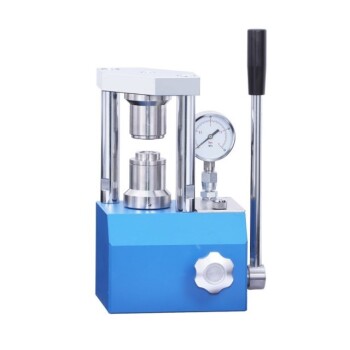
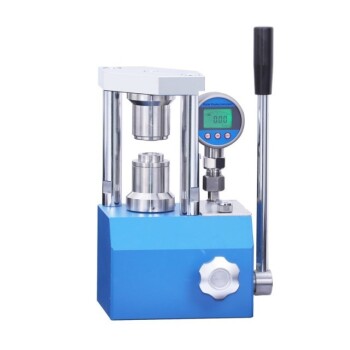
Ready to achieve the perfect balance of density and porosity in your battery research? KINTEK specializes in comprehensive laboratory pressing solutions designed for precision electrode fabrication. From manual and automatic presses to multifunctional and glovebox-compatible models, our equipment ensures uniform pressure for superior contact density and structural stability. Whether you are working on Ag@ZnMP coatings or advanced isostatic pressing, our tools are engineered to reduce resistance and enhance cycling longevity.
Unlock superior electrical efficiency and rate capability in your lab—Contact KINTEK today for a consultation!
References
- Hee Bin Jeong, John Hong. Hierarchical Ag Coating on Active Zinc Metal Powder Anodes via Galvanic Replacement for High‐Performance Aqueous Zn‐Ion Batteries. DOI: 10.1002/sstr.202500111
This article is also based on technical information from Kintek Solution Knowledge Base .
Related Products
- Lab Cylindrical Press Mold for Laboratory Use
- Lab Double Plate Heating Mold for Laboratory Use
- Warm Isostatic Press for Solid State Battery Research Warm Isostatic Press
- Lab Round Bidirectional Press Mold
- Lab Polygon Press Mold
People Also Ask
- What is the purpose of incorporating cartridge heaters into a lab press mold for MLCC block compression? Optimize Results
- Why is precise cooling management of the lab press mold necessary? Protect Core Integrity in Thermoforming
- What is the function of a pressing tool in thermoplastic panels? Master Precision Shaping & Fusion Bonding
- Why is a high-performance laboratory molding press critical for in-situ electrolyte formation? Unlock Battery Success
- How does the geometry of laboratory molds influence mycelium-based composites? Optimize Density and Strength