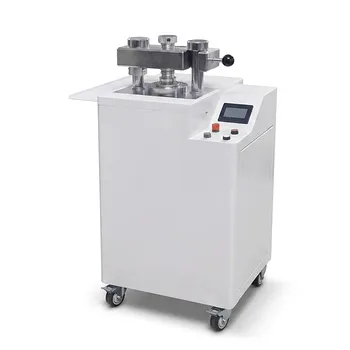
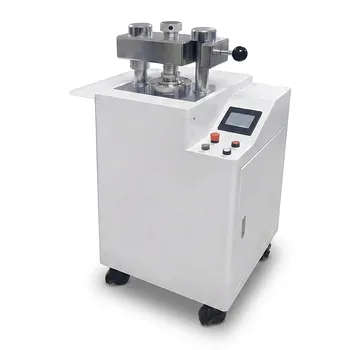
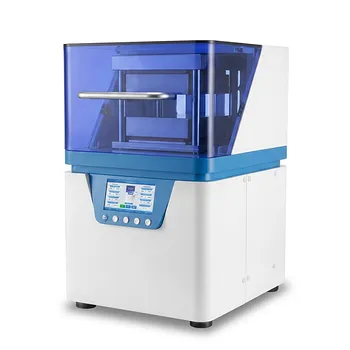
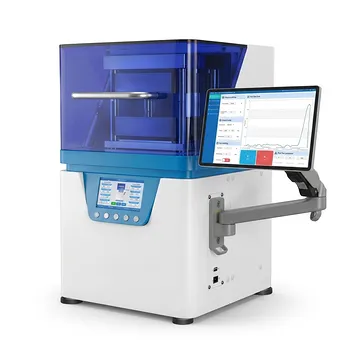
Hydraulic presses designed for XRF pellet preparation are specialized, high-throughput systems engineered to maximize laboratory efficiency. Unlike general-purpose presses, these machines prioritize speed and repetition, featuring integrated pellet dies and accelerated operational cycles to handle high volumes of samples effectively.
Core Insight: While standard manual presses can produce pellets, specialized XRF presses are distinct because they focus on automation and rapid mechanical extraction. They are built to minimize the downtime between samples, making them essential for laboratories processing large quantities of data daily.
Engineered for High-Throughput Environments
Accelerated Cycle Times
The primary distinction of an XRF-specific press is its ability to perform swifter operational cycles.
Because XRF analysis often involves testing large batches of samples, these presses are tuned to apply and release pressure more rapidly than standard industrial or manual counterparts.
Automated Pellet Extraction
To maintain a high workflow, these presses utilize advanced mechanical systems designed for the quick removal of the finished pellet.
This automation allows the operator to extract the sample and immediately prepare the machine for the next iteration, significantly reducing the "dead time" between presses.
Design Integration and Usability
Integrated Pellet Dies
A unique feature of these specialized machines is the use of integrated pellet dies.
Rather than requiring the operator to manually assemble and disassemble a die set for every single sample, the pressing mechanism is often built directly into the workflow to streamline operations.
Monitoring and Safety
Even within high-speed operations, safety remains a critical design element.
Many hydraulic pellet presses include clear pressure force displays, allowing users to monitor levels precisely and ensure the binder and sample are being compressed to the correct specifications.
Additionally, automatic pressure relief mechanisms are standard features that prevent overstressing the system, protecting both the expensive die and the operator from accidental over-pressurization.
Understanding the Trade-offs
The Cost of Automation
While high-throughput XRF presses offer speed, they represent a significant capital investment compared to manual hydraulic presses.
Manual options are significantly more affordable and are often the logical choice for laboratories with lower budgets where speed is not a critical metric.
Physical Effort vs. Consistency
Manual presses require the operator to apply pressure by hand, which can lead to operator fatigue and potential inconsistencies in pellet density over long shifts.
Automated XRF presses eliminate the physical variable, ensuring that every sample—from the first to the hundredth—is pressed with identical force and duration.
Selecting the Right Press for Your Laboratory
To ensure you invest in equipment that matches your specific operational needs, consider the following:
- If your primary focus is high-volume efficiency: Prioritize an automated press with integrated dies and mechanical extraction to maximize sample throughput.
- If your primary focus is budget optimization: Choose a manual hydraulic press, which offers the necessary force and safety features for low-volume pellet preparation at a fraction of the cost.
Ultimately, the right choice depends on balancing your laboratory's daily sample volume against your available capital.
Summary Table:
| Feature | Specialized XRF Press | Manual Hydraulic Press |
|---|---|---|
| Primary Goal | High-throughput Efficiency | Budget-friendly Flexibility |
| Operation | Automated Cycles | Manual Pumping |
| Extraction | Integrated Mechanical Systems | Manual Removal |
| Consistency | High (Programmed Logic) | Variable (Operator Dependent) |
| Safety | Auto-Relief Mechanisms | Manual Pressure Gauges |
Maximize Your XRF Analysis Precision with KINTEK
Is your laboratory struggling to keep up with high-volume sample demands? KINTEK specializes in comprehensive laboratory pressing solutions designed to eliminate bottlenecks and ensure consistent results.
Whether you need an automatic high-throughput XRF press, a heated multifunctional model, or a glovebox-compatible isostatic press, our equipment is engineered for the rigors of battery research and material science. We offer manual, automatic, and specialized isostatic models (cold and warm) to fit every budget and technical requirement.
Ready to upgrade your sample preparation? Contact KINTEK today to consult with our experts and find the perfect pressing solution for your lab!
Related Products
- Automatic XRF Pellet Press for Laboratory Spectrometry Sample Preparation
- Automatic Fluorescence Sample Preparation Press 40 Ton Lab Pellet Press for XRF Analysis
- Laboratory Hydraulic Pellet Press for XRF KBR FTIR Lab Press
- Automatic Laboratory Hydraulic Press for XRF and KBR Pellet Pressing
- Lab XRF Boric Acid Powder Pellet Pressing Mold for Laboratory Use
People Also Ask
- How can contamination occur during the preparation of pressed pellets for XRF analysis? Expert Prevention Guide
- How does the sample material influence the required pressing load for making an XRF pellet? Find the Optimal Pressure
- What are the different methods for preparing a sample pellet for XRF analysis? Expert Guide to Superior XRF Results
- What are the advantages of preparing a sample as a dense pellet for XRF? Unlock High-Precision Trace Element Analysis
- What is the primary purpose of using an automatic pellet press? Achieve Precise Geopolymer Analysis Results