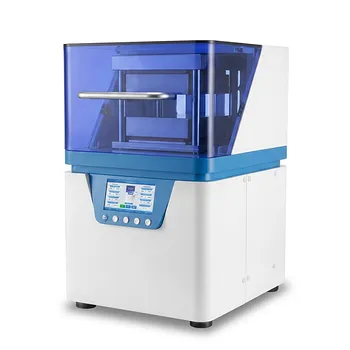
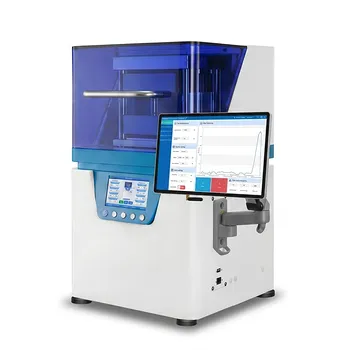
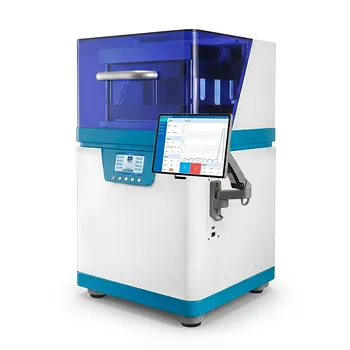
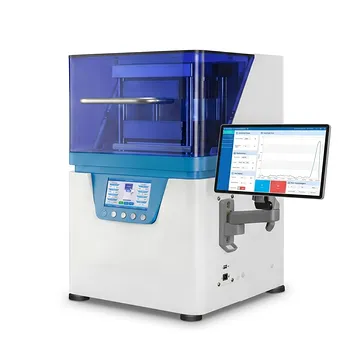
The pressing plates in a rubber laboratory press are sophisticated components designed to withstand immense pressure without deforming. Typically numbering four, these plates are constructed from a chromium-molybdenum alloy and finished with advanced surface treatments to reach a hardness of up to 60HRC.
To ensure consistent experimental results, pressing plates combine hardened alloy materials with a rigid structural frame to maintain exceptional flatness and parallelism under high pressure.
Material Composition and Surface Hardening
The Core Alloy
The foundation of a high-quality pressing plate is a chromium-molybdenum alloy.
This material is selected for its high tensile strength and ability to withstand the thermal and mechanical stresses inherent in laboratory pressing.
Advanced Surface Treatments
To achieve the requisite durability, the raw alloy undergoes a series of rigorous treatments.
Processes such as high-frequency heating, carburizing, and chromium plating are applied to the surface.
Achieving Optimal Hardness
The final result of these treatments is a surface hardness that can reach up to 60HRC.
This extreme hardness is critical for preventing surface marring or indentation over time, especially when using pellet dies or compressing hard powders.
Final Polishing
After hardening, the plates undergo a polishing process.
This ensures a smooth, non-reactive surface, which is essential when forming thin films or delicate samples where surface texture transfer must be minimized.
Structural Integrity and Precision
Precision Guide Columns
The plates are supported and aligned by four high-strength precision guide columns.
These columns ensure that the vertical movement of the plates remains perfectly linear during operation.
Deformation Resistance
The system utilizes double layers of high-strength laminate clamping structures housed within a heavy structural steel frame.
This robust framework is engineered specifically to minimize deformation, ensuring the machine maintains its geometry even under maximum load.
Critical Parallelism
The combination of the guide columns and the rigid frame maintains an extremely high level of parallelism between the laminate plates.
If parallelism is lost, samples—such as pressed powder disks or formed films—will have uneven thickness, rendering test results invalid.
Understanding the Trade-offs
Weight vs. Stability
The heavy structural steel frame required to minimize deformation results in a significant increase in the equipment's total weight.
While this ensures precision, it makes the unit difficult to move and often requires a dedicated, reinforced bench or floor space.
Hardness vs. Maintenance
While a hardness of 60HRC is impressive, the polished surface is not invulnerable.
Because these presses are used for various applications—from bending to compacting powders—operators must meticulously clean the plates. Even minor debris pressed into the polished surface at high tonnage can damage the finish, compromising future thin-film applications.
Making the Right Choice for Your Goal
When evaluating a laboratory press, the specifications of the plates dictate the machine's suitability for your specific research.
- If your primary focus is compacting hard powders: Prioritize the 60HRC hardness rating and chromium-molybdenum construction to ensure the plates resist pitting and wear over thousands of cycles.
- If your primary focus is forming precision thin films: Prioritize the guide column design and frame rigidity, as maintaining strict parallelism is the single most important factor for uniform film thickness.
A press is only as effective as the stability of its pressing plates; choose a unit where the structural frame matches the quality of the alloy.
Summary Table:
| Feature | Specification/Material | Benefit |
|---|---|---|
| Core Material | Chromium-molybdenum alloy | High tensile strength & thermal resistance |
| Surface Hardness | Up to 60HRC | Prevents marring, pitting, and indentation |
| Surface Finish | Polished Chromium Plating | Non-reactive surface for delicate thin films |
| Support System | 4 Precision Guide Columns | Ensures linear movement & perfect alignment |
| Frame Structure | Heavy Structural Steel | Minimizes deformation under maximum load |
| Key Metric | High Parallelism | Guarantees uniform thickness for valid test results |
Elevate Your Material Research with KINTEK Precision
Don't let equipment deformation compromise your experimental data. KINTEK specializes in comprehensive laboratory pressing solutions, offering manual, automatic, heated, and multifunctional models designed for maximum rigidity and precision. Whether you are conducting advanced battery research or forming delicate thin films, our presses—including cold and warm isostatic models—provide the stability your lab requires.
Ready to upgrade your laboratory capabilities? Contact our experts today to find the perfect pressing solution for your specific application.
Related Products
- Automatic Hydraulic Heat Press Machine with Multi Stage Programmable Control and Integrated Water Cooling Plate Size 180x180mm
- Automatic Heated Hydraulic Lab Press 120x120mm Plate Fully Automated Material Research Press
- Automatic High Temperature Heated Hydraulic Press Machine with Heated Plates for Lab
- 24T 30T 60T Heated Hydraulic Lab Press Machine with Hot Plates for Laboratory
- Manual Heated Hydraulic Lab Press with Integrated Hot Plates Hydraulic Press Machine
People Also Ask
- How does a laboratory hydraulic heat press facilitate the molding of cellulose composite specimens? Precision Molding
- How is a hydraulic heat press used for sample preparation? Achieve Uniform, Void-Free Samples for Lab Analysis
- What is the role of a hydraulic heat press in material testing? Unlock Superior Data for Research & QC
- What is a hydraulic heat press? Discover Precision Material Bonding and Sample Preparation
- What are the industrial applications of a hydraulic heat press? Powering Lamination, Bonding, and R&D Efficiency