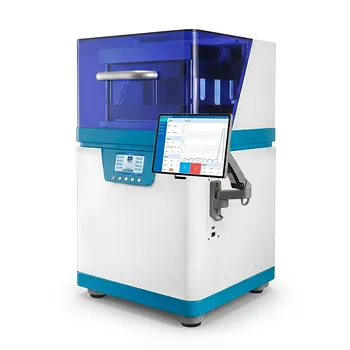
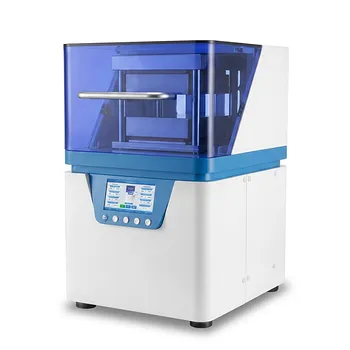
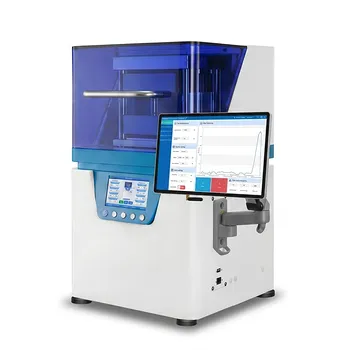
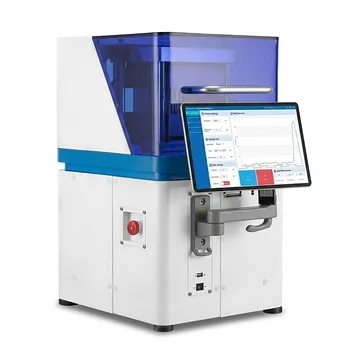
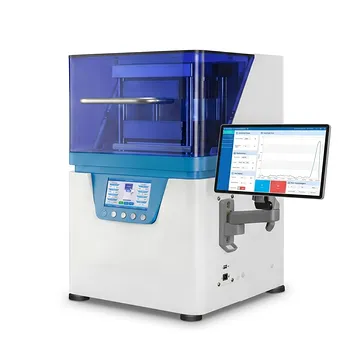
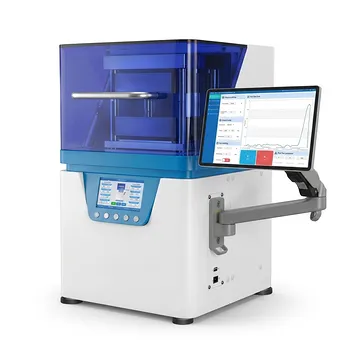
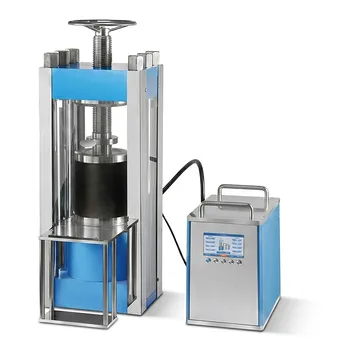
A modern hot press is defined by its ability to deliver precise thermal application alongside mechanical versatility. Typical operational features include advanced pulse heating technology with sampling frequencies as fast as 0.1 seconds, allowing for rapid and accurate temperature control. These machines also feature multi-stage temperature profiles for complex bonding requirements, real-time monitoring displays, and adaptable working platforms—such as rotary or left-right mobile stages—to maximize production efficiency.
The defining characteristic of a high-quality hot press is controllability. It moves beyond simple heating to offer a synchronized orchestration of temperature, pressure, and time, ensuring consistent bonding for sensitive components like electronics.
Achieving Thermal Precision
The primary function of a hot press is to alter the internal energy of materials to create a permanent bond, often for soldering or joining parts. To do this effectively, the machine relies on rigorous thermal management features.
Pulse Heating Technology
To ensure rapid heating without overshooting targets, hot presses often utilize pulse heating. This technology provides an extremely fast response, capable of sampling temperature data every 0.1 seconds.
Multi-Stage Temperature Rise
Not all bonds can be formed with a single blast of heat. These machines allow operators to program controlled heating profiles, ramping the temperature up in specific stages to match the material's melting and curing requirements.
Real-Time Monitoring
Consistency is key in manufacturing. A real-time temperature curve display allows operators to visualize the thermal process as it happens, ensuring every cycle matches the pre-set parameters.
Versatility in Mechanical Operation
Beyond heat, the physical movement of the machine dictates its throughput and flexibility. Different manufacturing environments require different mechanical configurations.
Diverse Working Modes
To accommodate different workflows, hot presses offer various platform designs. These include single platforms for simple tasks, rotary platforms for continuous loading, and left-right mobile platforms to handle multiple fixtures or complex positioning.
Adjustable Stroke and Pressure
The "press" aspect is as critical as the heat. Features often include stroke-adjustable cylinders, allowing operators to fine-tune the positioning and pressure applied to the parts during the bonding phase.
Structural Stability
For high-precision tasks, stability is non-negotiable. Many units employ a four-column and three-plate structure, which ensures the pressing force is distributed evenly and the alignment remains true.
Advanced Alignment and Safety
Modern operations demand both high accuracy and strict operator protection.
Vision Systems
For applications requiring micron-level accuracy, such as electronics assembly, machines may integrate CCD vision systems. These cameras assist in the precise alignment of components before the press cycle begins.
Comprehensive Safety Protocols
Operating under high heat and pressure presents risks. Standard safety features typically include two-hand start buttons (preventing hands from being in the crush zone), emergency stop switches, and safety gratings or sealed doors to isolate the danger area.
Understanding the Trade-offs
While advanced features offer superior control, they introduce specific operational considerations that must be managed.
Complexity of Parameter Setup
Features like multi-stage temperature profiles provide flexibility but require a deeper understanding of materials science. Incorrectly programming the ramp-up rates can lead to cold solder joints or thermal shock, damaging the components.
Maintenance of Precision Components
High-precision elements, such as pulse heating elements and alignment sensors, are sensitive. They often require more frequent calibration and maintenance compared to simpler, continuous-heat systems to maintain their 0.1s sampling accuracy.
Making the Right Choice for Your Goal
Selecting the right hot press depends on balancing throughput requirements with the complexity of the bond you need to create.
- If your primary focus is High Throughput: Prioritize machines with rotary or left-right mobile platforms, as these allow for loading one part while another is being processed.
- If your primary focus is Bonding Sensitive Electronics: Ensure the machine features pulse heating with multi-stage control to prevent thermal damage to delicate components.
- If your primary focus is Precision Alignment: Look for units that integrate CCD vision systems and a rigid four-column structure to guarantee exact placement.
Success with a hot press comes from matching the machine's control capabilities to the specific thermal limitations of your materials.
Summary Table:
| Feature Category | Key Operational Highlights | Benefits for Laboratory/Production |
|---|---|---|
| Thermal Control | Pulse heating & multi-stage temperature profiles | Rapid response, precise bonding, and prevents thermal damage |
| Monitoring | Real-time temperature curve & 0.1s sampling | Guaranteed consistency and immediate process visualization |
| Mechanical Design | Rotary, mobile stages, & four-column structure | High throughput, structural stability, and even pressure distribution |
| Precision | CCD vision systems & adjustable stroke cylinders | Micron-level alignment accuracy for sensitive electronics |
| Safety | Two-hand start, emergency stops, & safety gratings | Maximum operator protection during high-heat/pressure cycles |
Elevate Your Material Research with KINTEK Precision Solutions
At KINTEK, we understand that successful bonding and material synthesis depend on the perfect orchestration of temperature and pressure. Whether you are advancing battery research or developing complex electronic components, our comprehensive range of laboratory pressing solutions—including manual, automatic, heated, multifunctional, and glovebox-compatible models, alongside cold and warm isostatic presses—is engineered to meet your most rigorous standards.
Why choose KINTEK?
- Unmatched Versatility: Tailored configurations for diverse laboratory environments.
- Superior Control: Achieve precise thermal profiles and uniform pressure distribution.
- Expert Support: Benefit from high-performance equipment designed for cutting-edge material science.
Ready to enhance your lab's efficiency and precision? Contact us today to find your ideal pressing solution!
Related Products
- Automatic Hydraulic Hot Press with Large Plate and Precision Temperature Control for Advanced Material Sample Preparation and Industrial Research
- Automatic High Temperature Heated Hydraulic Press Machine with Heated Plates for Lab
- Heated Hydraulic Press Machine with Heated Plates for Vacuum Box Laboratory Hot Press
- Automatic Heated Hydraulic Press Machine with Hot Plates for Laboratory
- Heated Hydraulic Press Machine With Heated Plates For Vacuum Box Laboratory Hot Press
People Also Ask
- What are the specific features and applications of hydraulic hot press machines? Precision Solutions for Modern Labs
- How does an automatic hydraulic press operate? Achieve Precision and Consistency in Lab Pelleting
- What are the advantages and common applications of an automatic hydraulic press? Elevate Your Lab's Precision
- What is the technical significance of setting a precise dwell time? Achieve Peak Material Density and Stability
- When is an automatic hydraulic press more suitable than a manual press? Scale Your Lab with Precision & Speed