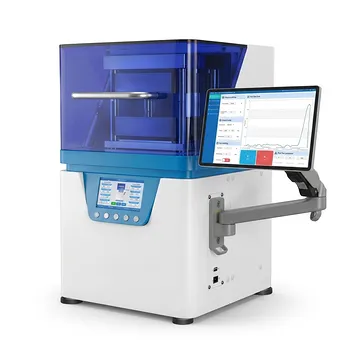
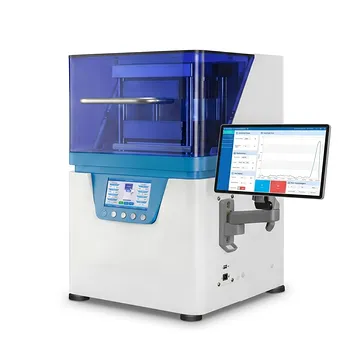
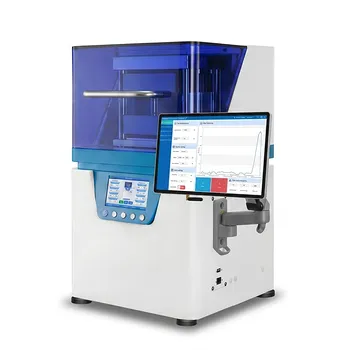
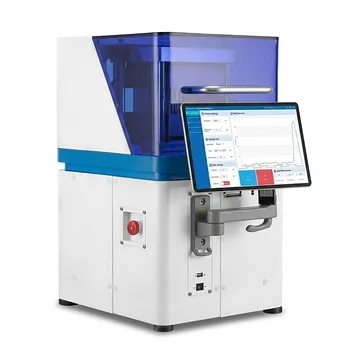
A laboratory hydraulic press is a compact, high-efficiency machine designed specifically for precise sample preparation and material testing. Unlike massive industrial counterparts, these units utilize a hydraulic cylinder to generate controlled compressive force on a small scale, fitting easily on a benchtop or inside controlled environments.
The primary value of this equipment lies in its ability to transform loose materials into uniform shapes with high precision. By condensing samples into pellets or testing material durability in a small footprint, it ensures accurate results in chemical and biological analysis.
The Core Function and Design
Optimized for Sample Preparation
The main purpose of a laboratory hydraulic press is to prepare samples for analysis. By crushing or compacting materials, the press aids in the extraction of compounds or creates solid pellets required for various spectroscopic techniques.
Compact and Mobile Architecture
A defining characteristic of these presses is their small footprint. They are engineered to be portable, making them easy to carry and move between different workstations within a facility.
Mechanism of Action
Operating on the principles of Pascal’s Law, the machine uses fluid pressure to amplify force. Whether powered by an electric motor or a hand-operated lever, the hydraulic ram exerts significant pressure on a sample positioned between plates to mold or compress it.
Versatility in Application
Controlled Environment Compatibility
For sensitive research, certain laboratory hydraulic presses are designed to operate inside a vacuum glove box. This allows researchers to process samples under a vacuum or inert atmosphere, preventing contamination or reaction with air.
Thermal Capabilities
Specific variations, such as the Hydraulic Heat Lab Press, offer integrated heating elements. This allows the user to heat the sample simultaneously while pressing, which is essential for specific material synthesis or molding applications.
Research and Testing
Beyond simple compaction, these machines are precise enough for material research. They are frequently used to test the strength and durability of substances or to investigate the physical effects of high pressure on new materials.
Understanding the Trade-offs
Scale vs. Precision
While these presses offer high precision, they are significantly smaller than industrial versions. They are optimized for research and testing, not high-volume manufacturing or heavy-duty metalworking.
Manual Operation Factors
Many laboratory units rely on hand-operated levers. While affordable and simple, manual operation can be physically demanding over time and may introduce slight variations in pressure application compared to fully automated electric systems.
Making the Right Choice for Your Goal
To select the correct press, you must align the machine's features with your specific analytical requirements.
- If your primary focus is air-sensitive chemistry: Prioritize a compact model explicitly rated for operation inside a vacuum glove box.
- If your primary focus is polymer molding or synthesis: Ensure you select a Hydraulic Heat Lab Press to control temperature during compression.
- If your primary focus is basic sample pelletizing: A standard, hand-operated or electric hydraulic press will provide the necessary force and efficiency.
Success in the laboratory begins with the precise preparation of your materials.
Summary Table:
| Feature | Description |
|---|---|
| Core Mechanism | Utilizes Pascal’s Law for controlled compressive force |
| Primary Use | Sample pelletizing, material testing, and compound extraction |
| Design Focus | Compact, portable, and benchtop-friendly architecture |
| Key Variations | Manual, Electric, Heated, and Glovebox-compatible models |
| Application | Spectroscopy, battery research, and polymer synthesis |
Elevate Your Research with KINTEK Precision
At KINTEK, we specialize in comprehensive laboratory pressing solutions tailored to your unique analytical needs. Whether you are conducting cutting-edge battery research or complex material synthesis, our diverse range of equipment—including manual, automatic, heated, multifunctional, and glovebox-compatible models, as well as cold and warm isostatic presses—ensures unmatched accuracy and reliability.
Ready to optimize your sample preparation workflow? Contact our technical experts today to find the perfect press for your facility!
Related Products
- Laboratory Hydraulic Press Lab Pellet Press Button Battery Press
- Laboratory Hydraulic Press 2T Lab Pellet Press for KBR FTIR
- Laboratory Hydraulic Press Lab Pellet Press Machine for Glove Box
- 24T 30T 60T Heated Hydraulic Lab Press Machine with Hot Plates for Laboratory
- Automatic Laboratory Hydraulic Press Lab Pellet Press Machine
People Also Ask
- How is a laboratory hydraulic press used for HAP composite gels? Master Mineral Substrate Standardization
- What role does a laboratory hydraulic press play in reaction pellets? Optimizing Lunar Soil and Metal Fuel Density
- What role does a laboratory hydraulic press play in the preparation of piezoelectric ceramic discs for DC-PG? | KINTEK
- What role does a laboratory hydraulic press play in the assembly of all-solid-state battery test cells? Expert Guide
- Why is a laboratory hydraulic press required for PBAT and PLA sample preparation? Achieve Flawless Characterization