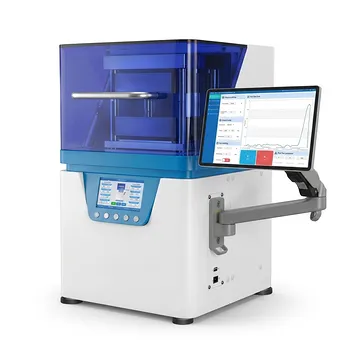
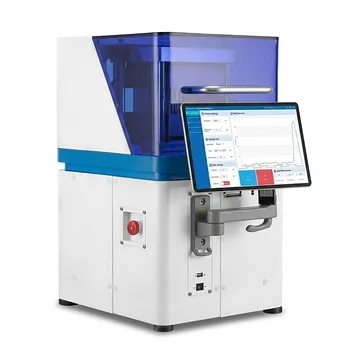
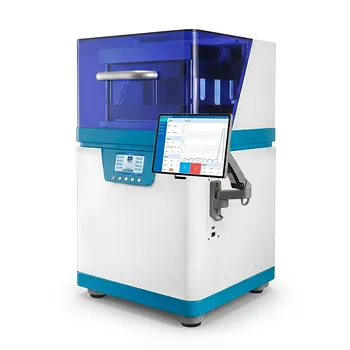
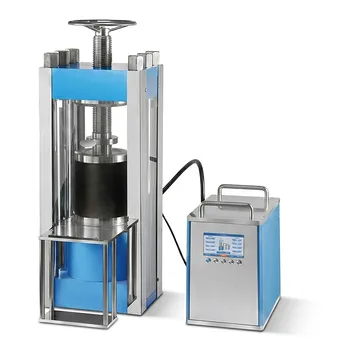
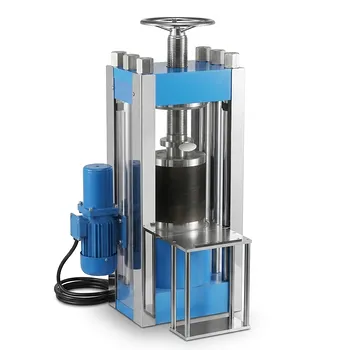
The primary function of a laboratory hot press in the preparation of fire alarm films is the thermal compression and lamination of shape memory polymer (SMP) layers with conductive nanomaterials. This equipment provides the precise heat and pressure required to bond functional layers into a cohesive unit that maintains electrical continuity and mechanical integrity during the extreme conditions of a fire.
A laboratory hot press transforms raw polymer and conductive components into a functional fire sensor by ensuring tight interfacial contact and structural uniformity. By controlling temperature and pressure, the press facilitates the creation of stable conductive paths that are essential for the alarm's triggering mechanism.
Achieving Strong Interfacial Bonding
Lamination of Functional Layers
The laboratory hot press is used to laminate SMP layers with conductive materials like MXene or carbon nanotubes. This process ensures that the conductive network is physically or chemically bonded to the polymer substrate.
Ensuring Electrical Continuity
By applying simultaneous heat and pressure, the press creates tight interfacial contact between layered materials. This is critical for maintaining stable conductive paths, which are the backbone of the fire alarm's sensing capability.
Mechanical Integrity at High Temperatures
The thermal compression process ensures that the film does not delaminate when exposed to heat. This bond strength allows the alarm film to remain functional and intact even while the shape memory effect is triggered during a fire.
Molding and Structural Uniformity
Precise Thickness and Density
A hot press allows researchers to consolidate polymer fragments into dense, uniform films with controllable thickness (often around 120 μm). Standardizing the thickness is vital because it directly impacts the film's response time to heat.
Elimination of Material Defects
When used in a vacuum, the hot press effectively removes air bubbles and internal defects. Eliminating these flaws ensures that the final film possesses high internal structural density and excellent surface flatness.
Homogeneous Additive Distribution
The pressure applied during the molten or semi-molten state ensures that conductive additives are distributed evenly within the polymer matrix. This uniformity prevents "cold spots" or broken circuits that could cause the alarm to fail.
Driving Thermal and Chemical Processes
Thermal Cross-Linking
Beyond physical shaping, the hot press facilitates thermal cross-linking of the polymer chains. This chemical stabilization is what gives the SMP its ability to "remember" a preset shape and recover it when heated.
Processing Above the Glass Transition Temperature
The press operates above the glass transition temperature (Tg) to deform the material into its initial shape. This precise molding ensures the material can accurately perform its shape-recovery function down the line.
Crystallinity and Phase Control
Controlled heating and cooling cycles within the press allow for the management of the polymer's crystallinity. This control is essential for fine-tuning the mechanical properties and the specific temperature at which the fire alarm triggers.
Understanding the Trade-offs
Thermal Degradation Risks
While high heat is necessary for bonding and molding, exceeding the polymer's thermal stability limit can degrade the material. This degradation can lead to brittleness or a loss of the shape memory effect, rendering the alarm useless.
Pressure Sensitivity
Applying excessive pressure may crush conductive nanomaterials or force them out of the desired network structure. Conversely, insufficient pressure leads to poor interfacial bonding, resulting in high contact resistance and unreliable sensor readings.
Complex Processing Windows
Finding the "sweet spot" between temperature, pressure, and time requires extensive calibration. Each unique combination of SMP and conductive filler has a narrow window for optimal processing, making the setup phase time-consuming and resource-intensive.
How to Optimize Your Hot Pressing Process
When preparing SMP fire alarm films, your specific research goals should dictate your hot press parameters.
- If your primary focus is electrical reliability: Prioritize the precision of your pressure settings to ensure a dense, continuous network of conductive nanomaterials throughout the film.
- If your primary focus is rapid trigger response: Focus on achieving the thinnest possible uniform film to minimize the thermal mass and allow for faster heat absorption.
- If your primary focus is long-term durability: Utilize a vacuum-integrated hot press to eliminate internal air pockets that could act as failure points during repeated thermal cycling.
The laboratory hot press is the indispensable bridge between raw material science and a reliable, functional fire safety device.
Summary Table:
| Key Function | Benefit for SMP Fire Alarms | Technical Detail |
|---|---|---|
| Thermal Lamination | Strong Interfacial Bonding | Bonds SMP layers with conductive nanomaterials (MXene/CNTs) |
| Compression Molding | Structural Uniformity | Eliminates defects and ensures precise film thickness (~120 μm) |
| Electrical Continuity | Reliable Sensor Triggering | Ensures tight contact for stable conductive pathways |
| Thermal Cross-Linking | Shape Memory Recovery | Facilitates polymer chain stability to "remember" preset shapes |
| Phase Control | Precise Trigger Temperature | Manages crystallinity and glass transition (Tg) properties |
Elevate Your Polymer Research with KINTEK Precision Hot Presses
Developing advanced SMP fire alarm films requires absolute control over temperature and pressure to ensure safety and reliability. KINTEK specializes in comprehensive laboratory pressing solutions tailored for high-stakes material science and battery research.
Why partner with KINTEK?
- Diverse Equipment Range: We offer manual, automatic, heated, multifunctional, and glovebox-compatible models to fit any workflow.
- Advanced Technology: Our cold and warm isostatic presses are widely applied in cutting-edge battery and polymer research.
- Precision Results: Achieve perfect interfacial bonding, eliminate internal defects, and ensure the mechanical integrity of your functional films.
Ready to optimize your thermal compression process? Contact KINTEK today to discover the ideal pressing solution for your laboratory needs!
References
- Chunmei Zhang, Jian Wang. Multifunctional Integration of Hydrogel‐Based Sensors and Their Applications in Fire Early Warning Systems. DOI: 10.1002/pol.20250673
This article is also based on technical information from Kintek Solution Knowledge Base .
Related Products
- 24T 30T 60T Heated Hydraulic Lab Press Machine with Hot Plates for Laboratory
- Heated Hydraulic Press Machine with Heated Plates for Vacuum Box Laboratory Hot Press
- Laboratory Split Manual Heated Hydraulic Press Machine with Hot Plates
- Automatic Heated Hydraulic Press Machine with Hot Plates for Laboratory
- Laboratory Manual Heated Hydraulic Press Machine with Hot Plates
People Also Ask
- Function of a Laboratory Hydraulic Press with Heated Platens in SSE? Enhance Battery Density & Conductivity
- Why is a laboratory hydraulic press with heating plates required for PLA/TEC films? Achieve Precise Sample Integrity
- What role does a laboratory heated hydraulic press play in LTCC? Essential for High-Density Ceramic Lamination
- Why reduce load when applying composite strengthening tabs? Protect Specimen Integrity and Data Accuracy
- Why is a laboratory heated hydraulic press utilized during the lamination stage of NASICON green tapes?