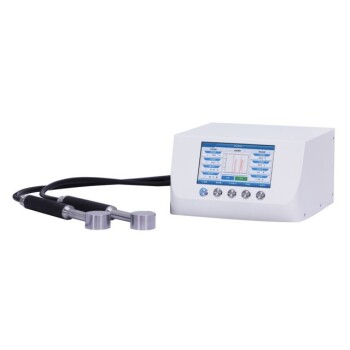
The primary function of a temperature controller paired with silicone heating mats is to create a precision thermal feedback system. In this configuration, the silicone mats serve as efficient heat-generating elements, while the controller actively modulates power output in real-time based on data from temperature probes positioned near the electrolyte.
The core value of this system lies in its ability to maintain thermal stability during rigorous testing. By continuously adjusting heat levels to match target parameters, it eliminates experimental data bias caused by environmental fluctuations or uneven heating.
The Mechanics of the Feedback Loop
The Role of Silicone Heating Mats
In a redox flow battery (RFB) setup, the silicone heating mats act as the active thermal engine. They provide the necessary heat to bring the system to the desired operating temperature.
Real-Time Power Modulation
The temperature controller acts as the system's "brain." It does not simply turn the mats on or off; it adjusts power in real-time.
Sensor-Driven Precision
This adjustment is dictated by feedback from temperature probes located near the electrolyte. This ensures the heat applied correlates exactly with the internal state of the battery fluid.
Ensuring Data Integrity Under Stress
Eliminating Experimental Bias
One of the most critical challenges in battery research is data bias. Without precise control, external temperature changes can skew performance metrics.
This system removes that variable. By ensuring minimal temperature fluctuations, it guarantees that the data collected reflects the battery's chemistry, not its environment.
Handling Extreme Testing Conditions
Redox flow batteries often require testing under extreme parameters, such as long-term cycling at 60°C.
Standard heating methods may struggle to maintain this specific threshold over long periods. This feedback system is specifically designed to stabilize the environment during these intensive cycles.
Common Pitfalls in Thermal Management
The Risk of Uneven Heating
Without the synchronization provided by this controller-mat combination, heating is often inconsistent.
The reference material highlights that uneven heating is a primary source of experimental error. Relying on static heating sources without feedback leads to hot spots and unreliable results.
Dependency on Probe Placement
For this system to function correctly, the feedback loop relies entirely on the accuracy of the input.
The text emphasizes that probes must be placed near the electrolyte. If sensors are positioned incorrectly, the controller will adjust based on faulty data, negating the benefits of the system.
Maximizing Your Experimental Success
If your primary focus is Data Accuracy:
- Ensure your setup utilizes this feedback loop to eliminate bias, guaranteeing that performance changes are due to the battery chemistry, not thermal drift.
If your primary focus is High-Temperature Stress Testing:
- Rely on this specific combination for long-term cycles (e.g., 60°C) to prevent thermal runaway or drops that could invalidate the stress test.
Ultimately, this system transforms temperature from an unpredictable variable into a controlled constant, securing the validity of your research.
Summary Table:
| Component | Role in RFB System | Key Benefit |
|---|---|---|
| Silicone Heating Mats | Active Thermal Engine | Provides uniform, rapid heat generation |
| Temperature Controller | System 'Brain' | Real-time power modulation based on sensor feedback |
| Temperature Probes | Feedback Source | Ensures data reflects electrolyte state, not ambient air |
| Thermal Feedback Loop | Precision Syncing | Eliminates experimental bias and thermal drift |
Elevate Your Battery Research with KINTEK Precision Solutions
Don't let thermal fluctuations compromise your data integrity. KINTEK specializes in comprehensive laboratory pressing and thermal solutions designed for the rigorous demands of battery research. From manual and automatic presses to specialized heating systems and isostatic technology, we provide the tools necessary for stable, repeatable results.
Why partner with KINTEK?
- Precision Control: Eliminate experimental bias with our advanced feedback systems.
- Versatile Solutions: Offering heated, multifunctional, and glovebox-compatible models.
- Industry Expertise: Widely applied in battery research, including cold and warm isostatic presses.
Ready to stabilize your testing environment? Contact us today to find the perfect solution for your lab!
References
- Ivan A. Volodin, Ulrich S. Schubert. Evaluation of <i>in situ</i> thermal stability assessment for flow batteries and deeper investigation of the ferrocene co-polymer. DOI: 10.1039/d3ta05809c
This article is also based on technical information from Kintek Solution Knowledge Base .
Related Products
- Infrared Heating Quantitative Flat Plate Mold for Precise Temperature Control
- Automatic High Temperature Heated Hydraulic Press Machine with Heated Plates for Lab
People Also Ask
- How do precision temperature-controlled heating plates function in electrolyte thermal stability storage experiments?
- What is the importance of a precision temperature-controlled heating module? Ensure Aluminum-Cadmium Thermal Stability
- How does heating platen precision affect rubber specimens? Achieve uniform density and reliable testing results.
- How are thin polymer films produced for spectroscopic analysis? Expert Guide to Heat and Low-Pressure Methods
- What accessories and field services can be used to optimize the capabilities of presses? Maximize Your Lab Performance