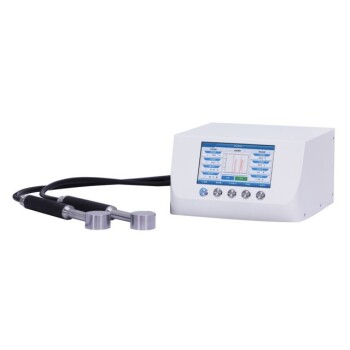
High-precision constant temperature heating equipment serves as the critical stabilizer for the chemical extraction process. Its primary function is to maintain the reaction environment at exactly 80 degrees Celsius for a duration of 120 minutes, providing the necessary thermal conditions to liberate bound polyphenols from the buckwheat matrix.
The equipment facilitates the release of non-extractable polyphenols by applying precise thermal energy under alkaline conditions, which severs the chemical bonds anchoring these compounds to the cell wall's dietary fiber.
The Mechanics of Extraction
Targeting the Cell Structure
Bound polyphenols in buckwheat are not free-floating; they are physically integrated into the dietary fiber structure of the cell wall.
Because of this integration, standard extraction methods are often ineffective. The target compounds are "non-extractable" without chemical modification.
Breaking the Chemical Bonds
The heating equipment works in tandem with strong alkaline conditions to alter the chemical state of the buckwheat.
The precise application of thermal energy helps break the specific chemical bonds holding the polyphenols to the fiber. This process transforms bound polyphenols into a releasable, extractable form.
The Role of Precision Control
Providing Stable Thermal Energy
The reference emphasizes the need for a stable 80 degrees Celsius environment.
This specific temperature provides the activation energy required for the hydrolysis reaction to proceed efficiently without fluctuating.
Sustained Reaction Duration
The process requires this stability to be held for 120 minutes.
The equipment ensures that the thermal energy remains constant throughout this two-hour window, allowing sufficient time for the alkaline solution to penetrate the cell walls and fully hydrolyze the bonds.
Why Precision Matters
The Risk of Thermal Fluctuation
The requirement for "high-precision" equipment suggests that the reaction is sensitive to temperature deviations.
If the temperature drops below the target, the energy may be insufficient to break the strong bonds within the dietary fiber, leading to incomplete extraction.
Ensuring Consistent Yields
Conversely, precise control prevents overheating, which is critical in chemical extractions to maintain the integrity of the target compounds.
By locking the temperature at 80 degrees Celsius, the equipment ensures the process remains reproducible and the yield of released polyphenols is maximized.
Making the Right Choice for Your Goal
To effectively utilize alkaline hydrolysis for buckwheat polyphenols, consider the following parameters based on the reference data:
- If your primary focus is Extraction Efficiency: Ensure your equipment can maintain exactly 80 degrees Celsius without significant fluctuation to guarantee the bonds are severed.
- If your primary focus is Process Completion: Verify that your heating system can sustain this temperature uninterrupted for the full 120-minute cycle.
High-precision thermal control is not merely a variable; it is the mechanism that unlocks the cellular structure of buckwheat to access its full polyphenol content.
Summary Table:
| Parameter | Requirement | Function |
|---|---|---|
| Target Temperature | 80°C | Provides activation energy to break chemical bonds |
| Reaction Duration | 120 Minutes | Ensures complete hydrolysis and penetration |
| Precision Level | High-Precision | Prevents thermal degradation and ensures reproducibility |
| Mechanism | Thermal Stability | Severs bonds between polyphenols and dietary fiber |
Maximize Your Extraction Yield with KINTEK Precision
Unlock the full potential of your research with KINTEK’s industry-leading thermal solutions. Whether you are performing complex alkaline hydrolysis for food science or advanced battery material research, KINTEK specializes in comprehensive laboratory pressing and heating solutions.
Our range of manual, automatic, and multifunctional equipment ensures the high-precision stability required for sensitive chemical extractions. Don't let thermal fluctuations compromise your results—leverage our expertise in heated models and isostatic presses to ensure consistent, reproducible yields every time.
Ready to elevate your lab's performance? Contact us today to find the perfect solution for your research!
References
- Pavlína Podloucká, Ondřej Jirsa. Effect of the extraction solvent and method on the determination of the total polyphenol content in different common buckwheat (Fagopyrum esculentum Moench) varieties. DOI: 10.29219/fnr.v69.9834
This article is also based on technical information from Kintek Solution Knowledge Base .
Related Products
- Infrared Heating Quantitative Flat Plate Mold for Precise Temperature Control
- Automatic High Temperature Heated Hydraulic Press Machine with Heated Plates for Lab
- Automatic Heated Hydraulic Press Machine with Heated Plates for Laboratory
- Lab Double Plate Heating Mold for Laboratory Use
- 24T 30T 60T Heated Hydraulic Lab Press Machine with Hot Plates for Laboratory
People Also Ask
- How do precision temperature-controlled heating plates function in electrolyte thermal stability storage experiments?
- What is the importance of a precision temperature-controlled heating module? Ensure Aluminum-Cadmium Thermal Stability
- How does heating platen precision affect rubber specimens? Achieve uniform density and reliable testing results.
- How are thin polymer films produced for spectroscopic analysis? Expert Guide to Heat and Low-Pressure Methods
- What accessories and field services can be used to optimize the capabilities of presses? Maximize Your Lab Performance