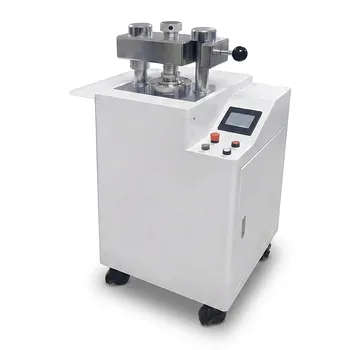
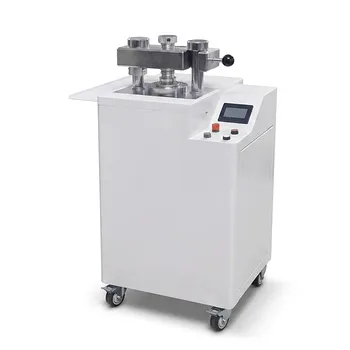
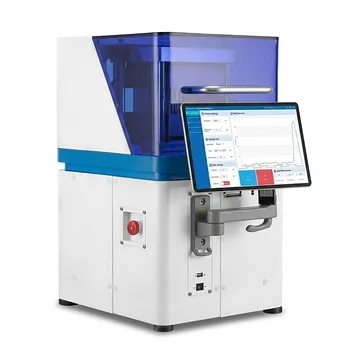
The primary role of automation and digital integration in modern lab pellet presses is to replace variable manual inputs with programmable, repeatable precision. By leveraging automated hydraulic systems—often capable of 30 to 60 tonnes of force—these devices operate autonomously to execute exact pressure and timing protocols. This technological shift eliminates human error and significantly reduces labor requirements, ensuring that every pellet produced meets strict specifications for analytical consistency.
Core Takeaway: The transition to automated, digital pellet presses is not merely about convenience; it is about data integrity. By removing the operator's physical variability from the equation and enabling precise data logging, these systems ensure that sample preparation is as scientifically rigorous and reproducible as the analysis that follows.
The Shift to Autonomous Operation
Eliminating Human Variability
In manual systems, the quality of a pellet often depends on the physical consistency of the operator. Automated hydraulic presses remove this variable entirely by applying force through programmed cycles. This ensures that the structural integrity of the pellet remains constant across different shifts and different operators.
Programmable Workflow Efficiency
Modern presses, particularly those in the 30 to 60-tonne configuration, can be programmed to operate autonomously. This allows laboratory staff to initiate a pressing cycle and step away to perform other tasks. The result is a significant increase in overall laboratory throughput and labor efficiency.
Integration with Lab Workflows
Beyond the press itself, automation fosters seamless connectivity. Future-facing trends point toward integration with other laboratory equipment, allowing the pellet press to function as one node in a larger, automated sample preparation workflow.
The Power of Digital Control Systems
Precision Parameter Control
Digital integration provides a user-friendly interface to control critical variables. Operators can make precise adjustments to pressure levels, dwell time (how long pressure is held), and release rates. This level of fine-tuning is essential for sensitive applications, such as preparing samples for X-ray fluorescence (XRF) or infrared spectroscopy, where pellet uniformity directly dictates analytical accuracy.
Replicability Through Presets
One of the most valuable features of digital systems is the ability to store multiple presets. Once an optimal method is developed for a specific material, it can be saved and instantly recalled. This guarantees that experimental conditions can be replicated exactly, months or even years later, without relearning the equipment.
Data Logging and Quality Control
Digital systems facilitate rigorous data logging and analysis. The equipment records the exact parameters used for every cycle. This data is crucial for quality control, allowing labs to audit their sample preparation process and optimize protocols based on historical performance.
Understanding the Trade-offs: Precision vs. Complexity
The Necessity of Calibration
While manual presses are mechanically simple, automated systems rely on sensors and software. To maintain the precision engineering benefits, these digital systems require regular calibration to ensure the displayed pressure matches the actual force applied.
Complexity in Maintenance
The move toward automation introduces electronic components and software into the workflow. While this boosts efficiency and precision, it also means that maintenance is no longer just mechanical; it involves ensuring software is updated and digital interfaces are functioning correctly.
Making the Right Choice for Your Goal
To determine if an automated, digitally integrated press is the right investment for your specific needs, consider your primary laboratory objectives:
- If your primary focus is Analytical Accuracy (XRF/IR): Prioritize systems with advanced digital controls to ensure the high-precision uniformity required for sensitive spectroscopic results.
- If your primary focus is High-Volume Throughput: Look for automated hydraulic presses that allow "set-and-forget" operation to maximize staff efficiency.
- If your primary focus is Methodology Development: Choose a model with robust data logging and preset storage to easily track, analyze, and replicate experimental conditions.
Ultimately, the value of automation lies in transforming sample preparation from a manual craft into a standardized, quantifiable science.
Summary Table:
| Feature | Manual Pressing | Automated & Digital Pressing |
|---|---|---|
| Consistency | Operator dependent (Variable) | Programmable & Repeatable |
| Force Control | Physical effort / Gauge reading | Precision Digital Input (up to 60T) |
| Throughput | Limited by manual labor | High (Set-and-forget operation) |
| Data Logging | Manual record keeping | Automatic digital audit trails |
| Applications | Simple / General use | XRF, IR Spectroscopy, High-Precision Research |
Elevate Your Sample Preparation with KINTEK Precision
Don't let manual variability compromise your research integrity. KINTEK specializes in comprehensive laboratory pressing solutions designed for the modern era of science. From manual and automatic models to specialized heated, multifunctional, and glovebox-compatible presses, we provide the tools necessary for rigorous analytical consistency.
Whether you are conducting battery research using our cold and warm isostatic presses or requiring high-tonnage automated systems for XRF analysis, KINTEK delivers precision-engineered equipment tailored to your specific workflow needs.
Ready to transform your sample preparation from a manual craft into a standardized science?
Contact KINTEK Today to Find Your Ideal Pressing Solution
Related Products
- Automatic Fluorescence Sample Preparation Press 40 Ton Lab Pellet Press for XRF Analysis
- Automatic Laboratory Hydraulic Press Lab Pellet Press Machine
- Laboratory Hydraulic Press 2T Lab Pellet Press for KBR FTIR
- Laboratory Hydraulic Pellet Press for XRF KBR FTIR Lab Press
- Laboratory Hydraulic Press Lab Pellet Press Machine for Glove Box
People Also Ask
- What is the general process for preparing a sample pellet for XRF? Master Consistency for Accurate Analysis
- What are the advantages of preparing a sample as a dense pellet for XRF? Unlock High-Precision Trace Element Analysis
- What are the common operational types of lab pellet presses? Choosing the Right Manual, Automatic, or Hydraulic System
- What are the emerging trends in the design and materials of lab pellet presses? Modernize Your Lab Efficiency
- What are common lab pellet press issues? Expert Troubleshooting Guide for Reliable Material Research