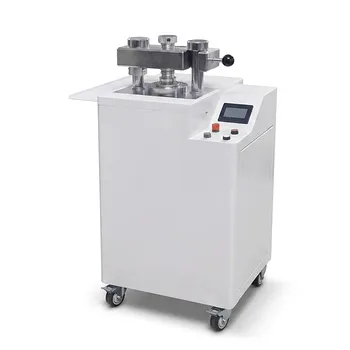
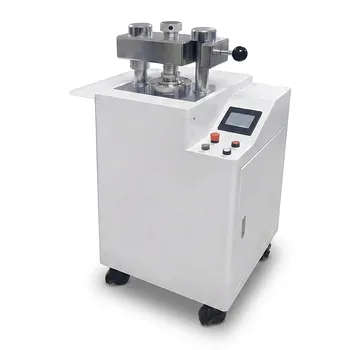
Operational simplicity is the defining feature of the hydraulic portable press. Unlike manual alternatives that rely heavily on operator leverage, this tool utilizes a hydraulic mechanism to generate force. This design ensures that any individual in the laboratory can create KBr pellets effortlessly, completely removing the variable of hand strength from the sample preparation process.
The accessibility of the hydraulic portable press stems from its ability to decouple result quality from physical effort. It democratizes sample preparation, ensuring consistent results regardless of the operator's physical capabilities.
The Mechanics of User Accessibility
Eliminating Physical Barriers
The primary obstacle in traditional pellet preparation is the physical force required to compress the powder. Hydraulic assistance bridges this gap.
By amplifying the input force, the press allows operators with varying levels of hand strength to achieve the necessary pressure. This ensures that the tool is usable by the entire staff, not just those with significant physical leverage.
Standardizing Sample Consistency
When physical strength is removed as a variable, consistency improves. The hydraulic mechanism applies force evenly and predictably.
This allows the lab to produce pellets of uniform quality across different shifts and different operators.
Operational and Economic Advantages
Durable Construction
Accessibility also refers to the tool's availability for daily use. A robust build ensures the press withstands the rigors of frequent laboratory work.
Long-term reliability means the equipment is consistently available, minimizing downtime caused by mechanical failure.
Reduced Maintenance Burden
The hydraulic system in these portable presses is typically sealed. This engineering choice protects internal components from contamination and wear.
Consequently, the need for frequent servicing is drastically reduced. This keeps the tool in circulation and accessible for research rather than sitting in a repair queue.
Material Efficiency
Economic accessibility is driven by the cost of ownership. The press is designed to produce high-quality pellets with minimal material waste.
By maximizing the utility of the KBr and sample material, the press lowers the operational cost per sample, making high-quality analysis more affordable for the lab.
Understanding the Trade-offs
Maintenance vs. Neglect
While the sealed hydraulic system reduces the frequency of maintenance, it does not eliminate the need for care.
Minimal maintenance is not the same as zero maintenance. Users must still ensure the device is kept clean and inspected to maintain the low cost of ownership over the tool's lifespan.
Initial Investment vs. Long-term Value
The "low cost of ownership" highlighted in technical specifications refers to the life of the product, not necessarily the purchase price.
Labs must be willing to invest in the upfront quality of a sealed, durable system to realize the economic benefits of reduced waste and servicing later on.
Making the Right Choice for Your Lab
To determine if this tool fits your specific workflow, consider your primary operational constraints:
- If your primary focus is Personnel Inclusivity: The hydraulic mechanism is essential to ensure every staff member can prepare samples without physical strain.
- If your primary focus is Long-Term Budgeting: The sealed system and durable construction offer the best return on investment by minimizing repair costs and material waste.
By prioritizing a tool that balances physical ease of use with mechanical reliability, you ensure your lab remains productive and accessible to all researchers.
Summary Table:
| Feature | Benefit to Laboratory | Impact on Accessibility |
|---|---|---|
| Hydraulic Mechanism | Amplifies input force effortlessly | Removes physical strength barriers for all staff |
| Sealed System | Protects internal components from wear | Minimizes maintenance and ensures tool availability |
| Robust Construction | High durability under frequent use | Reliable performance for high-volume research |
| Material Efficiency | Reduces KBr and sample waste | Lowers cost-per-sample for better budget management |
Elevate Your Lab Efficiency with KINTEK Press Solutions
Don't let physical limitations or inconsistent pellet quality hinder your research. KINTEK specializes in comprehensive laboratory pressing solutions designed for precision and inclusivity. Whether you need manual, automatic, heated, or glovebox-compatible models—or advanced cold and warm isostatic presses—our equipment is engineered to meet the rigorous demands of battery research and spectroscopy.
Ready to standardize your sample preparation? Contact our experts today to find the perfect press for your workflow and experience the KINTEK advantage in durability and ease of use.
Related Products
- Laboratory Hydraulic Press 2T Lab Pellet Press for KBR FTIR
- Automatic Laboratory Hydraulic Press for XRF and KBR Pellet Pressing
- Laboratory Hydraulic Pellet Press for XRF KBR FTIR Lab Press
- Manual Laboratory Hydraulic Pellet Press Lab Hydraulic Press
- Laboratory Hydraulic Press Lab Pellet Press Machine for Glove Box
People Also Ask
- What is the role of a laboratory pressure machine and KBr in FTIR? Master Sample Preparation for Flame Retardants
- What is the role of a laboratory hydraulic press in high-loading NCM811 cathode prep for solid-state batteries?
- What role does a laboratory hydraulic press play in reaction pellets? Optimizing Lunar Soil and Metal Fuel Density
- Why is a laboratory hydraulic press necessary for sample preparation? Precise Pelleting for Spiro Heterocyclic Analysis
- How does the application of a laboratory hydraulic press improve the performance of Tungsten Trioxide (WO3) electrodes? - Pro Tips