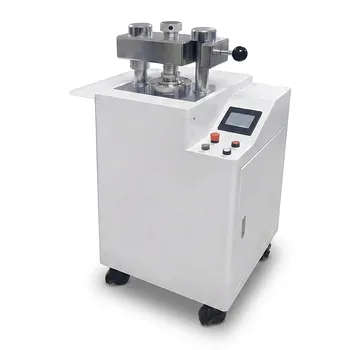
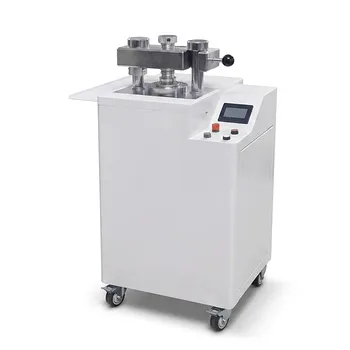
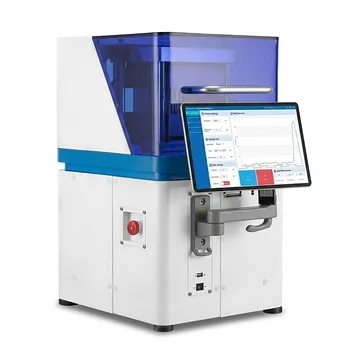
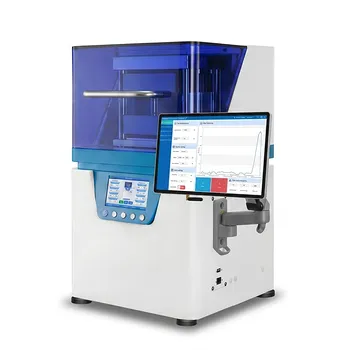
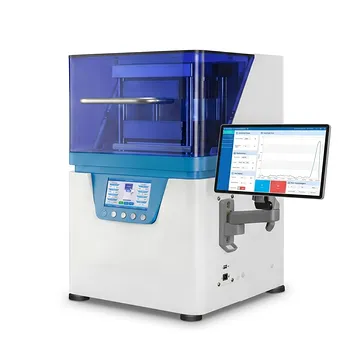
Beyond the standard applications in pharmaceutical and biological research, lab pellet presses are essential tools in environmental science, the food industry, and diverse industrial sectors ranging from aerospace to wood research. These devices are utilized wherever loose materials—such as powders, soils, or polymers—must be consolidated into uniform, solid samples to ensure accurate analysis and quality control.
The Core Utility While often viewed as niche laboratory equipment, pellet presses are universal tools for standardization. By converting variable raw materials into consistent, compact forms, they eliminate sample irregularity as a variable, ensuring that data regarding nutritional content, soil composition, or material density is precise and reproducible.
Applications in Environmental and Food Sciences
Environmental Sample Analysis
In environmental science, the consistency of the sample is critical for accurate data. Lab pellet presses are standard equipment for preparing soil and sediment samples.
Researchers compress loose soil into solid discs, creating a uniform surface area. This preparation allows for more accurate spectroscopic analysis when detecting contaminants or analyzing mineral composition.
Food Industry Quality Control
The food industry relies on pellet presses for both nutritional analysis and strict quality control (QC).
To determine the exact caloric or chemical makeup of a product, food scientists create uniform samples from raw ingredients. This ensures that nutritional labeling is based on a consistent density rather than loose, variable volumes.
Industrial and Material Engineering Uses
Wood, Rubber, and Plastic Research
Supplementary data indicates that these presses are heavily utilized in material testing industries. Specifically, they are used in wood research and rubber and plastic molding.
In these fields, the press is often used to test density, bond strength, or to create prototypes of composite materials before full-scale production.
Aerospace and Electronics
High-precision industries, such as aerospace and computer hardware manufacturing, utilize lab presses for component testing.
While the primary reference focuses on biological sciences, these sectors use presses to test the durability of ceramics, polymers, and composite materials used in high-stress environments.
Education and R&D Workflows
Educational Demonstrations
Beyond commercial use, lab pellet presses play a vital role in educational settings.
They are used in university labs to teach students about material properties and processing techniques. This hands-on experience helps students understand how pressure affects the physical state and density of matter.
Research and Development (R&D)
In a broader industrial context, these presses are integral to lean manufacturing and cell manufacturing.
They allow engineers to conduct "short runs" or limited production tests. This enables R&D teams to validate a material's behavior under pressure without committing to expensive, mass-production machinery.
Understanding the Trade-offs
Manual vs. Automatic Consistency
While the application of these presses is broad, the type of press used dictates the workflow efficiency. Manual presses are durable but labor-intensive. They are suitable for educational demos or occasional research where high throughput is not required.
Throughput and Reproducibility
For industrial QC or high-volume environmental testing, manual operation introduces human error. Automatic presses are generally required in these fields because they can be preset for specific pressures and holding times. This removes operator variability, ensuring that a soil sample analyzed today is prepared exactly the same way as one analyzed next month.
Making the Right Choice for Your Goal
Whether you are testing soil contaminants or analyzing food nutrition, the equipment must match the scale of your operation.
- If your primary focus is Environmental or Food Analysis: Prioritize automatic presses that ensure identical sample density for consistent spectral analysis.
- If your primary focus is Material Science (Plastics/Aerospace): Look for hydraulic presses capable of generating the high pressures required to consolidate polymers and ceramics.
- If your primary focus is Education or Occasional R&D: A manual press offers a cost-effective, robust solution for demonstrating principles and running small batches.
Success in any of these fields relies not just on the analysis method, but on the absolute uniformity of the sample being analyzed.
Summary Table:
| Industry Field | Primary Application | Key Materials Processed |
|---|---|---|
| Environmental | Soil and sediment analysis | Contaminated soil, mineral deposits |
| Food Science | Nutritional & chemical profiling | Raw ingredients, food powders |
| Aerospace & Electronics | High-stress component testing | Ceramics, polymers, composites |
| Material Engineering | Density and bond strength testing | Wood, rubber, plastics |
| Education & R&D | Material property demonstrations | Prototyping and small-batch testing |
Elevate Your Sample Consistency with KINTEK Solutions
Precise analysis starts with a perfectly prepared sample. KINTEK specializes in comprehensive laboratory pressing solutions tailored for battery research, material science, and industrial QC. Whether you need the portability of a manual press, the high-throughput repeatability of an automatic model, or the specialized capabilities of heated, multifunctional, or isostatic presses (CIP/WIP), we have the technology to eliminate sample irregularity.
Maximize your lab's accuracy today. Contact our experts for a personalized consultation and discover how our glovebox-compatible and specialized pressing equipment can optimize your research outcomes.
Related Products
- Automatic Fluorescence Sample Preparation Press 40 Ton Lab Pellet Press for XRF Analysis
- Automatic Laboratory Hydraulic Press Lab Pellet Press Machine
- Laboratory Hydraulic Press 2T Lab Pellet Press for KBR FTIR
- Laboratory Hydraulic Pellet Press for XRF KBR FTIR Lab Press
- Laboratory Hydraulic Press Lab Pellet Press Machine for Glove Box
People Also Ask
- What is the general process for preparing a sample pellet for XRF? Master Consistency for Accurate Analysis
- What are the advantages of preparing a sample as a dense pellet for XRF? Unlock High-Precision Trace Element Analysis
- What are the common operational types of lab pellet presses? Choosing the Right Manual, Automatic, or Hydraulic System
- What are the emerging trends in the design and materials of lab pellet presses? Modernize Your Lab Efficiency
- What are common lab pellet press issues? Expert Troubleshooting Guide for Reliable Material Research