Direct hot pressing plays a rapidly expanding role in the manufacturing of high-performance friction materials, specifically for sintered brake pads and clutch discs. It is the primary method used to consolidate metal powders into solid, durable components capable of withstanding extreme conditions in heavy industry and transport.
In the friction material industry, direct hot pressing is the manufacturing standard for producing sintered components. It bridges the gap between raw material and finished product for applications requiring exceptional durability, such as high-speed trains and heavy agricultural machinery.
The Production of Sintered Components
An Increasing Industrial Standard
Direct hot pressing is not a niche technique; it is seeing increased adoption across the friction material industry. This growth is driven by the demand for components that can handle higher thermal loads and mechanical stresses than traditional organic materials.
Creating Solid Forms
The process is fundamental to the creation of sintered materials. By applying heat and pressure simultaneously, this method fuses metallic powders into a dense, strong final product without melting the materials completely.
Applications in Braking Systems
High-Speed and Heavy Transport
One of the most critical applications for direct hot pressing is in the rail sector. High-speed trains rely on these sintered brake pads to manage immense kinetic energy during stopping. Similarly, motorcycles use these components to ensure reliable stopping power at high velocities.
Renewable Energy and Industry
The technology is vital for the wind energy sector, likely within the braking systems of wind turbine rotors. It also serves various general industrial applications where machinery requires consistent friction performance.
Off-Road and Recreation
Direct hot pressed pads are the friction material of choice for ATVs and mountain bikes. These vehicles operate in dirty, wet, or muddy environments where traditional pads might fail or wear down prematurely.
Applications in Transmission Systems
Heavy-Duty Commercial Vehicles
In the realm of transmission, direct hot pressing is used to produce sintered clutch discs. These are predominantly found in heavy-duty trucks, providing the durability needed to haul massive loads without clutch slippage or failure.
Agriculture and Marine
The agricultural sector relies on this technology for tractors and other farming machinery. Additionally, vessels utilize sintered clutch discs, ensuring reliable power transmission in marine environments.
Understanding the Trade-offs
Specificity of Application
While direct hot pressing creates superior heavy-duty components, it is tailored for high-stress environments. The process produces parts designed for "heavy-duty" and "high-speed" use, implying they may be over-engineered or less cost-effective for standard, light-duty passenger vehicles.
Material Characteristics
Sintered materials produced via this method are aggressive and hard. While this offers longevity for the friction material itself, it typically places higher stress on mating components (such as rotors or flywheels) compared to softer, non-sintered alternatives.
Making the Right Choice for Your Goal
If you are evaluating friction materials, the manufacturing process dictates the performance characteristics.
- If your primary focus is Extreme Braking Environments: Prioritize components made via direct hot pressing, as they are essential for high-speed trains, motorcycles, and wind turbines.
- If your primary focus is Heavy Load Transmission: Select sintered clutch discs produced through this method for maximum durability in tractors, trucks, and vessels.
Direct hot pressing is the definitive manufacturing solution when the application demands friction materials that refuse to compromise under heat and pressure.
Summary Table:
| Application Category | Core Components | Key Industry Examples |
|---|---|---|
| Braking Systems | Sintered Brake Pads | High-speed trains, wind turbines, motorcycles, ATVs |
| Transmission | Sintered Clutch Discs | Heavy-duty trucks, tractors, marine vessels |
| Key Performance | High Thermal Load | Superior durability in wet, muddy, and high-heat conditions |
Optimize Your Lab’s Material Research with KINTEK
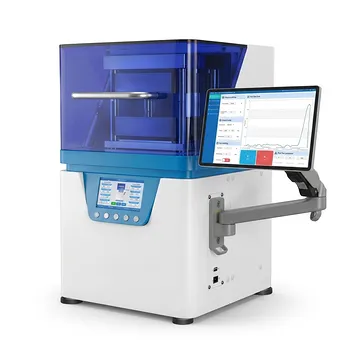
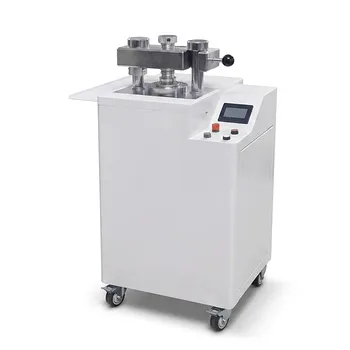
At KINTEK, we understand that high-performance friction materials require precision-engineered equipment. Whether you are developing the next generation of sintered brake pads or researching advanced metal powder consolidation, our comprehensive laboratory pressing solutions provide the reliability you need.
We offer a versatile range of equipment including:
- Manual & Automatic Presses for routine sample preparation.
- Heated & Multifunctional Models for advanced hot-pressing research.
- Glovebox-Compatible & Isostatic Presses (CIP/WIP) for specialized battery and materials science applications.
Empower your R&D with KINTEK's industry-leading technology. Contact us today to discuss how our laboratory presses can streamline your production of durable, high-performance components.
Related Products
- Automatic Hydraulic Hot Press with Large Plate and Precision Temperature Control for Advanced Material Sample Preparation and Industrial Research
- Automatic Heated Hydraulic Press Machine with Hot Plates for Laboratory
- Automatic High Temperature Heated Hydraulic Press Machine with Heated Plates for Lab
- Automatic Heated Hydraulic Lab Press Machine 200x200 Plate Size for Battery Research and Materials Science
- Laboratory Manual Heated Hydraulic Press Machine with Hot Plates
People Also Ask
- What are the specific features and applications of hydraulic hot press machines? Precision Solutions for Modern Labs
- How does an automatic hydraulic press operate? Achieve Precision and Consistency in Lab Pelleting
- What are the advantages and common applications of an automatic hydraulic press? Elevate Your Lab's Precision
- What is the technical significance of setting a precise dwell time? Achieve Peak Material Density and Stability
- When is an automatic hydraulic press more suitable than a manual press? Scale Your Lab with Precision & Speed