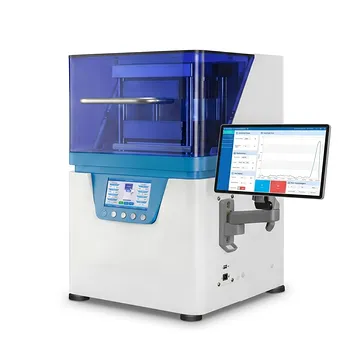
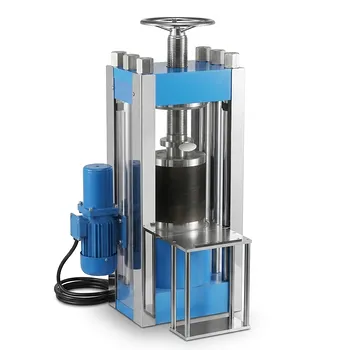
Complex pressure cycles are essential for curing PEEK and glass fiber laminates because they drive the high-viscosity molten matrix into the fiber bundles while simultaneously managing the polymer's crystalline structure. This phased approach ensures that the PEEK nanocomposite fully impregnates the microscopic gaps within the glass fiber reinforcement, effectively eliminating internal porosity. By synchronizing pressure with specific temperature stages, the process maximizes interlaminar shear strength and ensures the structural integrity of the multi-scale laminate.
The core takeaway is that complex pressure cycles transform PEEK from a surface layer into a fully integrated matrix. This precise control is necessary to eliminate void defects and optimize the matrix's crystallinity, which directly determines the mechanical performance of the final composite.
Achieving Systematic Matrix Impregnation
Overcoming High Melt Viscosity
Polyetheretherketone (PEEK) is a high-performance thermoplastic that requires temperatures near 400°C to reach a molten state. Even when molten, its viscosity is significantly higher than traditional thermoset resins, making it difficult for the matrix to flow into dense fiber bundles.
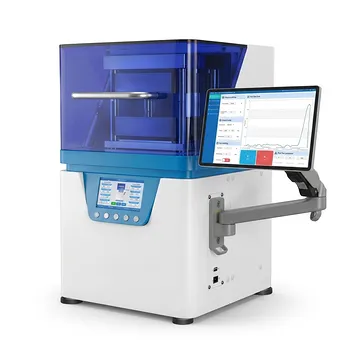
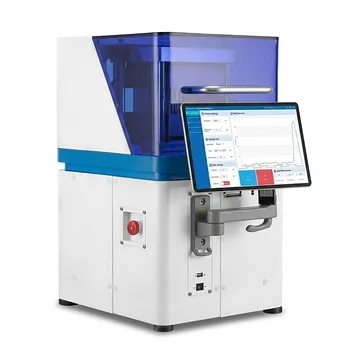
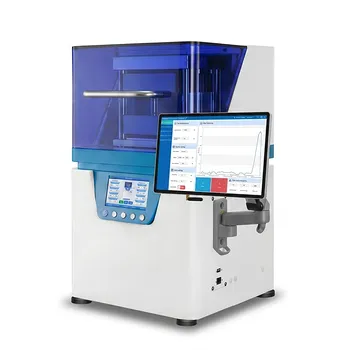
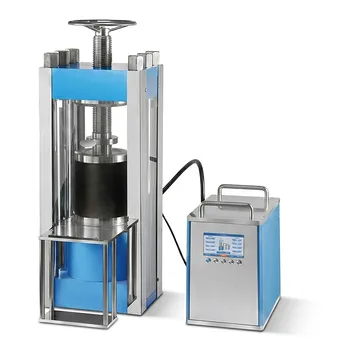
Phased pressure cycles provide the mechanical force necessary to overcome this resistance. By applying targeted pressure at specific thermal windows, the laboratory hot press forces the molten PEEK nanocomposite to penetrate the microscopic gaps within the glass fiber mats.
Eliminating Internal Porosity and Voids
The presence of air between prepreg layers or within fiber bundles creates "voids" that act as stress concentrators. These defects significantly reduce the material's strength and can lead to premature failure.
A synchronized pressure environment, often reaching levels as high as 38 bar, ensures that interlaminar air is expelled before the matrix solidifies. This process establishes a dense, high-fiber-volume fraction and ensures the final product meets exacting industrial standards for density.
Regulating Microstructural Development
Optimizing Matrix Crystallinity
The mechanical properties of PEEK are highly sensitive to its degree of crystallinity. Pressure cycles, managed in tandem with cooling rates, allow researchers to influence how polymer chains organize as they transition from a melt to a solid.
Properly executed cycles prevent the formation of an entirely amorphous or inconsistently crystalline structure. This precision ensures that the laminate achieves the specific balance of stiffness and toughness required for its intended application.
Strengthening Interfacial Bonding
High-precision pressure ensures that the resin thoroughly "wets" the fibers, facilitating mechanical anchoring and chemical bonding at the interface. Without this uniform pressure, the resin may merely sit on the surface of the fibers rather than interlocking with them.
Strong interfacial bonding is the primary driver of interlaminar shear strength. By maintaining stable pressure gradients, the laboratory press prevents delamination and ensures that the final composite possesses consistent dimensional stability.
Understanding the Trade-offs
Equipment and Energy Intensity
Processing PEEK and glass fiber laminates requires specialized laboratory presses capable of maintaining both extreme temperatures and high, constant pressure. The energy requirements and equipment wear-and-tear are significantly higher than those for standard composites like epoxy or EVA.
Risk of Fiber Damage and Internal Stress
There is a delicate balance between "sufficient" and "excessive" pressure. While high pressure is needed for impregnation, extreme force can cause fiber crushing or misalignment, which paradoxically weakens the laminate.
Furthermore, if the pressure cycle is not correctly synchronized with the cooling phase, it can trap internal stress concentrations. This may lead to warping or micro-cracking once the laminate is removed from the press and returns to ambient temperature.
How to Apply This to Your Project
Recommendations for Success
- If your primary focus is maximizing mechanical strength: Prioritize high 38-bar pressure phases to ensure the complete elimination of internal voids and optimal fiber-to-matrix bonding.
- If your primary focus is specific material calibration: Utilize a press that allows for rapid quenching and uniform pressure to create amorphous control samples for crystallinity studies.
- If your primary focus is dimensional precision: Implement a constant pressure (e.g., 0.5 MPa to 5 MPa) during the entire cooling stage to prevent warping and ensure uniform thickness across the plate.
Ultimately, mastering the complex interplay between pressure and temperature is the only way to unlock the full performance potential of PEEK-based multi-scale laminates.
Summary Table:
| Process Objective | Mechanism | Key Outcome |
|---|---|---|
| Matrix Impregnation | Overcomes high melt viscosity at 400°C | Forces molten PEEK into dense glass fiber bundles |
| Porosity Removal | High pressure (up to 38 bar) | Expels interlaminar air and eliminates internal voids |
| Crystallinity Control | Synchronized thermal/pressure cycles | Balances stiffness and toughness in the polymer matrix |
| Interfacial Bonding | Uniform mechanical anchoring | Maximizes interlaminar shear strength and prevents delamination |
Elevate Your Composite Research with KINTEK Precision
Unlock the full potential of high-performance materials like PEEK with KINTEK’s advanced laboratory pressing solutions. Our specialized equipment is designed to handle the rigorous demands of complex thermal and pressure cycles, ensuring your laminates achieve maximum structural integrity and optimal crystallinity.
Why choose KINTEK?
- Comprehensive Range: Manual, automatic, heated, and multifunctional models.
- Specialized Applications: Glovebox-compatible designs and isostatic presses (cold/warm) ideal for battery research and advanced polymer science.
- Precision Control: Achieve the exact 38-bar cycles and 400°C environments required for elite multi-scale laminates.
Ready to eliminate voids and enhance your material performance? Contact our technical experts today to find the perfect press for your laboratory!
References
- Ana M. Díez‐Pascual, Marián A. Gómez‐Fatou. Influence of carbon nanotubes on the thermal, electrical and mechanical properties of poly(ether ether ketone)/glass fiber laminates. DOI: 10.1016/j.carbon.2011.03.011
This article is also based on technical information from Kintek Solution Knowledge Base .
Related Products
- 24T 30T 60T Heated Hydraulic Lab Press Machine with Hot Plates for Laboratory
- Laboratory Split Manual Heated Hydraulic Press Machine with Hot Plates
- Heated Hydraulic Press Machine with Heated Plates for Vacuum Box Laboratory Hot Press
- Automatic Heated Hydraulic Press Machine with Hot Plates for Laboratory
- Automatic Large Format Laboratory Heated Hydraulic Press 400x400mm Plate Capacity
People Also Ask
- Function of a Laboratory Hydraulic Press with Heated Platens in SSE? Enhance Battery Density & Conductivity
- Why is a laboratory hydraulic press with heating plates required for PLA/TEC films? Achieve Precise Sample Integrity
- What role does a laboratory heated hydraulic press play in LTCC? Essential for High-Density Ceramic Lamination
- Why reduce load when applying composite strengthening tabs? Protect Specimen Integrity and Data Accuracy
- Why is a laboratory heated hydraulic press utilized during the lamination stage of NASICON green tapes?