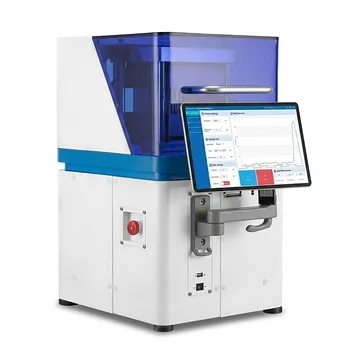
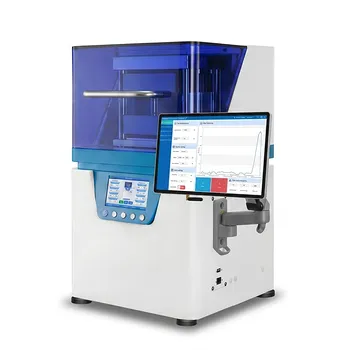
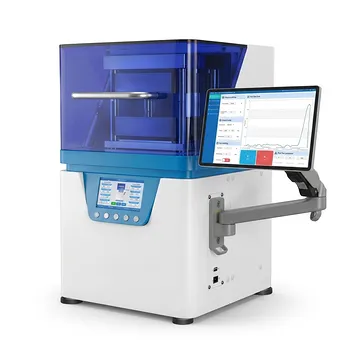
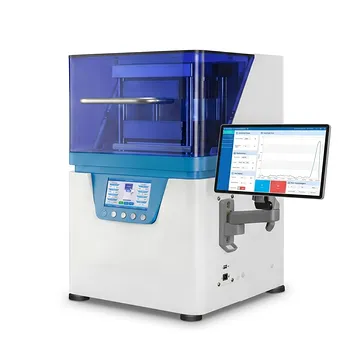
A dedicated laboratory platen press is the cornerstone of agile industrial research. It serves a critical role by bridging the gap between theoretical formulation and physical reality, specifically designed to handle high-demand operations that require frequent iteration. Unlike rigid production equipment, these units allow researchers to efficiently alter settings and switch between materials, bringing industrial capability directly into the lab.
The core value of a laboratory platen press lies in its ability to condense industrial processes into a compact footprint, enabling rapid iteration and immediate feedback without disrupting mass production lines.
Operational Agility in Research
Research and Development (R&D) is rarely a linear process; it requires constant adjustment. A dedicated press is engineered to support this specific need for flexibility.
Rapid Parameter Adjustments
In a research setting, finding the optimal processing window is key. A dedicated laboratory press allows operators to efficiently change settings such as temperature, pressure, and dwell time.
This capability ensures that researchers can run multiple experimental cycles in rapid succession to isolate the perfect variables.
Seamless Material Switching
R&D often involves testing a wide variety of compounds or substrates. These presses are designed to facilitate switching between materials quickly.
This reduces the downtime associated with cleaning or reconfiguring larger machinery, ensuring the equipment is ready for the next test immediately.
Optimizing the Laboratory Footprint
Space is often the most constrained resource in a research facility. The physical design of the equipment is just as important as its performance capabilities.
Compact Design for Lab Integration
Unlike massive production machines that require warehouse-style flooring, laboratory presses feature a small footprint.
This compact design allows high-force machinery to be conveniently placed directly inside the laboratory environment.
Point-of-Use Accessibility
Because the machine fits within the lab, testing is performed exactly where the samples are prepared. This eliminates the logistical bottleneck of moving samples to a separate production floor for testing.
Streamlining the R&D Workflow
The ultimate goal of a dedicated press is to remove friction from the research process.
Reducing Cycle Times
By placing the press close to the researcher, the workflow becomes significantly streamlined.
There is no need to wait for a production window to open up on a factory machine. Tests happen on demand, accelerating the overall pace of innovation.
Understanding the Limitations
While indispensable for research, it is important to recognize the specific boundaries of this equipment to ensure valid results.
Scale-Up Discrepancies
A laboratory press is optimized for flexibility, not mass throughput. Data gathered here must be carefully correlated when scaling up to larger production machines.
Differences in thermal mass or pressure distribution between a compact lab unit and a full-sized factory press can occasionally lead to variations in the final product.
Throughput Restrictions
These units are designed for high-demand operations (frequency of use), not high-volume output. They are generally not suitable for pilot runs requiring thousands of units.
Making the Right Choice for Your Goal
To maximize the return on investment for a laboratory press, align the equipment's capabilities with your specific research objectives.
- If your primary focus is Material Development: Prioritize a press that offers the fastest possible transition times between different material setups to maximize testing frequency.
- If your primary focus is Process Optimization: Ensure the press offers granular control over settings to replicate specific production variables on a smaller scale.
- If your primary focus is Laboratory Efficiency: select a model with the smallest physical footprint to maintain a streamlined workflow within a crowded workspace.
A dedicated laboratory press transforms R&D from a logistical challenge into a seamless, iterative process.
Summary Table:
| Feature | Research Benefit | Impact on R&D |
|---|---|---|
| Parameter Flexibility | Rapidly adjust temperature, pressure, and dwell time | Faster isolation of optimal processing variables |
| Compact Footprint | Small design fits directly into lab environments | Enhances accessibility and saves valuable floor space |
| Material Versatility | Quick switching between different compounds | Reduces downtime and increases testing frequency |
| Workflow Integration | Point-of-use testing near sample preparation | Streamlines innovation by removing logistical bottlenecks |
| Operational Agility | Immediate feedback without stopping production lines | Condenses industrial processes into rapid iterations |
Elevate Your R&D Precision with KINTEK
Transform your material research from a logistical challenge into a seamless iterative process. KINTEK specializes in comprehensive laboratory pressing solutions tailored for industrial excellence. Whether you require manual, automatic, heated, multifunctional, or glovebox-compatible models, our equipment is engineered to bridge the gap between theory and physical reality.
From advanced battery research using our cold and warm isostatic presses to rapid material prototyping, KINTEK provides the agility your lab needs to stay ahead. Contact KINTEK today to find your perfect pressing solution and bring industrial-grade capability directly to your benchtop!
Related Products
- 24T 30T 60T Heated Hydraulic Lab Press Machine with Hot Plates for Laboratory
- Automatic Heated Hydraulic Lab Press Machine 200x200 Plate Size for Battery Research and Materials Science
- Automatic Heated Hydraulic Lab Press 120x120mm Plate Fully Automated Material Research Press
- Laboratory Split Manual Heated Hydraulic Press Machine with Hot Plates
- Automatic High Temperature Heated Hydraulic Press Machine with Heated Plates for Lab
People Also Ask
- Function of a Laboratory Hydraulic Press with Heated Platens in SSE? Enhance Battery Density & Conductivity
- Why is a laboratory hydraulic press with heating plates required for PLA/TEC films? Achieve Precise Sample Integrity
- What role does a laboratory heated hydraulic press play in LTCC? Essential for High-Density Ceramic Lamination
- What is the primary function of a laboratory heated hydraulic press? Mastering Thermoplastic Carbon Fiber Composites
- What is the critical role of a laboratory heated hydraulic press? Mastering PVC Sample Prep for Testing