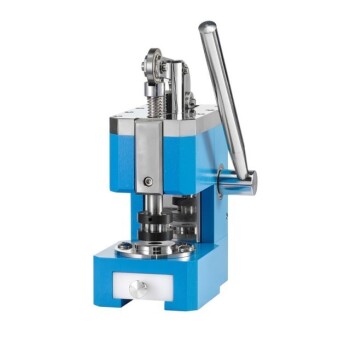
Lab-scale extraction equipment acts as the definitive filter for validating sustainable Crude Palm Oil (CPO) production processes. It is necessary because it isolates the effectiveness of Good Management Practices (GMP) by eliminating the unstable environmental factors inherent in large-scale industrial operations. This allows producers to prove that a process improvement works based on data, rather than luck or external variables.
By decoupling process variables from environmental chaos, lab-scale validation transforms theoretical improvements into actionable engineering data. It provides the essential blueprint required to upgrade semi-automated mills with confidence.
The Necessity of Controlled Validation
Eliminating Environmental Noise
In a full-scale mill, factors like fluctuating ambient temperatures and inconsistent raw material volume can skew performance data.
Lab-scale equipment removes these unstable environmental factors entirely. This ensures that any observed increase in Oil Extraction Rates (OER) is the result of the process itself, not a temporary external condition.
Verifying Good Management Practices (GMP)
Implementing sustainable practices requires proof of concept before capital investment.
Laboratory equipment validates that specific GMP interventions directly lead to improved extraction. It serves as the "truth test" for new methods before they are rolled out to the production floor.
Precision as a Design Tool
Defining Optimal Parameters
Sustainable production relies on maximizing yield while minimizing energy input.
Lab-scale tools allow for absolute control over critical variables: extraction temperature, processing duration, and pressure. Researchers can tweak these inputs with granular precision to find the exact "sweet spot" for maximum yield.
Guiding Facility Upgrades
The data derived from the lab does not just stay in the lab; it dictates the future of the infrastructure.
These optimal parameters serve as the technical specifications for designing or upgrading semi-automated palm oil mills. The lab results tell the engineers exactly what performance targets the industrial machinery must achieve.
Understanding the Trade-offs
The Scale-Up Discrepancy
While lab data is precise, it represents an idealized scenario that is difficult to replicate perfectly in a factory.
A common pitfall is assuming a 1:1 translation of results; industrial machinery often faces heat transfer and mechanical inefficiencies that lab equipment does not.
The Cost of Precision
Achieving lab-level control on an industrial scale requires sophisticated, semi-automated equipment.
Producers must balance the cost of these high-precision upgrades against the projected revenue from improved extraction rates.
Strategic Implementation for CPO Producers
To effectively utilize lab-scale validation for your sustainability goals, align your approach with your specific phase of development:
- If your primary focus is Process Optimization: Use lab equipment to isolate single variables (like pressure) to determine the mathematical limit of your extraction rate.
- If your primary focus is Infrastructure Investment: Use the optimal parameters identified in the lab to audit potential equipment upgrades, ensuring they can match the required specifications.
True sustainability in CPO production begins with the precise, data-driven validation that only the laboratory can provide.
Summary Table:
| Key Validation Factor | Lab-Scale Benefit | Impact on CPO Production |
|---|---|---|
| Variable Control | Eliminates environmental noise | Isolates process efficiency from external luck |
| GMP Verification | Provides a "truth test" for methods | Proves performance before capital investment |
| Parameter Tuning | Granular control of temp/pressure | Identifies the "sweet spot" for maximum yield |
| Infrastructure | Provides technical blueprints | Guiding specs for upgrading semi-automated mills |
Elevate Your CPO Research with KINTEK Precision
Ready to transform your theoretical process improvements into actionable engineering data? KINTEK specializes in comprehensive laboratory pressing solutions designed to meet the rigorous demands of sustainable oil extraction and battery research.
Whether you require manual, automatic, heated, or multifunctional models, or advanced cold and warm isostatic presses, our equipment provides the precision needed to validate your GMP interventions and optimize extraction rates. Don't leave your industrial upgrades to chance—partner with KINTEK to build a data-driven foundation for your facility.
Contact KINTEK Today to Find Your Pressing Solution
References
- L.M. Ayompe, Benis N. Egoh. Transforming palm oil production: sustainable techniques and waste management strategies for Cameroon's smallholder farmers. DOI: 10.3389/fsufs.2025.1606323
This article is also based on technical information from Kintek Solution Knowledge Base .
Related Products
- Laboratory Hydraulic Split Electric Lab Pellet Press
- Lab Manual Microtome Slicer for Tissue Sectioning
- Square Lab Press Mold for Laboratory Use
- Automatic High Temperature Heated Hydraulic Press Machine with Heated Plates for Lab
- Automatic Heated Hydraulic Press Machine with Heated Plates for Laboratory
People Also Ask
- What are the emerging trends in the design and materials of lab pellet presses? Modernize Your Lab Efficiency
- What are common lab pellet press issues? Expert Troubleshooting Guide for Reliable Material Research
- How do lab pellet presses support customization and flexibility? Optimize Your Sample Prep for Any Material
- What are the common operational types of lab pellet presses? Choosing the Right Manual, Automatic, or Hydraulic System
- Why use a laboratory pellet press for solid-state battery evaluation? Ensure Accuracy in Interface Stability Testing