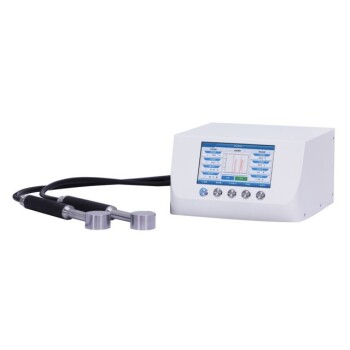
Precise temperature control is the fundamental requirement for scientifically validating oil stability. It allows researchers to replicate the exact thermal stress of cooking to observe how triglycerides decompose into free fatty acids. Without this strict regulation of heating duration and cooling cycles, it is impossible to generate reliable quantitative data on oil degradation.
Laboratory heating equipment provides the controlled environment necessary to accurately measure changes in Acid Value and Peroxide Value. This precision enables the identification of specific critical points where hydrolysis rancidity occurs, differentiating the thermal performance of refined versus cold-pressed oils.
Simulating Real-World Conditions
Replicating Cooking Stress
Laboratory heating equipment is not simply about making oil hot; it is designed to simulate the thermal conditions oil experiences during actual cooking.
By applying specific, consistent heat loads, researchers can mimic frying or sautéing environments. This ensures that the data collected reflects how the oil will behave in a kitchen, rather than just in a test tube.
Controlling the Thermal Lifecycle
Stability testing requires more than just a steady temperature; it involves setting precise heating durations and subsequent cooling cycles.
Oils react differently to sustained heat versus heating-and-cooling patterns. Controlled equipment allows researchers to program these cycles to observe the cumulative effect of thermal stress over time.
Measuring Chemical Decomposition
Tracking Triglyceride Breakdown
The primary chemical change utilized to evaluate stability is the decomposition of triglycerides into free fatty acids.
This chemical breakdown is the precursor to spoilage. Precise heat control is required to induce this breakdown at a measurable, consistent rate, allowing for a direct comparison between oil types.
Quantifying Acid and Peroxide Values
To objectively compare refined and cold-pressed oils, researchers must measure specific chemical markers: the Acid Value and the Peroxide Value.
These values indicate the level of oxidation and rancidity. A controlled laboratory environment ensures that changes in these values are result of thermal load, not external variables like ambient fluctuation.
Identifying Critical Failure Points
The ultimate goal of using precision equipment is to pinpoint the critical points of degradation.
These are the exact moments or temperatures where hydrolysis rancidity begins. By identifying these thresholds, researchers can define the safe operating limits for different types of oils.
Common Pitfalls in Stability Testing
The Risk of Variable Contamination
If heating equipment lacks precision, it becomes impossible to attribute chemical changes solely to thermal degradation.
Fluctuations in temperature can cause inconsistent rates of hydrolysis. This leads to data noise, making it difficult to distinguish whether an oil failed due to its inherent properties or due to irregular testing conditions.
Overlooking the Cooling Phase
A common error is focusing exclusively on maximum temperature while ignoring the cooling phase.
As the primary reference notes, cooling cycles are integral to the simulation. Neglecting to control the rate and duration of cooling leads to an incomplete picture of the oil's total oxidative stability.
Making the Right Choice for Your Analysis
To accurately evaluate the thermal stability of your oil samples, align your testing protocols with your specific analytical goals.
- If your primary focus is defining shelf-life: Focus on measuring the Peroxide Value over extended heating and cooling cycles to detect early oxidation.
- If your primary focus is cooking safety: Prioritize identifying the critical points of hydrolysis rancidity to establish maximum temperature limits for the oil.
Precision in the lab is the only path to predictability in the kitchen.
Summary Table:
| Parameter | Importance in Oil Stability Testing | Impact on Analysis |
|---|---|---|
| Temperature Precision | Simulates cooking stress (frying/sautéing) | Identifies critical failure points and hydrolysis thresholds |
| Heating Duration | Controls the rate of triglyceride decomposition | Ensures consistent, measurable breakdown into free fatty acids |
| Cooling Cycles | Replicates the full thermal lifecycle of oils | Reveals cumulative oxidative stress and long-term shelf-life |
| Environment Control | Minimizes ambient variable contamination | Guarantees changes in Acid/Peroxide values are due to thermal load |
Elevate Your Lipid Research with KINTEK Precision
Ensure your oil stability testing yields reliable, repeatable data with KINTEK’s advanced laboratory heating solutions. Whether you are analyzing the oxidative thresholds of cold-pressed oils or the thermal durability of refined products, our equipment provides the exact control over heating cycles and temperature stability required for rigorous scientific validation.
Our specialized solutions for battery research and material science labs include:
- Manual & Automatic Presses for sample preparation.
- Heated & Multifunctional Models for precise thermal stress simulation.
- Glovebox-Compatible & Isostatic Presses (Cold/Warm) for specialized environmental testing.
Don't let inconsistent heat compromise your Acid and Peroxide value accuracy. Contact KINTEK today to find the perfect thermal processing solution for your lab!
References
- ARFA NOORA A, Sivakumar K.P. Quantitative analysis on the impact of heating on acid value of cold press and refined oil a comparative study. DOI: 10.36948/ijfmr.2025.v07i05.57755
This article is also based on technical information from Kintek Solution Knowledge Base .
Related Products
- Automatic Heated Hydraulic Press Machine with Hot Plates for Laboratory
- Laboratory Split Manual Heated Hydraulic Press Machine with Hot Plates
- Automatic Heated Hydraulic Press Machine with Heated Plates for Laboratory
- Cylindrical Lab Electric Heating Press Mold for Laboratory Use
- 24T 30T 60T Heated Hydraulic Lab Press Machine with Hot Plates for Laboratory
People Also Ask
- Function of a Laboratory Hydraulic Press with Heated Platens in SSE? Enhance Battery Density & Conductivity
- Why is a laboratory hydraulic press with heating plates required for PLA/TEC films? Achieve Precise Sample Integrity
- What are the requirements for electrode pressing with high-viscosity ionic liquids like EMIM TFSI? Optimize Performance
- How does a laboratory heated hydraulic press facilitate PBN sample prep for WAXS? Achieve Precise X-Ray Scattering
- What are the industrial applications of heated hydraulic presses? Master Heat & Force for Precision Manufacturing