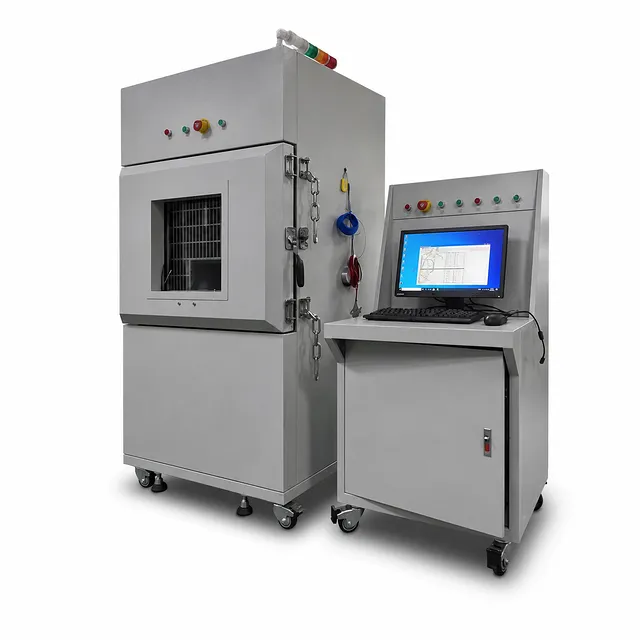
Battery Safety Testing Equipment
Computer Servo Compression Nail Penetration Test Machine
Item Number : DA08
Price varies based on specs and customizations
- Pressure Range
- 1~20KN (adjustable)
- Compression Travel
- 300mm
- Testable Battery Size
- W400 X D400 X H300mm

Shipping:
Contact us to get shipping details Enjoy On-time Dispatch Guarantee.
Why Choose Us
Easy ordering process, quality products, and dedicated support for your business success.
Product Overview
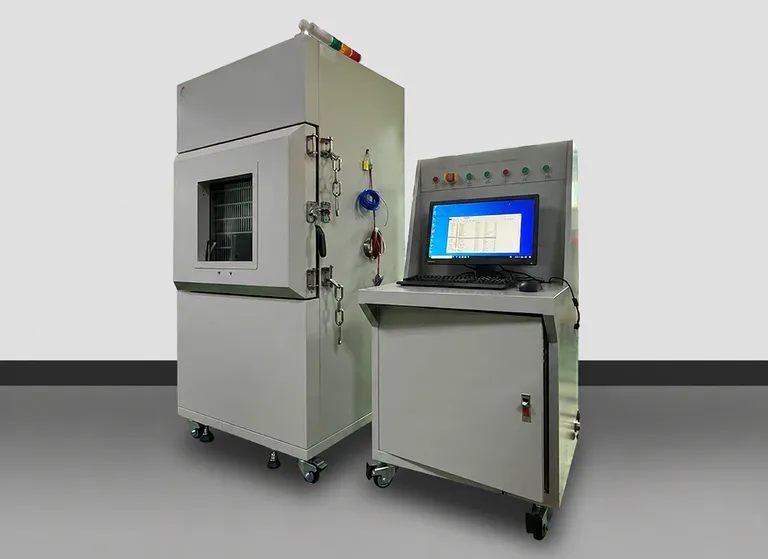
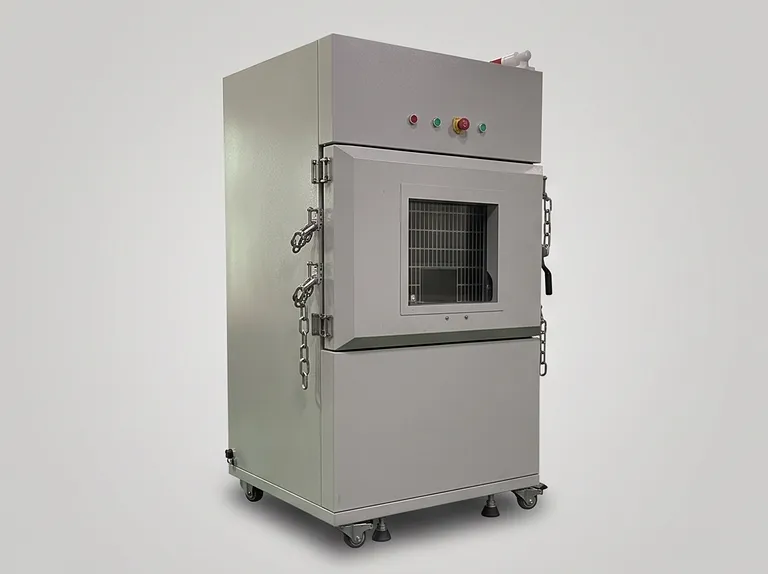
This computer-controlled battery safety test system reproduces compression and nail penetration conditions that traction lithium batteries may experience during use. It applies controlled force through a servo motor and screw mechanism, allowing laboratory teams to observe possible battery responses under programmed compression conditions. Adjustable force, speed, travel, hold time, voltage monitoring, and multi-stage displacement control provide a practical platform for repeatable abuse-test procedures.
The equipment is intended for power lithium battery development, cell safety evaluation, quality verification, and failure-analysis work. It supports force-, displacement-, or voltage-based test conditions, enabling teams to establish procedures around a defined load, deformation target, or voltage-drop threshold. The included tungsten carbide needles also support penetration testing alongside plate-based compression testing within the same protected test environment.
Built around a vertical compression structure and a separated control arrangement, this unit prioritizes controlled operation during demanding battery tests. A flame-retardant stainless-steel inner chamber, explosion-protected observation window, automatic pressure-relief provision, exhaust capability, remote video monitoring, carbon dioxide fire-extinguishing system, and emergency stop function support informed observation while helping keep personnel separated from the active test area.
Key Features
-
Servo-Driven Compression Control: A servo motor drives the screw-based loading mechanism for adjustable compression from 1 to 20 kN. The system provides force error of no more than +/-1% of full scale, supporting dependable execution of defined load conditions.
-
Programmable Multi-Stage Displacement: The platen can descend to a defined position, dwell, continue to a second displacement stage, dwell again, and repeat the sequence through the final programmed position. This control method supports deformation-based test protocols that require staged loading and timed holds rather than a single continuous stroke.
-
Multiple Automatic Return Conditions: The system can return immediately or after a specified hold when the set force is reached. It can also return or hold after a selected voltage-drop value is detected, giving laboratories flexibility to align termination behavior with their internal test method.
-
Adjustable Speed Across Compression and Penetration Tests: Compression speed is adjustable from 1 to 900 mm/min, while nail penetration speed is 1 to 40 mm/s. Speed accuracy is no more than +/-1% of full scale, helping users maintain consistent motion settings across comparative test programs.
-
Integrated Voltage and Temperature Acquisition: The unit includes temperature and voltage acquisition capability, with 1 mV voltage resolution. Test data are computer-controlled for stable, real-time remote collection and can be saved and printed as Excel documents.
-
Protected Observation Environment: A 400 x 400 mm explosion-proof glass viewing window incorporates explosion-proof film and an internal steel-mesh structure. A high-brightness energy-saving explosion-proof lamp illuminates the test space for direct visual observation during testing.
-
Containment and Pressure-Relief Provisions: The vertical chamber uses flame-resistant material and SUS#304 stainless steel for the inner enclosure, with a powder-coated cold-rolled-steel exterior. A magnetically retained 300 x 300 mm rear pressure-relief door opens under strong airflow to reduce explosion impact.
-
Independent Exhaust and Fire Control: The independently controlled 150 mm diameter top exhaust system can automatically detect smoke generated by a test sample and discharge it through ducting. A remotely controllable carbon dioxide fire-extinguishing system provides an additional protective response capability.
-
Remote and Local Operating Arrangement: The chamber and control section are separated by up to 5 m, with an independent controller that supports both local and remote control. A high-definition camera monitoring system in the test area can also be remotely controlled to support accurate observation and recorded test review.
-
Purpose-Built Penetration Tooling: The supplied tungsten carbide needle set includes six each of Phi3, Phi4, and Phi6 x 100 mm needles, for 18 needles in total. This provides several reference-backed needle diameters for battery penetration test preparation.
Applications
| Application | Description | Key Benefit |
|---|---|---|
| Power lithium battery cell development | Compresses development cells between two plates or performs controlled tungsten carbide needle penetration while monitoring voltage and temperature. | Helps R&D teams observe potential cell behavior under defined mechanical abuse conditions. |
| EV traction battery safety evaluation | Simulates compression scenarios associated with battery use and applies selectable force, voltage-drop, or deformation-based conditions. | Supports repeatable safety evaluation using programmable load and return logic. |
| Battery quality assurance laboratories | Verifies samples against internal compression or penetration procedures with computer-based acquisition and Excel document output. | Creates traceable data records for comparison, reporting, and printout. |
| Failure analysis and abuse-test research | Uses staged displacement, dwell periods, controlled speed, and voltage monitoring to examine changes during progressive mechanical loading. | Allows researchers to isolate loading sequence and hold-time variables in a single procedure. |
| Cell manufacturing process validation | Tests representative cells after production or design changes under controlled compression force and travel settings. | Supports consistent evaluation conditions when comparing sample groups. |
| Battery safety test facilities | Conducts high-consequence mechanical tests inside a chamber with explosion-protected viewing, smoke exhaust, pressure relief, and fire-control provisions. | Improves operational control and observation during tests that may generate smoke or strong airflow. |
| Academic electrochemical and materials research | Provides a controlled platform for studying battery response to mechanical deformation or puncture alongside voltage and temperature acquisition. | Combines mechanical test execution with measurement data for laboratory investigations. |
Technical Specifications
| Parameter | DA08 Specification |
|---|---|
| Application | Simulates compression conditions that various power lithium battery cells may encounter during use and presents possible battery conditions during compression. |
| Operating principle | A battery is placed between two compression plates. A motor applies pressure through a screw mechanism; the platen returns after a set pressure is reached, after voltage falls to a selected value, or after the battery is compressed to a specified deformation and held before further programmed compression and return. |
| Pressure range | 1~20KN (adjustable) |
| System structure | Vertical downward compression structure |
| Input voltage | 220V, 50 Hz single-phase power |
| Force error | <=+/-1% full scale |
| Force unit conversion | n, kn, |
| Compression speed | 1~900mm/min (speed can be adjusted arbitrarily) |
| Compression speed accuracy | <=+/-1% full scale |
| Compression travel | 300mm |
| Compression travel accuracy | <=+/-1% full scale |
| Testable battery size | W400 X D400 X H300mm |
| Voltage-drop control | When voltage drops to a selected voltage-drop value, the platen automatically returns or maintains pressure for a specified time before returning. |
| Pressure control | When pressure reaches the set force value, the platen returns immediately or maintains the set pressure for a specified time before returning. |
| Displacement control | The platen descends to a set position, pauses for a specified time, then continues to a second displacement and pauses. This cycle continues; after the final descending displacement, the platen holds for a specified time and then returns. |
| Safety stop switch | Equipped with an emergency stop button |
| Voltage resolution | 1mv |
| Test conditions | Force, displacement (deformation), or voltage; one of the three |
| Compression hold time | 0~99 hours 99 minutes 99 seconds; time status can be freely set and adjusted, with automatic termination according to deformation arrangement. |
| Communication and data handling | Computer control supports stable, real-time remote acquisition; includes explosion-proof function; all data are saved and printed as Excel documents through the computer. |
| Drive method | Servo motor drive |
| Nail penetration speed | 1~40mm/s |
| Tungsten carbide needles | Phi3; Phi4; Phi6X100MM, 6 pieces each, 18 pieces total |
| Acquisition system | Temperature/voltage acquisition system |
| Chamber arrangement | Vertical structure with chamber and control section separated by up to 5 m for operator safety; includes an independent controller and supports local and remote control. |
| Inner chamber material | Flame-resistant material, SUS#304 stainless steel |
| Outer chamber material | Powder-coated cold-rolled steel |
| Camera monitoring system | High-definition camera monitoring system installed in the test area; remotely controllable to help ensure accurate data. |
| Viewing window | 400 X400mm explosion-proof glass with explosion-proof film and built-in steel-mesh structure to prevent explosive objects from striking the window. |
| Lighting | High-brightness energy-saving explosion-proof lamp installed inside the test chamber to illuminate the full test space. |
| Exhaust system | Independently controlled; automatically detects smoke produced by the sample and exhausts smoke through ducting. Diameter: 150mm; installed at the top of the equipment. |
| Ergonomic design | Bottom of test chamber is approximately 800MM above the ground for observation and operation during testing. |
| Equipment base | Fitted with 4 universal wheels and 4 fixed feet for movement and stable positioning. |
| Automatic explosion-proof pressure-relief system | Provides exhaust for large quantities of waste gas generated during testing and discharges it outdoors. Rear protective enclosure has a magnetic pressure-relief door, 300*300mm, which opens automatically under strong airflow to reduce explosion impact. |
| Fire protection device | Carbon dioxide fire-extinguishing device; remotely controllable. |
| Automatic fire-extinguishing device | Fire-extinguishing device can be controlled remotely by remote control. |
| Overall dimensions | Approximately 1020W X 600D X 1900H mm; subject to actual equipment. |
| Computer control cabinet dimensions | Approximately 700W X 600D X 1300H mm; subject to actual equipment. |
| Machine weight | Approximately 1000KG |
| Power supply | 220V, 50Hz, single-phase power, British-standard plug |
| Power | 2.2KW |
| Test port | One Phi50mm test port on the left side of the chamber, with silicone compression sealing and a stainless-steel cover. |
Why Choose This Product
-
Control Built for Defined Test Methods: Adjustable force, compression speed, travel, hold time, voltage threshold, and multi-stage displacement provide the operating variables required to construct disciplined battery compression and penetration procedures.
-
Safety-Conscious Mechanical Test Design: The separated controller arrangement, emergency stop, protected viewing window, camera monitoring, smoke exhaust, pressure-relief door, and carbon dioxide fire-extinguishing provision address the practical operating environment of battery abuse testing.
-
Reliable Measurement and Documentation: Computer control supports stable real-time remote acquisition, while temperature/voltage collection and 1 mV voltage resolution help laboratories retain meaningful test evidence. Excel document saving and printing simplify reporting workflows.
-
Robust Laboratory Construction: SUS#304 stainless steel, flame-resistant chamber materials, powder-coated cold-rolled steel, explosion-proof lighting, and a stable wheeled base with fixed feet are selected for repeated laboratory operation and test-area practicality.
-
Flexible Support for Compression and Penetration Work: Plate compression functions and the supplied three-diameter tungsten carbide needle set enable one protected system to address complementary mechanical battery safety tests. Contact us for a quote or a custom solution matched to your battery size, test sequence, and laboratory safety requirements.
Trusted by Industry Leaders

REQUEST A QUOTE
Our professional team will reply to you within one business day. Please feel free to contact us!
Related Products
Solid State Battery Research Laboratory Hydraulic Hot Press Machine
High-precision thermal compression system for solid-state battery research with independent dual-platen heating up to 300°C, 30-ton hydraulic press, and automatic pressure compensation for precise sample fabrication. Ideal for electrolyte compaction and composite lamination. With programmable cooling and safety interlocks.
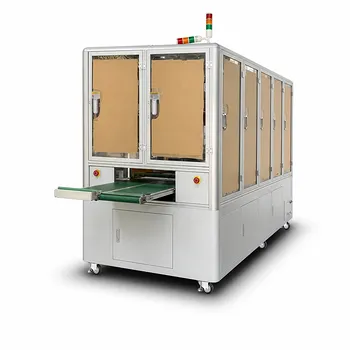
Pouch Prismatic Battery OCV DCIR Testing Machine with Barcode Scanning and Inkjet Coding
Automated pouch prismatic battery OCV and DCIR testing machine with barcode scanning, voltage resistance measurement, data traceability, and OK NG sorting for high throughput cell production across pouch cell manufacturing lines with reliable server integration
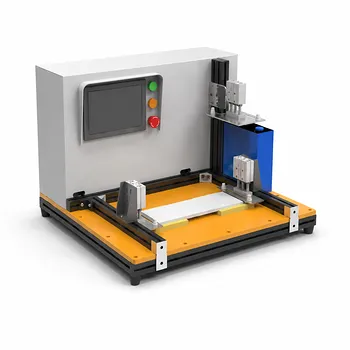
Prismatic Battery Automatic Testing and Sorting Equipment
Prismatic battery automatic testing and sorting equipment measures open circuit voltage and AC internal resistance, automatically pairs up to eight grades, supports traceable database management, and processes approximately 600 cells per hour for consistent pack quality in lithium battery production.
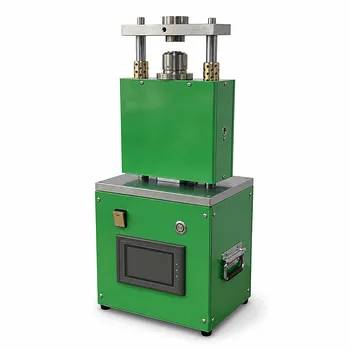
Electric Coin Cell Crimping Machine Battery Sealing Press
Electric coin cell crimping machine for laboratory battery research, capacitor sealing, small batch production, adjustable pressure, interchangeable dies, vibration free operation, and precise reliable forming across diverse materials processing applications.

Button Battery Sealing Press Machine for Lab
Boost button battery production with KINTEK's Electric Sealer – precision sealing, 300-600 pieces/hour, intelligent pressure control. Enhance yield now!
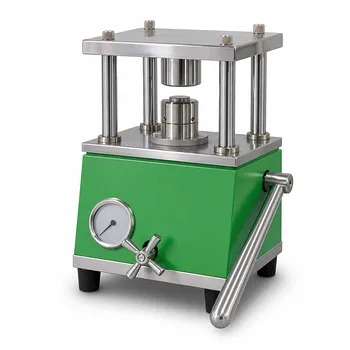
Manual Coin Cell Battery Crimping Machine
Manual coin cell battery crimping machine for laboratory research delivers precise hydraulic sealing up to 8T pressure, compact glovebox operation, adjustable safety control, accurate height limiting, and dependable short circuit protection for repeatable sample preparation and pilot production.
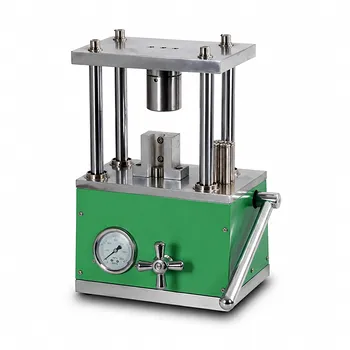
Laboratory Manual Cylindrical Battery Third Seal Crimping Machine
Laboratory manual cylindrical battery crimping sealing machine for 18650 third sealing delivers precise pressure control, smooth edges, strong airtightness, stable forming, compact operation, and glovebox compatible battery research performance with reliable consistency and convenient maintenance for demanding laboratory workflows
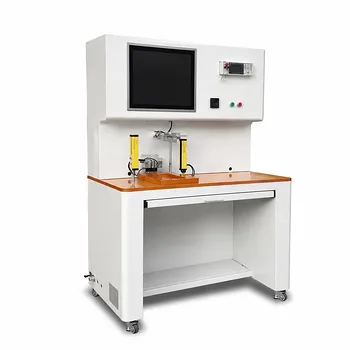
Manual Multifunctional OCV Sorting Machine for Pouch Lithium Ion Cells
Manual multifunctional OCV sorting machine for pouch lithium ion cells, combining voltage and internal resistance testing, data binding, software grading, voice notification, and flexible cell compatibility.
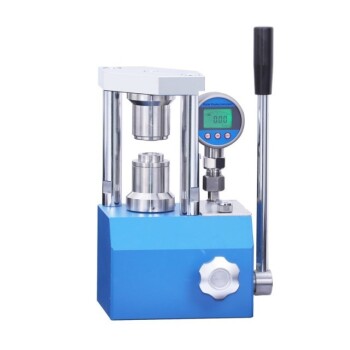
Button Battery Sealing Machine for Button Batteries
KINTEK's Manual Button Battery Sealer ensures precise, airtight sealing for CR2032, LR44 batteries. Ideal for labs, R&D, and small production. Boost efficiency now!
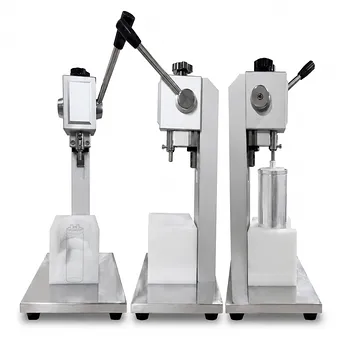
Manual Supercapacitor Plug Pressing Machine
Manual supercapacitor plug pressing machine for post-filling battery assembly, delivering compact, flexible operation with a 20mm working stroke, 60mm product diameter compatibility, and glovebox transfer capability for efficient laboratory production workflows in advanced electrochemical research environments today worldwide.
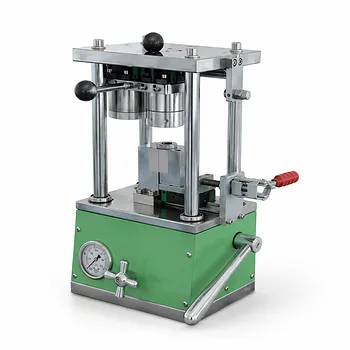
Laboratory Manual Cylindrical Battery Sealing Machine
Laboratory manual cylindrical battery sealing machine with two stage sealing hydraulic drive embedded pressure gauge and 8 ton maximum force for precise 18650 research
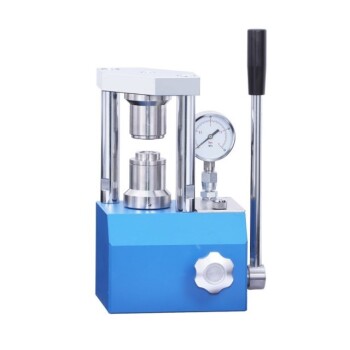
Manual Button Battery Sealing Machine for Battery Sealing
Manual Button Battery Sealer for precise, affordable lab sealing. Ideal for CR2032, LR44 batteries. Enhances safety & extends battery life. Get yours now!
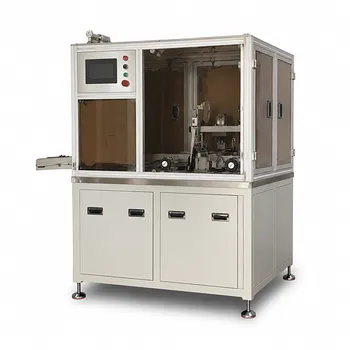
Fully Automatic Mechanical Battery Sealing Machine
Fully automatic mechanical battery sealing machine automates first second third and height-setting seals for liquid-filled cylindrical cells, delivering at least 45PPM throughput with 99% equipment-related yield, 98% equipment uptime, pneumatic height control, and corrosion-resistant industrial construction for production lines.
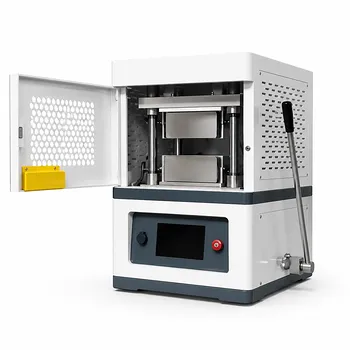
Laboratory Hydraulic Hot Press Machine for Solid-State Battery Research
Compact benchtop laboratory hydraulic hot press for solid-state battery research featuring independent dual-zone heating up to 300°C, 25-ton automatic pressure control, and integrated water cooling for precise compaction of electrolytes and polymer membranes in small-footprint design ideal for R&D applications.
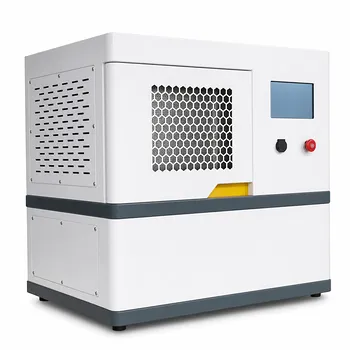
Solid-State Battery Laboratory Hydraulic Hot Press Machine
Precision laboratory hydraulic hot press for solid-state battery research, with dual-plate heating up to 300°C, 50-ton active pressure holding, programmable touchscreen control, and robust benchtop design, ideal for academic and industrial laboratories compacting electrolyte pellets and laminating electrodes.
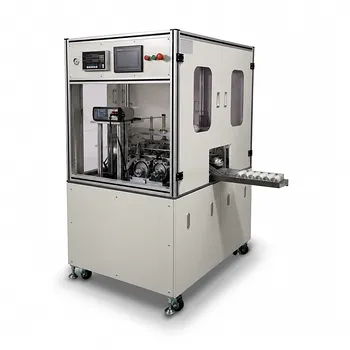
Precision Digital Battery Cell Shaping Machine Supercapacitor Cell Flattening Machine
Precision digital cell shaping machine for battery and supercapacitor cells, delivering four-station foil forming, short-circuit screening, accurate length adjustment, PLC control, and repeatable preparation for dependable collector-tab laser welding in demanding manufacturing environments.
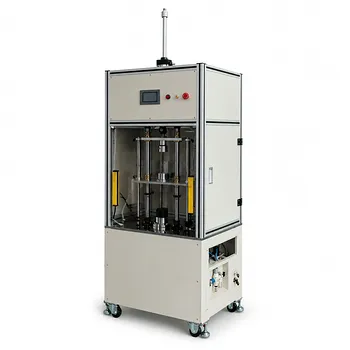
Capacitor Tab Punching Machine
Precision capacitor tab punching machine with 3 mm hole, ±0.05 mm hole accuracy, ±0.02 mm position accuracy, ≥100 kg cutting force, compact glovebox-compatible design for reliable cell assembly preparation and clean, repeatable riveting workflows in laboratory and pilot-scale capacitor manufacturing.
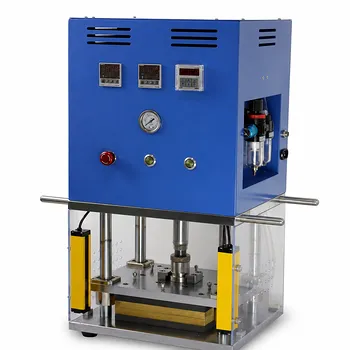
Manual Battery Cell Hot Press Flattening Shaping Machine
Manual battery cell hot press flattening shaping machine delivers adjustable 1T pressure and 250°C heating for consistent wound cell thickness reduced rebound safer casing insertion and reliable lithium battery production.
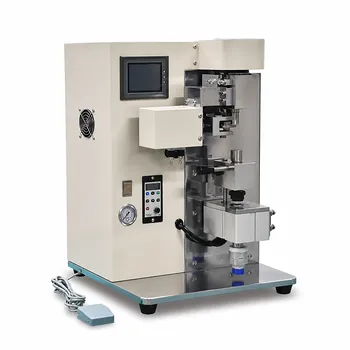
Vertical Cylindrical Battery Grooving Machine
Vertical cylindrical battery grooving machine with adjustable 1.2–2.0 mm depth, ±0.1 mm precision, PLC touchscreen control, and 400 EA/H semi-automatic capacity for stable cell production and compact 220 V operation across battery research and capacitor shell processing applications.
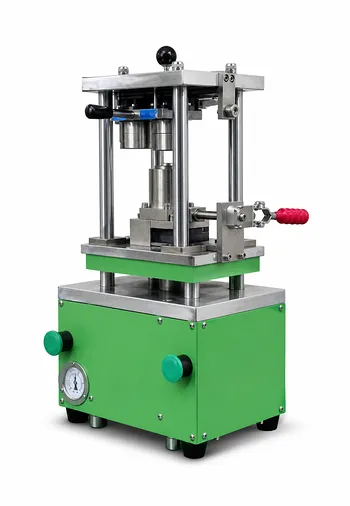
Pneumatic Cylindrical Battery Sealing Machine for Laboratory Cell Research
Pneumatic cylindrical battery sealing machine for 18650 cells delivers two station precision sealing, adjustable 0.4 to 0.5 MPa operation, inert gas compatibility, external exhaust, low gas consumption, compact construction, and reliable laboratory sample preparation for battery and capacitor research.