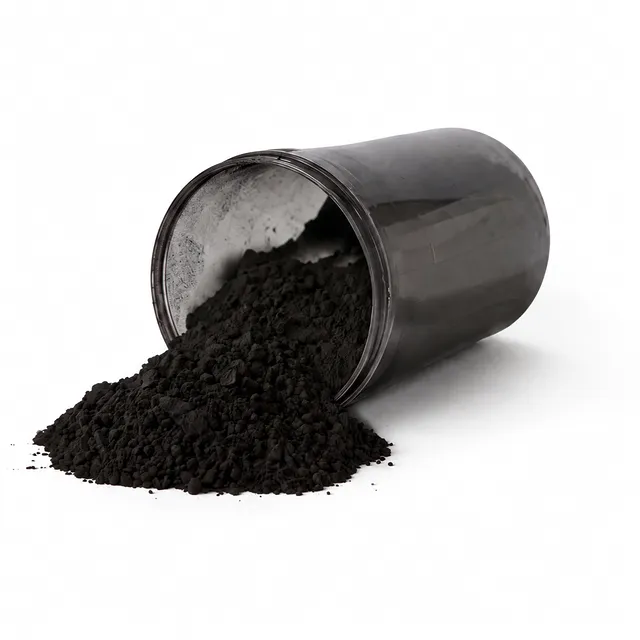
Battery supporting materials
Conductive Carbon Black Additive Powder for High Performance Battery Electrode Manufacturing
Item Number : FZ25
Price varies based on specs and customizations
- BET Nitrogen Surface Area
- 45 m²/g
- Moisture Content
- 0.1%
- Ash Content (600 °C)
- 0.01%

Shipping:
Contact us to get shipping details Enjoy On-time Dispatch Guarantee.
Why Choose Us
Easy ordering process, quality products, and dedicated support for your business success.
Product Overview
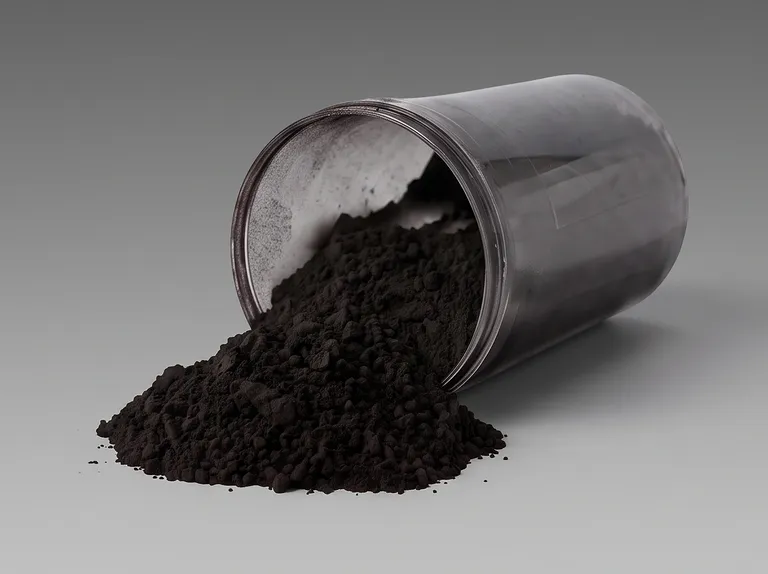
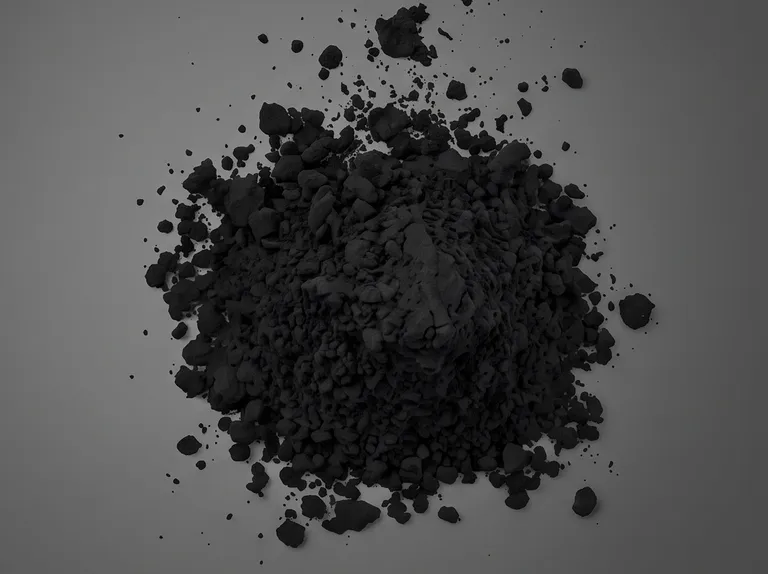
This high-purity conductive carbon black additive is engineered specifically for advanced electrochemical applications, providing superior electronic conductivity and structural integrity within electrode matrices. Characterized by a precisely controlled specific surface area and an optimized aggregate morphology, the material forms an efficient three-dimensional conductive network at low percolation thresholds. It bridges the microscopic gaps between electrochemically active material particles and current collectors, significantly lowering internal cell resistance and improving charge transfer kinetics.
Designed primarily for next-generation lithium-ion, sodium-ion, and solid-state battery manufacturing, this conductive agent is equally indispensable in supercapacitor fabrication, fuel cell catalyst layers, and specialized conductive polymer formulations. Its chemical stability and neutral pH ensure seamless integration into both standard NMP-based cathode slurries and aqueous anode processing lines without causing premature binder crosslinking or slurry agglomeration.
Manufactured under rigorous clean-room standards, the conductive powder features exceptionally low trace metal contamination, moisture content, and volatile matter. This ultra-high purity prevents localized micro-shorting, suppresses parasitic electrochemical side reactions, and guarantees exceptional batch-to-batch consistency. The material provides research laboratories, pilot development facilities, and industrial gigafactories with the processability and reliability required for high-yield, high-rate electrochemical device manufacturing.
Key Features
- Optimized BET Surface Area: Delivers an engineered specific surface area of 45 m²/g, providing the optimal balance between high electrical conductivity, rapid charge dissipation, and minimal binder consumption during slurry preparation.
- Exceptional Purity and Low Ash Content: Features an ultra-low ash content of 0.01% at 600 °C alongside minimal volatile matter (0.4% max), preventing unwanted gas evolution, electrolyte decomposition, and premature cell degradation.
- Sub-ppm Heavy Metal Control: Strictly controlled trace metal levels (Fe at 2 ppm, Ni at 1 ppm, and V, Cr, Cu below 1 ppm) eliminate internal dendrite nucleation sites and prevent transitional metal dissolution across continuous cycling.
- Minimal Grit Residue: Contains virtually zero coarse particulates (<2 ppm for grit >45 microns and 12 ppm for grit >20 microns), protecting separator integrity and preventing coating defects during high-speed doctor blade or slot-die electrode coating.
- Balanced Oil Absorption Profile: Features an absorption stiffness value of 36 ml/5g, which facilitates rapid wetting and promotes homogeneous mechanical dispersion without requiring excessive solvent volumes.
- Stable Neutral Surface Chemistry: Maintains a neutral pH of 7 with a sulfur content capped at 0.02%, preventing unwanted chemical reactions with sensitive polymeric binders such as PVDF, CMC, and SBR.
- Low Moisture Absorption: Retains an ultra-low moisture level of 0.1%, drastically reducing the risk of hydrofluoric acid (HF) generation in fluorinated liquid electrolytes and safeguarding moisture-sensitive solid-state electrolyte chemistries.
- Robust 3D Conductive Network: High intrinsic electronic conductivity establishes continuous electron transport pathways across cathode and anode layers, enabling superior high-C-rate discharge and rapid charging capabilities.
Applications
| Application | Description | Key Benefit |
|---|---|---|
| Lithium-Ion Cathode Slurries | Incorporated into high-nickel (NCM, NCA) and lithium iron phosphate (LFP) formulations to create resilient electron pathways between primary active particles and aluminum foil substrates. | Drastically reduces internal cell impedance (ESR), improves rate performance up to 10C+, and prevents capacity loss over thousands of deep discharge cycles. |
| Silicon-Graphite Anodes | Applied as a resilient conductive backbone to accommodate the severe mechanical strain and volume expansion typical of silicon-dominant and silicon-graphite composite anodes. | Maintains electrical contact during repetitive lithiation/delithiation volume swings, suppressing active material isolation and electrode pulverization. |
| Solid-State Battery Electrodes | Utilized in composite cathode and solid electrolyte interface formulations where mechanical contact and electronic transport are inherently constrained. | Establishes low-tortuosity electron channels across solid-solid interfaces without degrading moisture-sensitive sulfide or oxide solid electrolytes. |
| Electric Double-Layer Capacitors (EDLC) | Blended with high-surface-area activated carbons to bridge particle voids and enhance instantaneous power discharge in supercapacitor electrodes. | Minimizes equivalent series resistance, increases instantaneous power density, and enables ultra-fast charge/discharge responsiveness under extreme pulse conditions. |
| Sodium-Ion Battery Systems | Formulated into hard carbon anode and Prussian blue/layered oxide cathode pastes for scalable sodium-ion energy storage systems. | Delivers consistent chemical stability across wide electrochemical windows while ensuring cost-effective, high-conductivity electrode architectures. |
| Conductive Polymers & Coatings | Compounded into technical plastics, antistatic coatings, and EMI shielding composites requiring stable volumetric conductivity. | Achieves robust antistatic and electromagnetic dissipation properties without degrading the host polymer's mechanical elasticity or tensile strength. |
Technical Specifications
| Parameter | Unit / Condition | Specification Value (Item FZ25) |
|---|---|---|
| Product Identifier | — | FZ25 |
| Chemical Name | — | Carbon Black (Conductive Additive) |
| CAS Number | — | 1333-86-4 |
| BET Nitrogen Surface Area | m²/g | 45 |
| Absorption Stiffness Value | ml/5g | 36 |
| Moisture Content | % | 0.1 |
| Volatile Matter | % max | 0.4 |
| Toluene Extract | % max | 0.2 |
| Bulk Density | kg/m³ | 160 |
| Ash Content (600 °C) | % | 0.01 |
| Sulfur Content | % | 0.02 |
| pH Value | — | 7 |
| Grit Content (> 45 µm) | ppm | < 2 |
| Grit Content (> 20 µm) | ppm | 12 |
| Iron (Fe) Content | ppm | 2 |
| Nickel (Ni) Content | ppm | 1 |
| Vanadium (V) Content | ppm | < 1 |
| Chromium (Cr) Content | ppm | < 1 |
| Copper (Cu) Content | ppm | < 1 |
Processing & Rheological Integration
Achieving the maximum conductive performance from this material depends upon controlled dispersion methods during wet slurry processing. Thanks to its low specific surface area relative to high-structure carbon blacks, the material requires less solvent addition to reach optimal coating viscosity. When preparing slurries, dry pre-mixing with active materials prior to binder and solvent introduction is recommended to establish uniform distribution. Planetary vacuum mixers, dual asymmetric centrifuges, or high-shear homogenizers can be utilized without risking the excessive breakdown of carbon aggregate chains.
Impact on Battery Electrochemical Safety
Electrochemical safety in high-energy-density cells is intimately linked to the purity of the constituent conductive agents. The presence of metallic contaminants—particularly iron, nickel, and copper—can lead to localized micro-dendrite formation during cell charging. These metallic inclusions dissolve at the cathode potential, migrate across the porous separator, and deposit in metallic form on the anode, eventually causing catastrophic internal short circuits. With heavy metals strictly held to sub-ppm and single-digit ppm thresholds, this material ensures an unmatched safety margin for critical automotive and grid-scale storage cells.
Why Choose This Product
- Uncompromising Chemical Purity: Rigorous multi-stage purification processes keep trace transition metals (Fe, Ni, Cu, Cr, V) at industry-leading low levels, directly preventing micro-shorting and battery self-discharge.
- Low Binder Consumption: The engineered 45 m²/g surface area provides superior percolation conductivity without absorbing excessive liquid electrolyte or requiring elevated polymeric binder ratios, preserving active material mass loading.
- Smooth Slurry Processing: Extremely low grit levels eliminate particle scratching during doctor-blade and high-speed slot-die coating, resulting in pinhole-free, uniform electrode films with flawless edge quality.
- High Thermal & Electrochemical Stability: Neutral pH and low volatile content ensure stable electrode slurries with long pot life, preventing premature gelation and enabling repeatable manufacturing from lab scale to gigawatt lines.
- Proven Batch Consistency: Every production lot undergoes rigorous spectroscopic, morphological, and chemical testing to guarantee absolute dimensional and compositional reproducibility across shipments.
Contact our technical application team today to request detailed lot analysis, sample quantities, or customized formulation support tailored to your advanced battery and materials research projects.
Trusted by Industry Leaders

REQUEST A QUOTE
Our professional team will reply to you within one business day. Please feel free to contact us!
Related Products

Carbide Lab Press Mold for Laboratory Sample Preparation
Premium carbide lab press molds for precise sample preparation. Durable, high-hardness YT15 material, customizable sizes. Ideal for XRF, battery research & more.
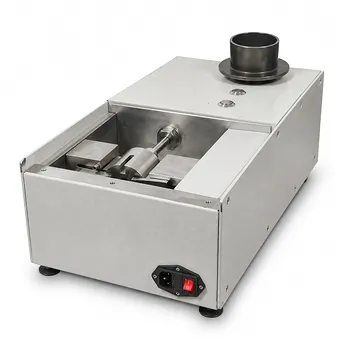
Lithium Battery Powder Resistivity and Compacted Density Measurement System
Optimize cathode and anode slurry formulations with this automated lithium battery powder resistivity and compacted density measurement system featuring closed-loop servo pressure execution high-resolution displacement monitoring synchronous environmental logging and automated analytical software for precision electrode quality control workflows

Lab XRF Boric Acid Powder Pellet Pressing Mold for Laboratory Use
Precision XRF boric acid pellet pressing mold for accurate sample preparation. Durable, high-grade alloy tool steel, ensures reliable XRF spectrometry results.

Lab Round Bidirectional Press Mold
Precision Round Bidirectional Press Mold for lab use, high-density compaction, Cr12MoV alloy steel. Ideal for powder metallurgy & ceramics.