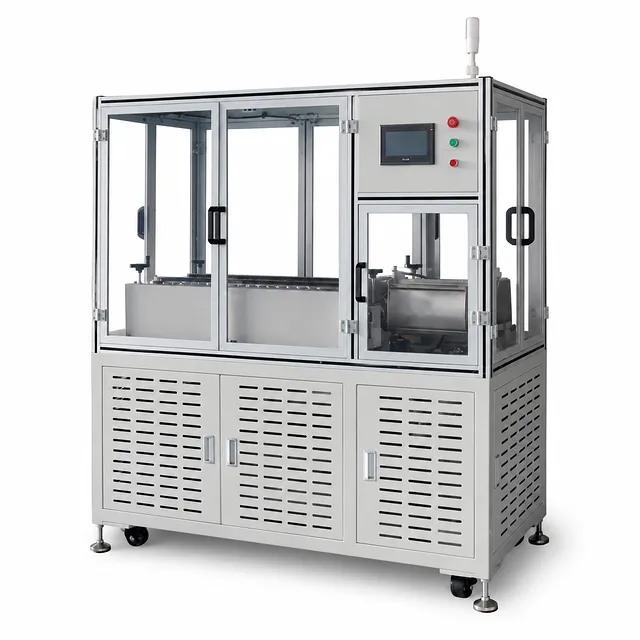
Pouch Cell Assembly Equipment
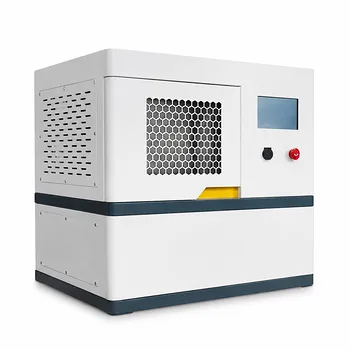
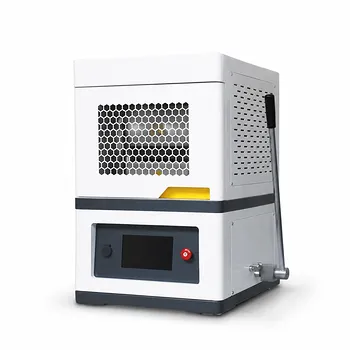
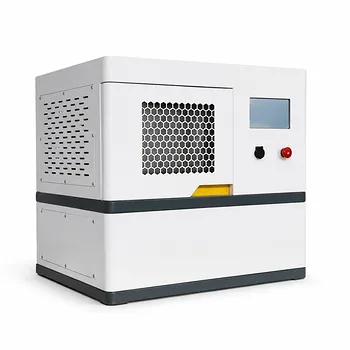
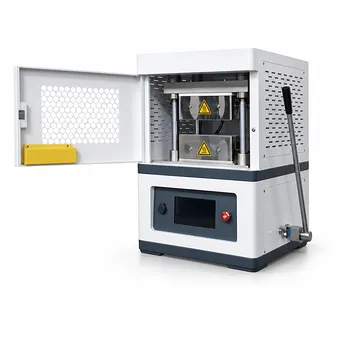
Horizontal Hot Press Formation Machine for Pouch Lithium Ion Batteries
Item Number : RB36
Price varies based on specs and customizations
- Operating Points
- 32 points, one fixture group
- Temperature Range and Accuracy
- Room temperature to 90 degrees C, plus or minus 3 degrees C
- Pressure Range and Accuracy
- 300 to 1800 kg, plus or minus 20 kg

Shipping:
Contact us to get shipping details Enjoy On-time Dispatch Guarantee.
Why Choose Us
Easy ordering process, quality products, and dedicated support for your business success.
Product Overview
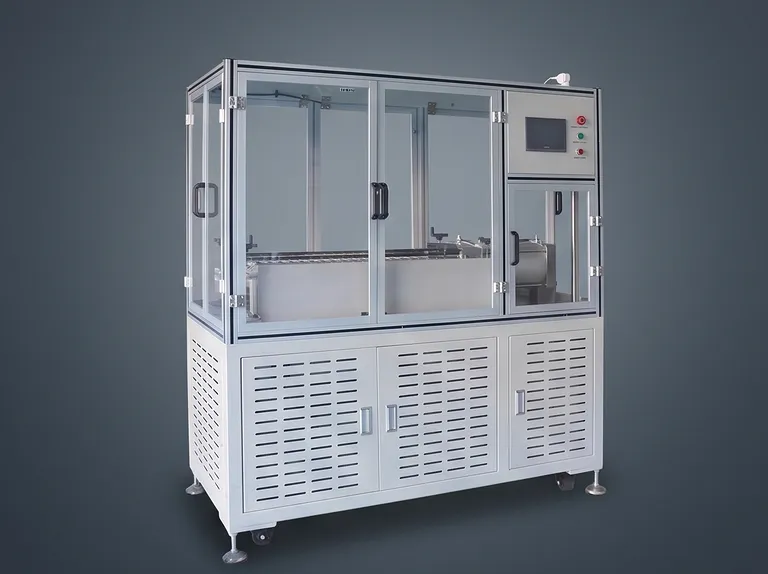
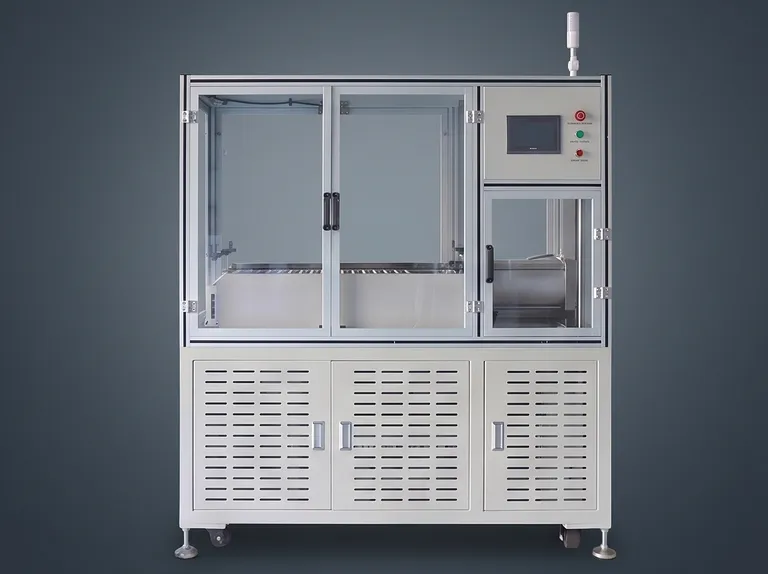
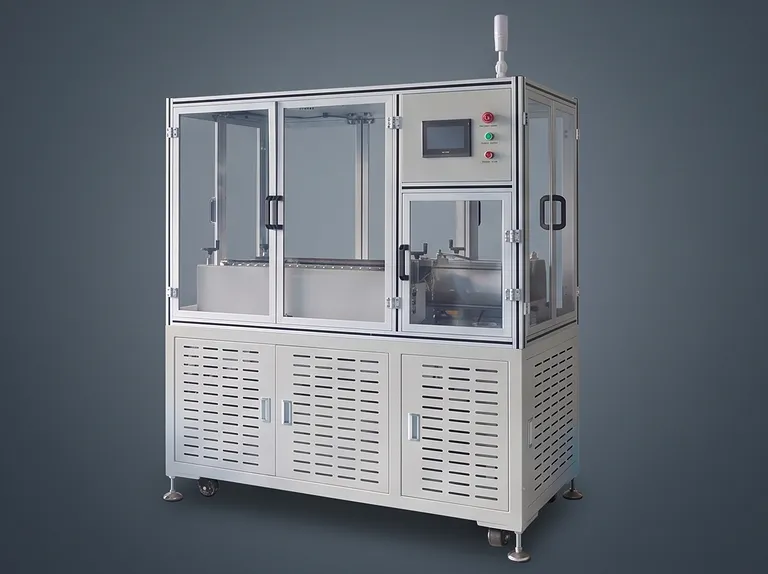
This horizontal hot press formation system is engineered for the formation process of single-tab pouch lithium-ion batteries. It applies controlled heat through aluminum plate clamping while pneumatic cylinders hold the cell in compression, supporting rapid heat transfer during activation. By combining heating and pressure in one controlled process, the equipment helps stabilize battery performance, increase physical strength, reduce cell thickness, and produce a firmer finished cell structure.
The equipment is intended for polymer lithium battery manufacturing, particularly production lines handling pouch cells after initial cell assembly. It supports a process in which a suitable low current is applied to activate internal active materials at the electrode terminals. Heat and pressure also promote the melting of binder coated on the separator, helping the separator bond closely with positive and negative electrode materials.
Built around a horizontal configuration, this unit provides 32 operating points in one fixture group and supports a maximum charge-discharge current of 6A. Its controlled temperature, pressure, and pneumatic operating conditions provide a repeatable platform for demanding pouch-cell formation work, while the integrated process can remove the separate baking and shaping step used in conventional formation workflows.
Key Features
-
Horizontal Heat-Press Formation Design: The equipment uses a horizontal layout specifically for single-tab pouch lithium-ion battery formation. This arrangement provides a dedicated processing platform for cells placed and clamped between heated pressure plates.
-
Integrated Heating and Compression: Heated aluminum plates clamp the cell during formation, combining thermal input with mechanical pressure in the same operation. The process supports fast heat conduction to the cell while maintaining compression through the formation cycle.
-
32-Point Processing Capacity: This system provides 32 points in a single fixture group. The multi-point configuration supports organized handling of multiple cells within one equipment platform.
-
6A Maximum Charge-Discharge Current: The equipment supports a maximum charge-discharge current of 6A. This capability serves the low-current activation process used to activate the internal active materials of newly formed batteries.
-
Controlled Temperature Performance: The operating temperature range extends from room temperature to 90 degrees C, with a temperature accuracy of plus or minus 3 degrees C. Initial heating to a target temperature of 80 degrees C is specified at 30 minutes or less.
-
Silicone Heating Plate Method: Silicone heating plates provide the heating method for the system. The arrangement works with the aluminum clamping plates to transfer heat rapidly to the cell during formation.
-
Pneumatic Clamping Mechanism: Cylinders provide the clamping action between the pressure plates. The specified working air pressure range is 5.0 to 7.0 kgf/cm2, equivalent to 0.5 to 0.7 MPa, using dried, filtered, and pressure-stabilized compressed air.
-
High Pressure Operating Range: The pressure range is 300 to 1800 kg, with pressure accuracy of plus or minus 20 kg. This range supports controlled compression for pouch cells with thicknesses from 4 to 12 mm.
-
Process Consolidation: Hot press formation can eliminate the baking and shaping operation in an existing battery formation process. This shortens formation time and the overall battery manufacturing cycle while reducing manual work.
-
Cell Flatness and Structural Improvement: The combined thermal and pressure process helps the separator and electrode materials form close contact. After degassing and sealing, the resulting pouch battery can be flatter, with increased hardness, improved physical strength, and reduced thickness.
Applications
| Application | Description | Key Benefit |
|---|---|---|
| Polymer lithium battery production | Performs the hot press formation step for polymer lithium batteries after initial cell formation. | Combines heating, compression, and cell activation within one dedicated process. |
| Single-tab pouch cell formation | Processes pouch lithium-ion cells with a single electrode-tab outlet and the specified tab geometry. | Accommodates tab lengths of 18 to 25 mm, tab widths up to 25 mm, and tab spacing of at least 10 mm. |
| Pouch cell activation | Applies suitable low current to the electrode terminals to activate active materials inside an initially formed battery. | Supports charge-discharge current up to 6A during the formation operation. |
| Separator-to-electrode bonding | Uses heat and pressure to promote melting of binder coating on the separator and close bonding with positive and negative electrode materials. | Helps establish direct, close contact between electrode sheets and separator materials. |
| Post-assembly cell shaping | Clamps cells between heated plates to support a firmer overall appearance and reduced cell thickness. | Produces a more compact pouch cell with increased physical strength. |
| Degassing and sealing workflow support | Supports hot press formation before or alongside the process sequence that includes pouch-cell degassing and sealing. | Helps make the battery flatter after degassing and sealing. |
| Battery line cycle reduction | Replaces the separate baking and shaping step used in an existing formation process. | Shortens formation time, reduces the battery production cycle, and lowers manual work requirements. |
Technical Specifications
| Parameter | Specification |
|---|---|
| Product Item Number | RB36 |
| Equipment design options | Horizontal and vertical designs are available in the product family. |
| Configuration supplied | Horizontal design. |
| Intended use | Formation process for single-tab pouch lithium-ion batteries. |
| Formation method | Heated aluminum plates clamp the cell; fast heat conduction is used for cell formation. |
| Cell loading and clamping | Place the cell between pressure plates; pneumatic cylinders provide clamping. |
| Operating points | 32 points per unit. |
| Fixture configuration | One fixture group. |
| Maximum charge-discharge current | 6A |
| Equipment dimensions | Approximately 1650 x 700 x 1800 mm (length x width x height). |
| Equipment weight | Approximately 500 kg. |
| Equipment color | Computer white or customer-specified color. |
| Compressed-air requirement | Air must be dried, filtered, and pressure-stabilized. Outlet pressure greater than 5.0 to 7.0 kgf/cm2 (0.5 to 0.7 MPa). |
| Working air pressure | 5.0 to 7.0 kgf/cm2 (0.5 to 0.7 MPa). |
| Electrical supply | AC220V/380V/50Hz/60Hz. |
| Rated power | Approximately 5 kW, excluding the power cabinet; subject to the actual unit. |
| Temperature range | Room temperature to 90 degrees C. |
| Temperature accuracy | Plus or minus 3 degrees C. |
| Initial heating time | 30 minutes or less, target temperature: 80 degrees C. |
| Heating method | Silicone heating plate. |
| Pressure range | 300 to 1800 kg. |
| Pressure accuracy | Plus or minus 20 kg. |
| Applicable Pouch Cell Dimension | Requirement |
|---|---|
| Length, L1 | 80 to 150 mm |
| Width, W1 | 80 to 100 mm |
| Thickness, T | 4 to 12 mm |
| Tab length, S | 18 to 25 mm |
| Minimum tab spacing, W2 | At least 10 mm |
| Tab width, W4 | 25 mm or less |
The specified cell envelope is designed for pouch lithium-ion batteries that require controlled hot press formation after initial assembly. Before procurement, buyers should compare their actual pouch dimensions, tab arrangement, current requirements, utility supply, and compressed-air preparation against the stated requirements. This is particularly important where cells approach the maximum 150 mm length, 100 mm width, 12 mm thickness, or 25 mm tab-width limits.
The thermal specification should also be matched to the required formation recipe. The unit operates from room temperature to 90 degrees C and reaches the stated 80 degrees C target in 30 minutes or less during initial heating. The temperature accuracy of plus or minus 3 degrees C and pressure accuracy of plus or minus 20 kg define the stated operating-control performance, while the 300 to 1800 kg pressure range gives the process a substantial compression window for applicable pouch cells.
Installation planning should account for the approximately 1650 x 700 x 1800 mm equipment footprint and approximately 500 kg machine weight. Electrical infrastructure must support the stated AC220V/380V and 50Hz/60Hz supply options. Pneumatic infrastructure must provide dried, filtered, pressure-stabilized air within the stated 5.0 to 7.0 kgf/cm2 range. The rated power is approximately 5 kW, excluding the power cabinet, and final power requirements should be confirmed against the actual supplied equipment.
Why Choose This Product
-
Purpose-Built Pouch-Cell Process Control: This system is configured specifically for single-tab pouch lithium-ion battery formation, integrating the required heating, clamping, and low-current activation functions into one equipment platform.
-
Reliable Mechanical and Thermal Parameters: The stated temperature range, pressure range, temperature accuracy, pressure accuracy, and pneumatic cylinder clamping method provide defined operating conditions for repeatable processing.
-
Productivity-Oriented Process Design: By removing the separate baking and shaping procedure from the existing formation route, the equipment supports shorter formation time, a reduced manufacturing cycle, and lower manual handling requirements.
-
Cell Quality Focus: Fast thermal conduction through heated aluminum plates and controlled clamping support close separator-to-electrode contact, increased cell hardness, reduced thickness, and improved flatness after degassing and sealing.
-
Practical Integration Flexibility: The stated electrical supply options, customer-specified color option, and defined compressed-air requirements support planning for installation within battery production environments.
Contact us for a quote or a custom solution aligned with your pouch-cell dimensions, formation process, and production-line utility requirements.
Trusted by Industry Leaders

REQUEST A QUOTE
Our professional team will reply to you within one business day. Please feel free to contact us!
Related Products
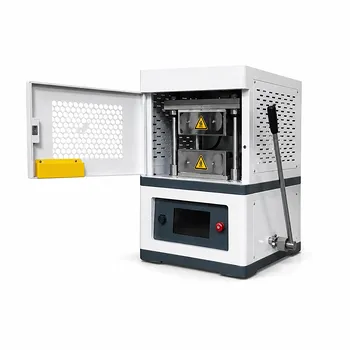
Laboratory Hydraulic Hot Press Machine for Solid-State Battery Research
Compact benchtop laboratory hydraulic hot press machine designed for solid-state battery research, featuring independent dual-platen heating up to 300°C, programmable multi-step temperature and pressure profiles, automated pressure holding, and water cooling for advanced materials processing and battery electrode lamination.
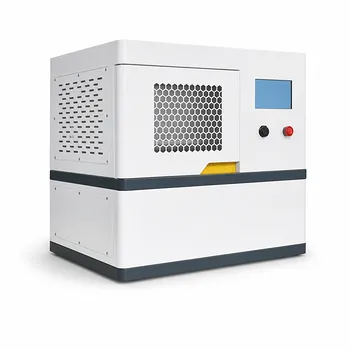
Solid-State Battery Research Laboratory Hydraulic Hot Press Machine
Compact benchtop hydraulic hot press with dual-platen heating, programmable pressure control, automatic pressure compensation, and water cooling. Ideal for solid-state battery research, composite electrode lamination, and fuel cell MEA bonding. Achieve precise temperature up to 300°C and 15-ton force consistently.
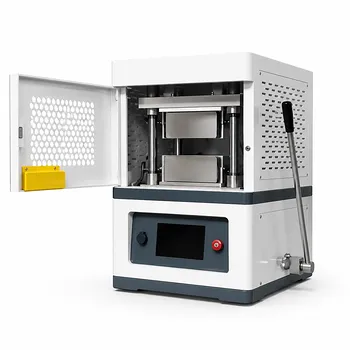
Laboratory Hydraulic Hot Press Machine for Solid-State Battery Research
Compact benchtop laboratory hydraulic hot press for solid-state battery research featuring independent dual-zone heating up to 300°C, 25-ton automatic pressure control, and integrated water cooling for precise compaction of electrolytes and polymer membranes in small-footprint design ideal for R&D applications.
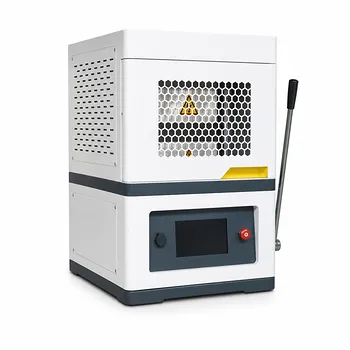
Solid State Battery Research Hydraulic Hot Press Machine
Benchtop hydraulic hot press for solid-state battery research. Precision temperature up to 300°C, 30-ton pressure, automatic holding, water cooling, touch-screen control. Ideal for electrolyte densification, electrode lamination, polymer membrane fabrication. Compact benchtop fits gloveboxes, customizable software, hardware, CE certified safety.
Solid State Battery Research Laboratory Hydraulic Hot Press Machine
Benchtop hydraulic hot press designed for solid-state battery research. Offers dual-platen heating to 500°C, 40-ton pressure with closed-loop control, and a 7-inch touchscreen. Supports electrolyte fabrication, electrode lamination, and polymer molding with safety shields and thermal cut-offs.
Solid State Battery Research Laboratory Hydraulic Hot Press Machine
High-precision thermal compression system for solid-state battery research with independent dual-platen heating up to 300°C, 30-ton hydraulic press, and automatic pressure compensation for precise sample fabrication. Ideal for electrolyte compaction and composite lamination. With programmable cooling and safety interlocks.
Solid State Battery Research Laboratory Hydraulic Hot Press Machine
Compact benchtop hydraulic hot press machine designed for solid-state battery research, featuring dual-zone independent heating up to 300°C, programmable pressure control with automatic replenishment, and integrated water cooling for rapid cycle times, suitable for electrolyte fabrication and electrode lamination.
Solid-State Battery Research Laboratory Hydraulic Hot Press Machine
Designed for solid-state battery research, this laboratory hydraulic hot press features servo-driven pressurization up to 2 tons, dual-platen heating up to 300°C, programmable pressure cycles, and a 7-inch touch-screen controller for precise thermal compaction of electrolytes and electrodes.
Laboratory Hydraulic Hot Press for Solid-State Battery Research
Compact benchtop hydraulic hot press for solid-state battery research, with dual heated platens, programmable touchscreen, and precise temperature control up to 300°C and 5 tons force. Ideal for electrolyte synthesis and electrode lamination, with automatic pressure holding. CE certified.
Solid-State Battery Laboratory Hydraulic Hot Press Machine
Precision laboratory hydraulic hot press for solid-state battery research, with dual-plate heating up to 300°C, 50-ton active pressure holding, programmable touchscreen control, and robust benchtop design, ideal for academic and industrial laboratories compacting electrolyte pellets and laminating electrodes.
Solid-State Battery Laboratory Electric Hot Press Machine
Compact benchtop electric hot press for solid-state battery research, polymer lamination, and MEA fabrication. Features dual-plate independent heating up to 200°C, programmable pressure up to 1800 kgf. Oil-free electric servo drive ensures clean, high-repeatability pressing, integrated water cooling.
Solid-State Battery and Polymer Composite Fabrication Laboratory Hydraulic Hot Press Machine
Advanced laboratory hydraulic hot press for solid-state battery and polymer composite fabrication, featuring PID temperature control up to 200°C, 0-90 ton hydraulic pressure with ±0.2% sensor accuracy, 300x300mm heated platens, automatic pressure holding, and intuitive 7-inch touchscreen programming.
Laboratory Hydraulic Hot Press for Solid-State Battery Research and Manufacturing
This laboratory hydraulic hot press is designed for solid-state battery electrolyte preparation, offering dual-plate heating (up to 300°C), 40-ton force, and programmable pressure cycles with automatic re-pressurization. Ideal for composite lamination, powder compaction, and features a built-in safety interlock.
Solid-State Battery and Polymer Electrolyte Development Laboratory Hydraulic Hot Press Machine
High-precision benchtop hydraulic hot press for solid-state battery and polymer electrolyte research. Features dual heated platens up to 300°C, automatic pressure compensation up to 15T, and integrated water cooling for repeatable results. Ideal for electrolyte compaction and PEMFC pressing.
Laboratory Hydraulic Hot Press for Solid State Battery and MEA Fabrication
Compact laboratory hydraulic hot press with independent dual platen heating up to 300°C and programmable 50 ton pressure for solid state battery electrolyte compaction and membrane electrode assembly fabrication, featuring water cooling and safety shields, suitable for advanced material research.
Laboratory Hydraulic Hot Press for Solid-State Battery and Polymer Electrolyte Research
Compact benchtop hydraulic hot press for solid-state battery and polymer electrolyte research with dual-zone heating, automatic pressure compensation, and active cooling system, ensuring uniform temperature up to 300°C and stable load for extended tests with CE certification and safety features.
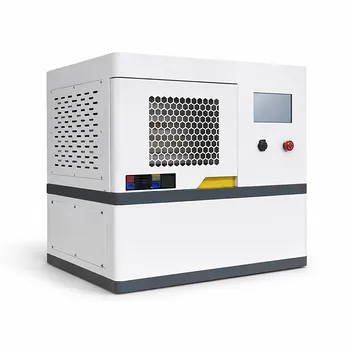
Solid-State Battery Research Laboratory Hydraulic Hot Press
Reliable laboratory hydraulic hot press for solid-state battery research offers independent dual-zone heating, programmable pressure with auto compensation, and a touchscreen interface, enabling precise pelletizing of electrolytes, polymer lamination, and composite fabrication up to 300°C and 20 tons.
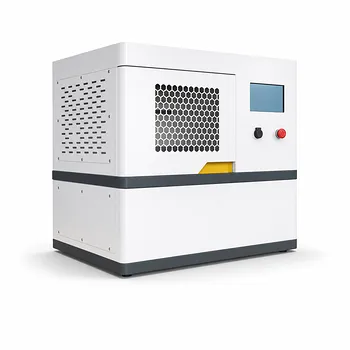
Laboratory Benchtop Hydraulic Hot Press for Solid State Battery Research
Explore the laboratory hydraulic hot press for solid-state battery research, featuring dual-platen heating, automated pressure profiling, and integrated water cooling for efficient, precise sample processing. Ideal for electrolyte pellet and membrane fabrication in a compact, glovebox-compatible benchtop design.
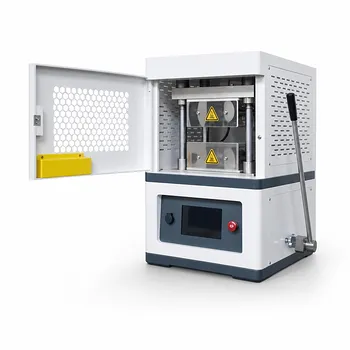
Laboratory Hydraulic Hot Press for Solid-State Battery Electrolyte Preparation
This compact high precision laboratory hydraulic hot press offers dual platen independent heating up to 300°C, 5 tons pressure, integrated water cooling with precise digital control for solid-state battery electrolyte preparation, polymer composite lamination, and membrane electrode assembly fabrication.
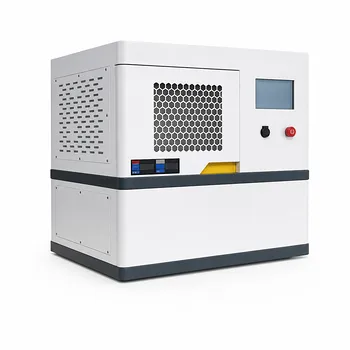
Solid-State Battery Electrolyte and Polymer Composite Laboratory Hot Press Machine
Compact high-precision thermal pressing system for solid-state battery electrolyte pellet preparation and polymer composite curing. Oil-free servo drive with dual independent programmable heating up to 300°C and precise pressure control up to 2 tons. Ideal for cleanroom research environments.