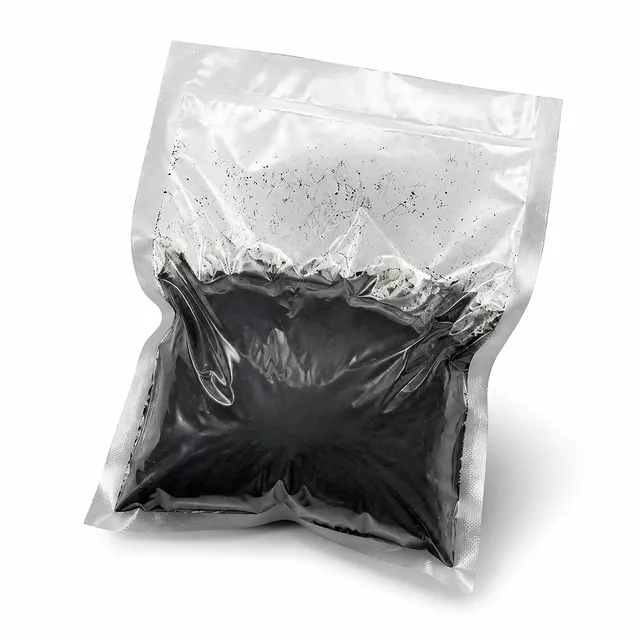
Battery powder materials
LiNiCoMnO2 Ni Co Mn 8 1 1 NCM 811 Cathode Material Lithium Ion Battery High Nickel Ternary NMC
Item Number : CL04
Price varies based on specs and customizations
- Specific Discharge Capacity (0.1C, 3.0-4.3V)
- ≥205 - 210 mAh/g
- Chemical Composition
- LiNi0.8Co0.1Mn0.1O2 (NCM 811)
- Compacted Powder Density
- ≥3.2 g/cm³

Shipping:
Contact us to get shipping details Enjoy On-time Dispatch Guarantee.
Why Choose Us
Easy ordering process, quality products, and dedicated support for your business success.
Product Overview
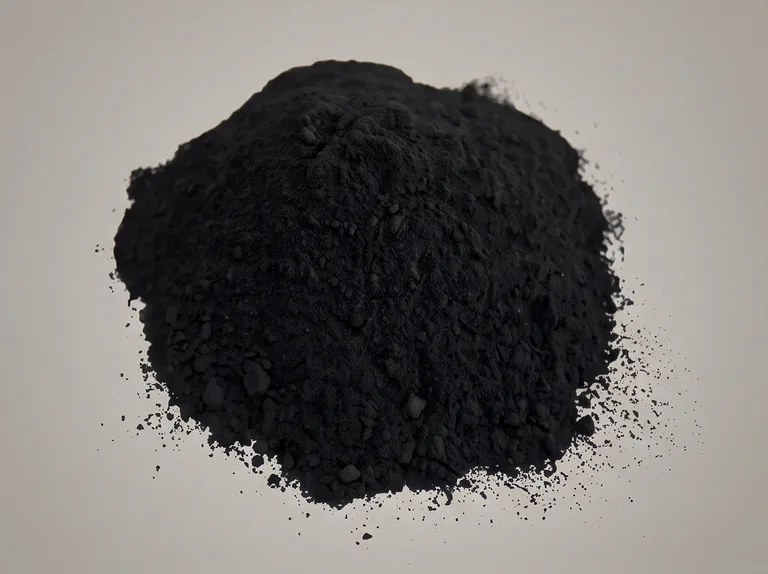

This premium high-nickel ternary cathode material features an optimized nickel-cobalt-manganese stoichiometric composition of 8:1:1 ($LiNi_{0.8}Co_{0.1}Mn_{0.1}O_2$), engineered specifically for next-generation lithium-ion battery research and high-energy-density cell manufacturing. Available in advanced single-crystal and engineered polycrystalline structural morphologies, this powder delivers superior specific discharge capacity, exceptional first-cycle coulombic efficiency, and enhanced structural robustness across broad operating voltages.
Designed for demanding electrochemical environments, the material addresses the traditional challenges of high-nickel chemistries through strict control of particle morphology, trace impurities, and surface residual lithium compounds ($LiOH$ and $Li_2CO_3$). This makes the product an ideal active material for researchers and industrial engineers developing high-performance pouch, cylindrical, and prismatic cells for electric vehicle propulsion, aerospace systems, grid-scale energy storage, and premium consumer electronics.
Synthesized under rigorous quality assurance protocols, this ternary powder ensures dependable batch-to-batch repeatability and thermal resilience during repeated charge-discharge cycling. Whether configured for room-temperature cycling or elevated-temperature operations up to 45°C, the cathode powder maintains high capacity retention and robust structural integrity under aggressive C-rate protocols.
Key Features
- High Nickel Stoichiometric Formulation: Formulated with an 80% nickel ratio to maximize lithium-ion extraction efficiency, delivering a specific discharge capacity exceeding 205–210 mAh/g at 0.1C within a standard 3.0–4.3V voltage window.
- Controlled Particle Size Distribution: Tailored particle sizing with a controlled D50 distribution ensures optimal packing density, facilitating uniform slurry rheology, defect-free doctor-blade coating, and exceptional electrode calendering response.
- Ultra-Low Residual Lithium Content: Tight thermal processing limits residual surface lithium hydroxide ($LiOH \le 0.30–0.40\text{ wt}%$) and lithium carbonate ($Li_2CO_3 \le 0.30\text{ wt}%$), significantly suppressing slurry gelation and reducing cell gas evolution during high-voltage cycling.
- High Tap and Compacted Density: Achieves a tap density of $\ge 2.1\text{ g/cm}^3$ and a powder compacted density of $\ge 3.2\text{ g/cm}^3$, enabling high volumetric energy density in compact cell form factors.
- Superior Thermal and High-Temperature Stability: Demonstrates exceptional electrochemical stability at elevated operating temperatures (45°C), delivering an initial discharge capacity of 222.2 mAh/g and over 93% capacity retention after 50 cycles.
- Stringent Magnetic Contaminant Control: Processed with advanced electromagnetic separation to keep ferromagnetic impurities ($Fe + Cr$) strictly below 100 ppb, minimizing micro-short risks and self-discharge rates in assembled cells.
- Low Moisture Absorption: Maintained at $\le 600\text{ ppm}$ moisture content through hermetic barrier packaging, preventing active transition metal reduction and hydrofluoric acid ($HF$) formation in non-aqueous electrolytes.
- Versatile Structural Options: Offered in both single-crystal morphology for maximum mechanical durability against micro-cracking and polycrystalline agglomerate morphology for rapid lithium diffusion kinetics.
Applications
| Application | Description | Key Benefit |
|---|---|---|
| Electric Vehicle (EV) Traction Batteries | Active cathode active material for high-capacity NMC 811 automotive pouch and prismatic cells. | Maximizes gravimetric energy density to extend driving range while maintaining robust cycle life. |
| Solid-State Battery Research | Integration into sulfide- and oxide-based solid-state lithium battery architectures. | High structural stability and low surface reactivity reduce interphase resistance with solid electrolytes. |
| Aerospace and Drone Power Systems | Lightweight, high-discharge battery packs requiring maximum energy-to-weight ratios. | High specific capacity (>210 mAh/g) reduces total pack weight without sacrificing power output. |
| Consumer Electronics (3C Devices) | Thin-profile pouch cells for premium laptops, smartphones, and wearable electronic devices. | High compacted density ($\ge 3.2\text{ g/cm}^3$) maximizes volumetric capacity in ultra-compact form factors. |
| Grid and Industrial Energy Storage | Utility-scale energy storage systems subject to rigorous daily cycling protocols. | High capacity retention (>91% at room temperature after 50 cycles) ensures long operational life. |
| Academic and Industrial Battery R&D | Standardized positive electrode reference material for half-cell and full-cell coin/pouch testing. | High batch-to-batch consistency enables reproducible electrochemical benchmarking and binder evaluation. |
| High-Rate Discharge Equipment | Power tools, robotic manipulators, and medical equipment requiring fast C-rate capability. | Stable rate performance across 0.1C to 2C continuous discharge regimes with minimal polarization. |
Technical Specifications
General Product Identification & Packaging
| Parameter | Value / Standard |
|---|---|
| Product Item Number | CL04 |
| Chemical Formula | $LiNi_{0.8}Co_{0.1}Mn_{0.1}O_2$ (NCM 811 / NMC 811) |
| Available Structural Variants | Single Crystal Ni83 (CL04-M2S) / Polycrystalline Standard (CL04-M2C) |
| Standard Packaging | 500 g / sealed vacuum aluminum foil bag |
Physical & Chemical Properties
| Inspection Parameter | Unit | Variant CL04-M2S (Single Crystal Ni83) | Variant CL04-M2C (Polycrystalline) | Testing Method / Instrument |
|---|---|---|---|---|
| Particle Size Distribution D10 | $\mu m$ | — | $5.0 \pm 1.0$ | Laser Diffraction (Mastersizer 2000) |
| Particle Size Distribution D50 | $\mu m$ | $4.0 \pm 1.0$ (Typical: 3.6) | $10.0 \pm 2.0$ | Laser Diffraction (Mastersizer 2000) |
| Particle Size Distribution D90 | $\mu m$ | — | $20.0 \pm 4.0$ | Laser Diffraction (Mastersizer 2000) |
| Maximum Particle Size (Dmax) | $\mu m$ | — | $\le 40.0$ | Laser Diffraction (Mastersizer 2000) |
| Specific Surface Area (SSA) | $m^2/g$ | $0.6 \pm 0.2$ (Typical: 0.65) | $0.6 \pm 0.3$ | BET Nitrogen Adsorption (TriStar 3000) |
| Tap Density | $g/cm^3$ | — | $\ge 2.1$ | Tap Density Meter |
| Powder Compacted Density | $g/cm^3$ | — | $\ge 3.2$ | Hydraulic Powder Press |
| Moisture Content | $ppm$ | — | $\le 600$ | Karl Fischer Coulometer @ 250°C (Metrohm 831/860) |
| pH Value | — | $\le 11.70$ (Typical: 11.50) | $\le 11.80$ | pH Meter (Mettler Toledo FE30) |
| Residual Alkali: $LiOH$ / $OH^-$ | $wt%$ | $\le 0.30$ (Typical: 0.21) | $\le 0.40$ | Potentiometric Titration (Mettler Toledo G20) |
| Residual Alkali: $Li_2CO_3$ / $CO_3^{2-}$ | $wt%$ | $\le 0.30$ (Typical: 0.09) | $\le 0.30$ | Potentiometric Titration (Mettler Toledo G20) |
| Magnetic Impurities ($Fe + Cr$) | $ppb$ | — | $\le 100$ | ICP-OES (Optima 2100DV) |
| 0.1C Specific Capacity (3.0–4.3V) | $mAh/g$ | $210 \pm 5$ (Typical: 210.2) | $\ge 205$ | CR2016 Coin Half-Cell vs. $Li/Li^+$ |
| Initial Coulombic Efficiency | $%$ | $89 \pm 1$ (Typical: 89.6) | $\ge 88$ | CR2016 Coin Half-Cell (0.1C / 0.1C) |
Electrochemical Half-Cell Performance (Variant CL04-M2S, 3.0–4.3V vs. $Li/Li^+$)
Room Temperature (25°C) Cycling Data
| Cycle Step / Rate Protocol | Charge Capacity ($mAh/g$) | Discharge Capacity ($mAh/g$) | Coulombic Efficiency ($%) | Capacity Retention ($%) |
|---|---|---|---|---|
| 1st Cycle (0.1C / 0.1C) | 234.5 | 210.2 | 89.6 | 100.0 (Base) |
| 2nd Cycle (0.5C / 0.5C) | — | 196.7 | — | — |
| 3rd Cycle (0.5C / 1.0C) | — | 190.5 | — | — |
| 4th Cycle (0.5C / 2.0C) | — | 183.5 | — | — |
| 5th Cycle (0.5C / 1.0C) | — | 190.2 | — | — |
| 55th Cycle (0.5C / 1.0C) | — | 174.5 | — | 91.7 (at 50th Cycle) |
Elevated Temperature (45°C) Cycling Data
| Cycle Step / Rate Protocol | Charge Capacity ($mAh/g$) | Discharge Capacity ($mAh/g$) | Coulombic Efficiency ($%) | Capacity Retention ($%) |
|---|---|---|---|---|
| 1st Cycle (0.1C / 0.1C) | 242.2 | 222.2 | 91.7 | 100.0 (Base) |
| 2nd Cycle (0.5C / 0.5C) | — | 213.8 | — | — |
| 3rd Cycle (0.5C / 1.0C) | — | 208.1 | — | — |
| 4th Cycle (0.5C / 2.0C) | — | 201.6 | — | — |
| 5th Cycle (0.5C / 1.0C) | — | 206.3 | — | — |
| 55th Cycle (0.5C / 1.0C) | — | 191.9 | — | 93.0 (at 50th Cycle) |
Why Choose This Product
- Engineered Morphological Integrity: The single-crystal variant eliminates internal grain boundary micro-cracking during repeated anisotropic lattice expansion and contraction, preventing electrolyte penetration and phase degradation over prolonged cycling.
- Superior Surface Chemistry Control: Strict residual base mitigation prevents PVDF binder dehydrofluorination and subsequent slurry gelation, enabling longer slurry pot life, smooth roll-to-roll electrode processing, and minimal cell swelling.
- High Volumetric and Gravimetric Balance: With compacted densities reaching $\ge 3.2\text{ g/cm}^3$ and specific discharge capacities exceeding 210 mAh/g, this cathode material delivers industry-leading energy densities for advanced lithium-ion chemistries.
- Stringent Quality and Traceability: Every production batch undergoes comprehensive ICP-OES, Karl Fischer titration, and laser PSD validation, ensuring exceptional uniformity from lab-scale prototyping to pilot-scale production.
- Full-Workflow Compatibility: Seamlessly integrates with laboratory mixers, automated blade coaters, heated calendering presses, and coin/pouch assembly equipment, ensuring flawless incorporation into standard cell fabrication workflows.
Contact our technical sales team today to request a quotation, material safety data sheet, or custom batch formulation tailored to your energy storage research requirements.
Trusted by Industry Leaders

REQUEST A QUOTE
Our professional team will reply to you within one business day. Please feel free to contact us!
Related Products
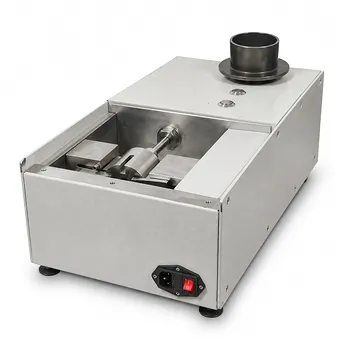
Lithium Battery Powder Resistivity and Compacted Density Measurement System
Optimize cathode and anode slurry formulations with this automated lithium battery powder resistivity and compacted density measurement system featuring closed-loop servo pressure execution high-resolution displacement monitoring synchronous environmental logging and automated analytical software for precision electrode quality control workflows
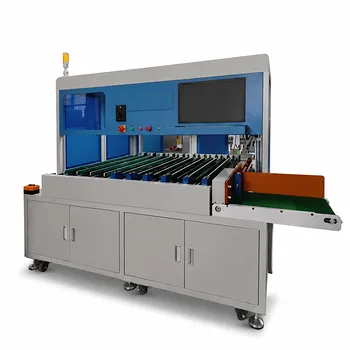
Prismatic Aluminum Shell Cell Automatic Sorting Machine
Automated prismatic aluminum shell cell sorting machine combines barcode traceability, precision voltage and internal resistance testing, and ten-grade classification to raise throughput, pairing consistency, and data control for battery manufacturing operations with reliable PLC handling, alarming, and local production records.
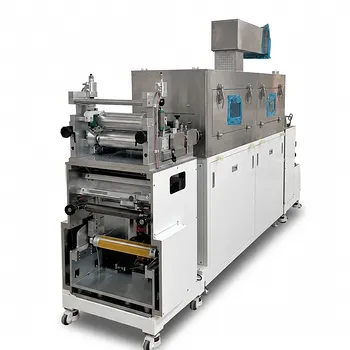
400mm Continuous and Intermittent Gap Coating Machine
400mm continuous and intermittent gap coating machine for precise lithium ion battery electrode coating with electric drying, controlled web handling, and configurable extrusion coating for cathode and anode production.
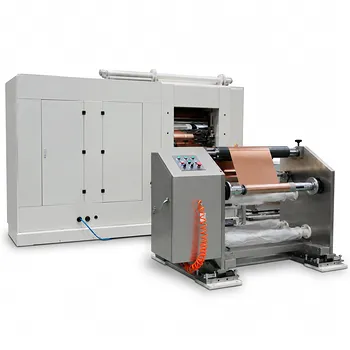
High Precision Lithium Battery Electrode Sheet Calendering Machine
High precision lithium battery electrode sheet calendering machine delivers controlled compaction, adjustable roll gaps, 4000 kN line pressure, accurate tension handling, and consistent electrode density for demanding cell manufacturing lines.
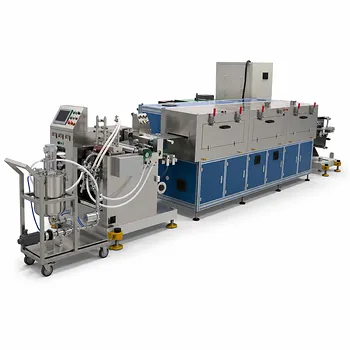
Single Sided Battery Electrode Extrusion Coating Machine
Single-sided battery electrode coating machine delivers precise intermittent and continuous slurry application, stable web tension, controlled electric drying, and consistent coatings for lithium-ion battery research, pilot production, and advanced materials development across demanding laboratory and development workflows every day.
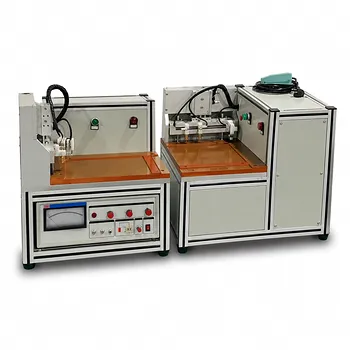
Pouch Cell Aluminum Laminated Film Short Circuit Tester Lithium Battery Testing Equipment
High precision pouch cell short circuit tester designed for reliable detection of insulation faults between tabs and aluminum laminated film prior to electrolyte injection maximizing lithium battery cell production yield process safety and high throughput quality control across manufacturing lines
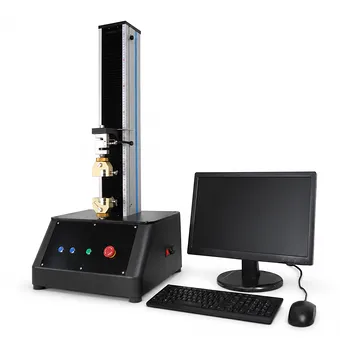
Computerized Battery Electrode Tab Welding Tensile Tester and Separator Performance Testing Machine
Evaluate battery electrode tab welding strength and separator mechanical performance with this computerized tensile testing machine featuring high precision load cells versatile test modes real time data acquisition and multi unit switching for advanced battery materials research and production
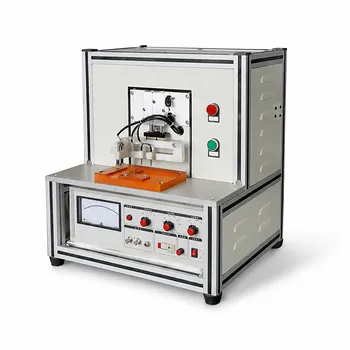
Pouch Cell Aluminum Laminated Film Short Circuit Tester Battery Testing Equipment
Boost battery production yields with our precision pouch cell short circuit tester engineered for rapid three point insulation verification between tabs and aluminum laminated film prior to electrolyte injection.
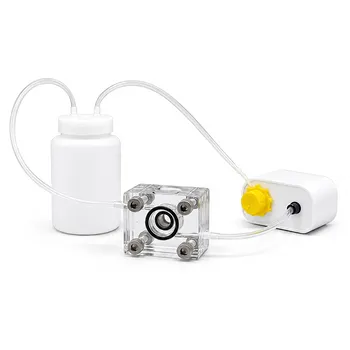
Reusable Gasket Sealed Electrolyte Cell Metal Fuel Cell Reactor
Reusable gasket sealed electrolyte cell and metal fuel cell reactor for transparent zinc air testing, external electrolyte circulation, oxygen experiments, reduced passivation, minimized concentration polarization, and reliable battery research across laboratories and advanced materials programs with selectable flow rates and storage capacities
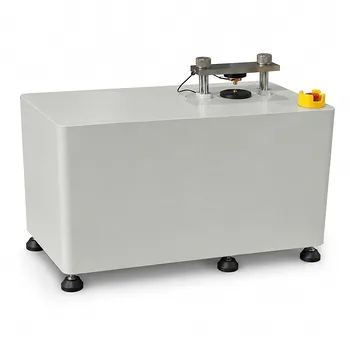
Automatic Lithium Battery Electrode Sheet Resistance Tester and Electrical Conductivity Meter
Streamline battery R&D quality control with our automatic lithium battery electrode sheet resistance tester, featuring programmable pressure loading up to 200kg, high-precision thickness monitoring, wide measurement ranges, and comprehensive real-time PC curve analytics.
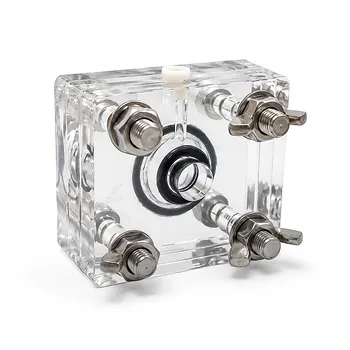
Rechargeable Zinc Air Electrolytic Cell Metal Fuel Cell Reactor Transparent Zinc Air Test Device
Transparent rechargeable zinc air electrolytic cell reactor for metal fuel cell research, corrosion resistant PMMA construction, selectable reaction areas, simple assembly, stainless steel hardware, visible testing, customizable configurations, reliable laboratory battery evaluation and advanced materials studies.
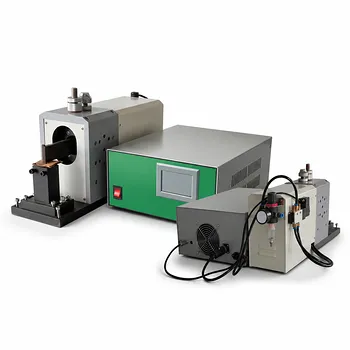
Intelligent 8000W Ultrasonic Battery Welding Machine for Up to 120 Layer Electrode Welding
Intelligent 8000W ultrasonic battery welding machine delivers stable 24 kHz electrode tab welding for aluminum and copper foils up to 120 layers, with automatic amplitude compensation, quality monitoring, bilingual touchscreen control, and reliable low-resistance joints.
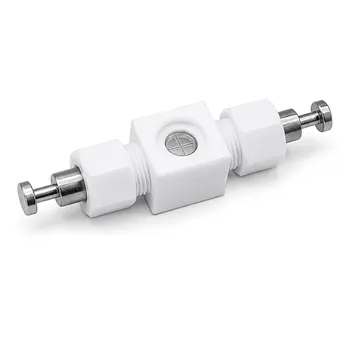
Optical Testing Cross Section Aqueous Battery Device for Microscopy Raman and Infrared Analysis
Optical testing cross section aqueous battery device for microscopy Raman infrared analysis dendrite observation and conductivity measurement in advanced battery research applications
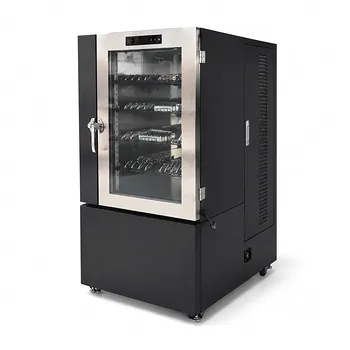
Integrated Constant Temperature Test Chamber for Battery Research and Materials Testing
Integrated constant temperature test chamber for pouch polymer and coin cell batteries delivers stable 0 to 60°C testing, rapid thermal transitions, PID control, Ethernet connectivity, and four-level insulated sample storage for reliable laboratory and production quality evaluation workflows.
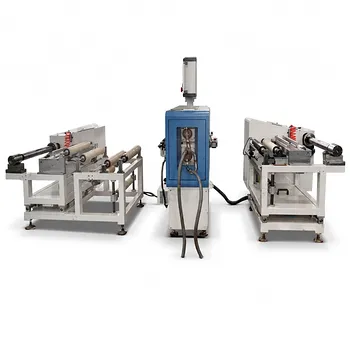
210 330mm Hydraulic Battery Electrode Calendaring Machine Heated Roller Press
210 x 330 mm hydraulic battery electrode calendaring machine with heated precision rolls, servo gap control, variable speed, and high pressure capability for consistent electrode density and thickness in advanced cell manufacturing research workflows.