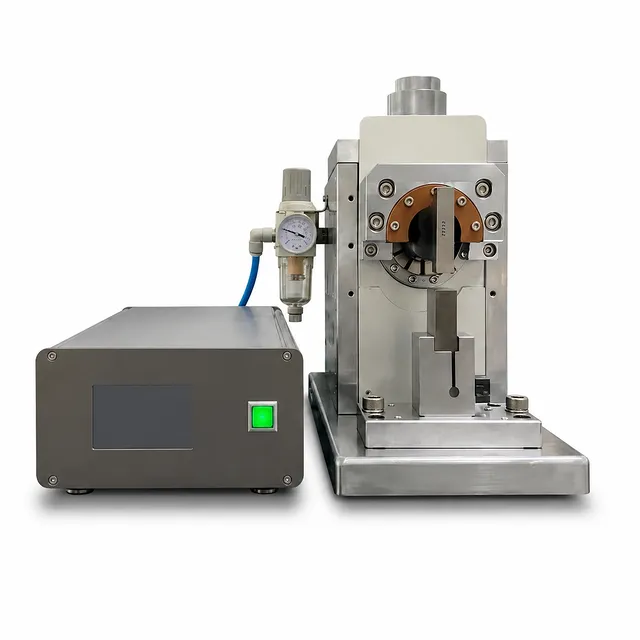
Spot Welder
Ultrasonic Metal Welding Machine for Glove Box Use Battery Tab Cap Welding
Item Number : DH01
Price varies based on specs and customizations
- Electrical Voltage
- 220 V ±10%
- Required Air Source Pressure
- 0.4-0.6 MPa
- High-Power Generator Dimensions
- 480 mm x 365 mm x 202 mm

Shipping:
Contact us to get shipping details Enjoy On-time Dispatch Guarantee.
Why Choose Us
Easy ordering process, quality products, and dedicated support for your business success.
Product Overview
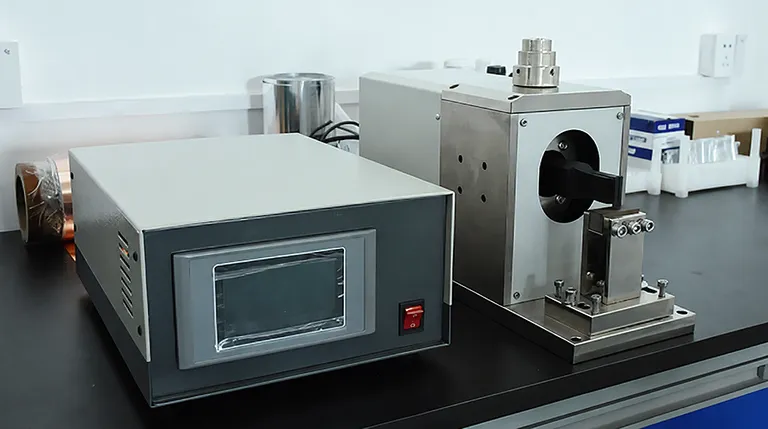
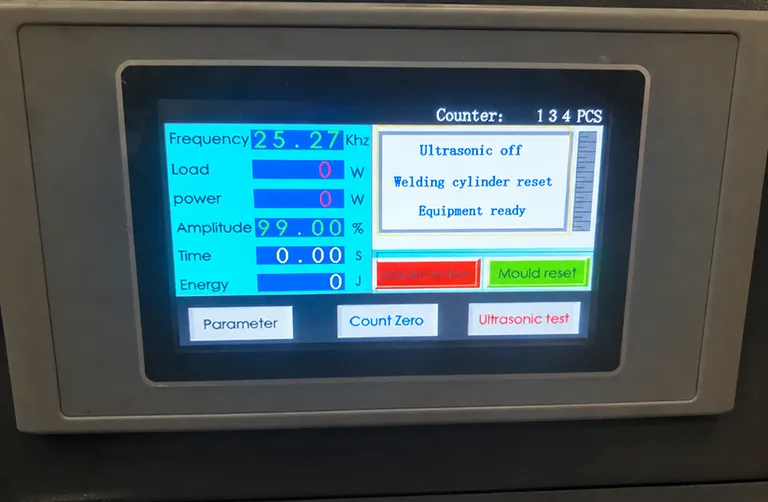
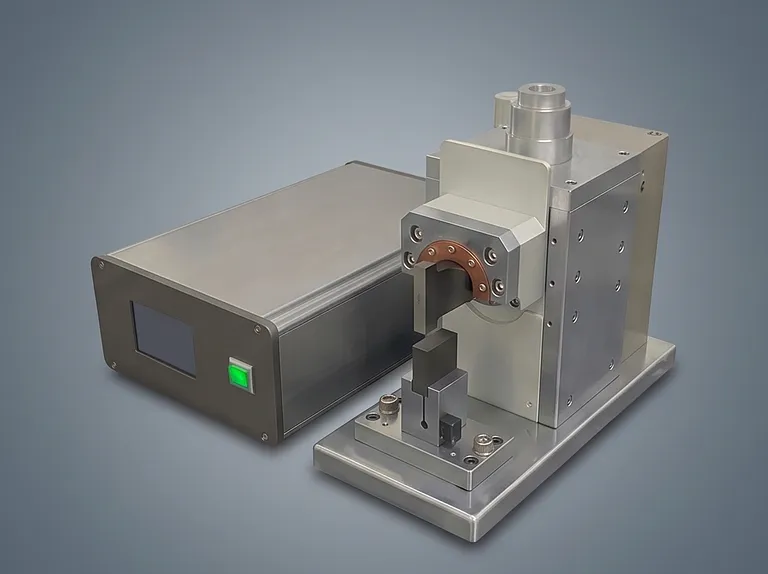
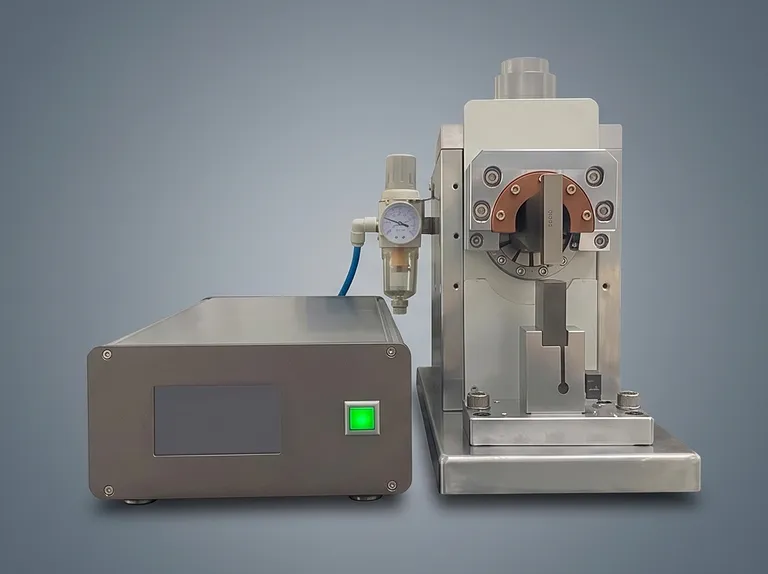
This ultrasonic metal welding machine is designed for compact, controlled joining of battery components and thin metal materials in glove box laboratory workflows. It combines a high-power generator with a dedicated welding head to support repeatable point-welding operations where controlled equipment dimensions, metric instrumentation, and defined utility conditions are important to process planning.
The equipment is particularly suited to welding 0.1 mm aluminum strip to battery caps and joining caps used with cylindrical cell formats such as 18650 and 21700. Custom welding areas and corresponding welding tooling can be specified for the intended component geometry, helping research and pilot-production teams adapt the unit to different cell assembly requirements.
A clearly defined electrical and pneumatic operating envelope supports reliable installation and daily use. The system is specified for 220 V operation with a tolerance of ±10%, compressed air at 0.4-0.6 MPa, humidity below 48%, and an ambient temperature not exceeding 45°C. These requirements give engineering and procurement teams a practical basis for facility compatibility review.
Key Features
-
Ultrasonic Metal Joining: The equipment is configured for ultrasonic point welding of battery-related metal components, including thin aluminum strip and cylindrical cell caps. This provides a dedicated joining solution for laboratory-scale cell fabrication and materials research workflows.
-
Battery Cap Welding Capability: The welding process supports cap-related work for 18650 and 21700 cylindrical battery formats. The defined application range helps laboratories evaluate equipment suitability against common cell assembly tasks.
-
Customizable Welding Area: A reference process for 0.1 mm aluminum strip and cap uses a 1.5 x 3 mm welding area. The corresponding welding die or horn can be customized to match the required component and joint geometry.
-
Dedicated High-Power Generator: The high-power generator has a compact footprint of 480 mm x 365 mm x 202 mm. Its defined enclosure size supports layout planning when the welding station must be integrated into a glove box or a constrained laboratory environment.
-
Compact Welding Head: The welding head measures 420 mm x 180 mm x 290 mm at its maximum external dimensions. This form factor helps users assess working clearance, access, and installation requirements before commissioning.
-
Defined Utility Requirements: The unit operates on 220 V ±10% and requires an air source at 0.4-0.6 MPa. Stating the operating utilities clearly supports more predictable facility integration and reduces ambiguity during equipment selection.
-
Controlled Environmental Conditions: The specified operating environment requires humidity below 48% and temperature no higher than 45°C. Maintaining these conditions helps laboratories establish an appropriate installation and operating plan.
-
Metric Instrumentation: All measuring instruments on the equipment use metric units. This improves consistency for laboratories that document dimensions, utilities, and process conditions within metric-based technical procedures.
-
Bilingual Program Support: The internal program is required to include both Chinese and English. This supports operation and process documentation in multilingual laboratory or manufacturing environments.
-
Three-Meter Transducer Connection: The transducer emission line connecting the welding head assembly to the electrical control box requires a length of 3 meters. This reference dimension should be incorporated into equipment layout, routing, and glove box integration planning.
Applications
| Application | Description | Key Benefit |
|---|---|---|
| Aluminum Tab to Battery Cap Welding | Weld 0.1 mm aluminum strip to a battery cap using a reference welding area of 1.5 x 3 mm. The welding die or horn can be customized for the required joint configuration. | Supports controlled joining of thin aluminum battery tabs while allowing the tooling to reflect the component design. |
| 18650 Cylindrical Cell Assembly | Perform cap welding for 18650 cylindrical battery cells during laboratory cell fabrication or pilot process development. | Provides a dedicated point-welding solution for a widely used cylindrical cell format. |
| 21700 Cylindrical Cell Assembly | Apply the welding process to cap-related assembly work for 21700 cylindrical cells and associated battery research procedures. | Helps battery R&D teams evaluate a common larger-format cylindrical cell workflow with purpose-selected tooling. |
| Glove Box Battery Research | Install and operate the compact generator and welding head as part of a controlled glove box-based cell assembly workflow, subject to facility integration and environmental requirements. | Combines a defined equipment footprint with specified electrical, pneumatic, and environmental conditions for planning enclosed laboratory processes. |
| Battery Materials Research | Use the unit for repeatable joining studies involving thin metal strips, caps, and related battery component interfaces. | Gives researchers a configurable platform for process trials where weld area and component geometry may change. |
| Academic and Advanced Materials Laboratories | Integrate the equipment into laboratory programs studying electrochemical cells, metal joining, or small-format component assembly. | Metric instrumentation, bilingual program support, and documented utilities simplify use across technical teams. |
Technical Specifications
| Parameter | Specification |
|---|---|
| Product Item Number | DH01 |
| Equipment Type | Ultrasonic metal welding machine / point welding equipment |
| Primary Intended Use | Battery component point welding and metal joining |
| Glove Box Suitability | Designed for glove box use according to the supplied product keyword and application requirement; confirm final integration conditions before purchase |
| High-Power Generator Dimensions L x W x H | 480 mm x 365 mm x 202 mm |
| Welding Head Dimensions L x W x H | 420 mm x 180 mm x 290 mm at the maximum top end dimensions |
| Measuring Instrument Units | Metric units for all measuring instruments on the equipment |
| Electrical Voltage | 220 V ±10% |
| Required Air Source Pressure | 0.4-0.6 MPa |
| Required Air Source Humidity | Less than 48% |
| Maximum Temperature | Not higher than 45°C |
| Reference Welding Material | 0.1 mm aluminum strip plus battery cap |
| Reference Welding Area | 1.5 x 3 mm |
| Welding Tooling | Welding die or horn can be customized |
| Supported Battery Cap Formats | 18650 and 21700 cylindrical cell caps |
| Transducer Emission Line Length | 3 m between the transducer emission line and electrical control box |
| Program Language Requirement | Chinese and English |
| Installation Planning Consideration | Account for generator dimensions, welding head clearance, and the 3 m transducer connection when arranging the station |
The stated dimensions should be reviewed together with the intended glove box opening, internal working envelope, service access, and cable or line routing. The generator and welding head are listed as separate dimensional assemblies, so the complete installation layout should reserve space for both components and their interconnection.
The power requirement is 220 V with an allowable variation of ±10%. The compressed-air requirement is 0.4-0.6 MPa, with humidity below 48%. Facility teams should verify that the available electrical supply and air preparation system remain within these conditions during operation, particularly when the unit is installed in a controlled enclosure or shared laboratory utility network.
For the reference aluminum-strip application, the supplied process information identifies a 0.1 mm aluminum strip joined to a cap and a 1.5 x 3 mm welding area. This is a reference configuration rather than a universal limitation on every possible joint. Because the welding area and corresponding tooling can be customized, buyers should provide component drawings, material details, and target joint dimensions during technical review.
The listed cylindrical cell applications include 18650 and 21700 cap welding. These formats should be evaluated against the laboratory's actual cap construction, tab design, access direction, and glove box handling procedure. Final tooling selection and process validation should be based on the components that will be used in production or research trials.
The transducer emission line connecting to the electrical control box requires a 3 m length. This detail is important when positioning the generator relative to the welding head and glove box. Routing should preserve practical access and avoid creating unnecessary bends, interference, or obstruction around the operator's working area.
Why Choose This Product
-
Purpose-Built for Battery Joining: The equipment addresses specific cap and aluminum-tab welding tasks rather than serving as an unspecified general-purpose joining tool. Its reference applications cover both 18650 and 21700 cylindrical cell formats.
-
Adaptable Process Tooling: A 1.5 x 3 mm welding area is documented for the 0.1 mm aluminum-strip application, while the welding die or horn can be customized for different component geometries. This supports a better fit between equipment configuration and research requirements.
-
Engineering-Ready Installation Data: Generator and welding head dimensions, the 220 V ±10% supply, 0.4-0.6 MPa air requirement, and 3 m transducer connection are clearly defined for procurement and facility planning.
-
Consistent Technical Communication: Metric measuring instruments and Chinese-English program support help standardize operation and documentation across multilingual technical teams.
-
Suitable for Controlled Laboratory Workflows: The defined humidity and temperature limits provide a clear basis for evaluating environmental compatibility, especially where the equipment is incorporated into glove box-based battery R&D.
For a configuration matched to your cell format, weld area, glove box layout, and facility utilities, contact us for a quotation and customized technical solution.
Trusted by Industry Leaders

REQUEST A QUOTE
Our professional team will reply to you within one business day. Please feel free to contact us!
Related Products
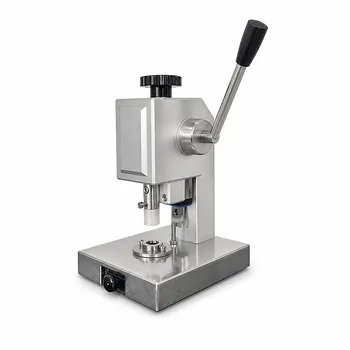
Coin Cell Electrode Sheet Punching Machine
Coin cell electrode sheet punching machine for precision die cutting of battery cathodes anodes separators and thin materials with compact operation flexible die sizes and glovebox compatible handling for laboratory research workflows consistent clean edges in demanding battery development applications.

Laboratory Hydraulic Press Lab Pellet Press Machine for Glove Box
Precision lab press for glove boxes: Compact, leak-proof design with digital pressure control. Ideal for inert atmosphere material processing. Explore now!
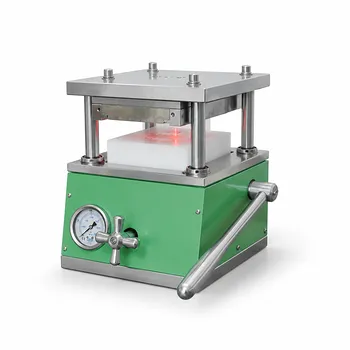
Laboratory Compact Hydraulic Positioning Die Cutting Machine
Compact hydraulic positioning die cutting machine for laboratory battery electrode and lithium foil preparation delivers accurate burr free cuts glovebox compatibility and protected adjustable pressure control for reliable research cell fabrication workflows with fast die changes daily use
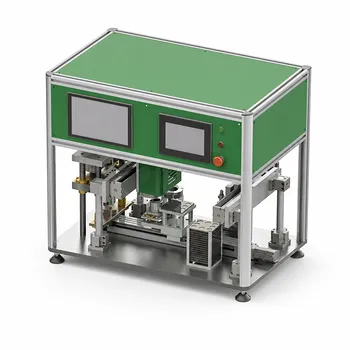
Automated Coin Cell Assembly Machine with Precision Electrolyte Filling and CCD Inspection
Automated coin cell assembly machine for 20 and 24 series batteries, featuring precision electrolyte filling, automatic material handling, tray switching, sealing, CCD inspection, PLC control, and glovebox-compatible operation for consistent laboratory cell fabrication and advanced battery research workflows.
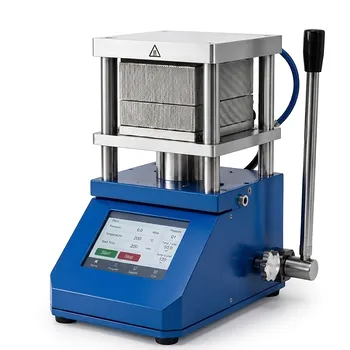
Intelligent Desktop Manual Thermal Press with Dual Heating Real Time MPa and Water Cooling for Glovebox
This compact benchtop thermal press delivers precise temperature and pressure control for materials research, with real-time MPa stress calculation, dual independent heating up to 300°C, and water-cooled thermal isolation. Ideal for glovebox-based solid-state battery development and FTIR sample preparation.
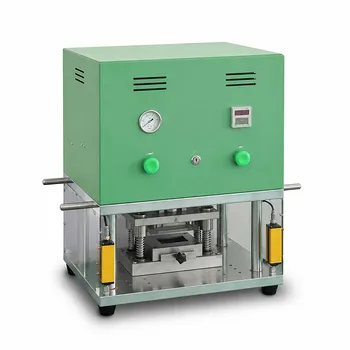
Metal Electrode Sheet Die Cutting Machine
Precision metal electrode sheet die cutting machine for battery positive and negative electrodes delivers stable dimensions low burrs infrared positioning and safeguarded pneumatic operation with custom tooling for diverse cell formats.
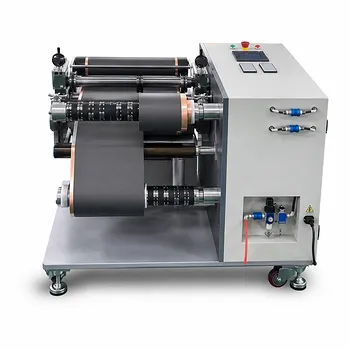
Roll to Roll Continuous Slitting Machine
Precision roll to roll continuous slitting machine for battery foil metal foil optical film and functional film converting delivers adjustable tension accurate widths low burr quality and PLC controlled operation with durable tungsten carbide circular blades and servo-driven unwinding rewinding.
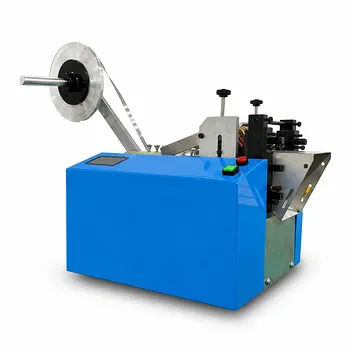
0.1mm 10m Nickel Strip Cutting Machine
Precision nickel strip cutting machine for battery manufacturing processes, handling copper, aluminum, copper foil tape, and nickel strip with adjustable cut lengths, widths from 0.1 to 100 mm, and dependable 150 cuts per minute throughput for laboratory production teams.
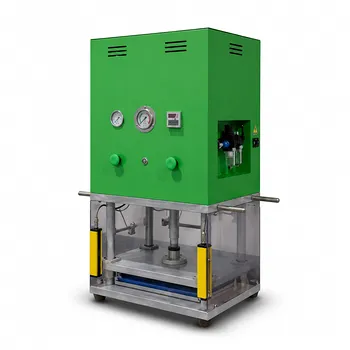
Semi Automatic Pouch Cell Electrode Sheet Die Cutting Machine
Semi-automatic pouch cell electrode die cutting machine with infrared positioning, adjustable 3T or 5T force, +/-0.1 mm precision, 800-2000 pieces per hour, clean edges, and safe light curtain protection for reliable battery research and scalable laboratory production workflows.
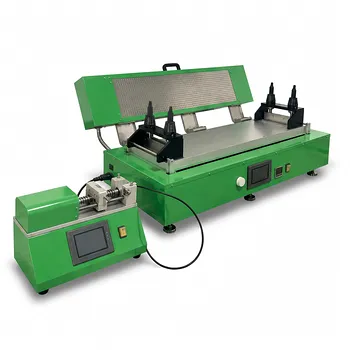
Customizable Laboratory Benchtop Extrusion Flat Plate Coating Machine
Customizable laboratory benchtop extrusion coating machine for lithium battery electrodes, solar films, conductive polymer layers, OLED substrates, precise thickness control, uniform heating, and glovebox-compatible research.

Heated Hydraulic Press Machine with Heated Plates for Vacuum Box Laboratory Hot Press
KINTEK Heated Hydraulic Lab Press with Vacuum Box ensures precise sample preparation. Compact, durable, and featuring digital pressure control for superior results.
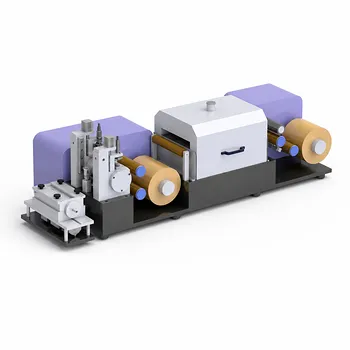
Slot Die Extrusion Coating Machine for Roll to Roll Electrode Coating
Slot die extrusion coating machine delivers non-contact roll-to-roll electrode coating with precision syringe pumping, controlled infrared drying, and glovebox-ready compact operation for solid-state battery, functional film, and laboratory process development where repeatable coating, web tracking, and temperature uniformity support results.
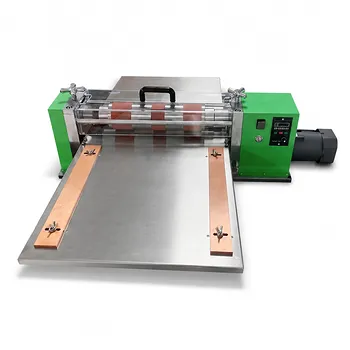
Polymer Battery Lithium Battery Positive Negative Electrode Sheet Electric Slitting Machine
Electric roll slitting machine for polymer battery and lithium battery positive and negative electrode sheets, delivering adjustable positioning, synchronized circular cutters, high precision cutting, and guarded operation for 50-400 μm electrode materials.
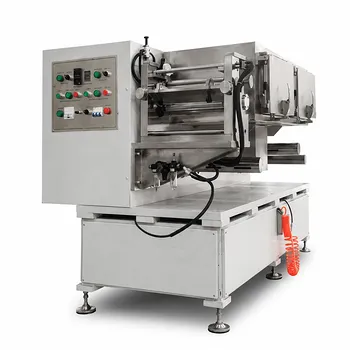
300mm Small Laboratory Automatic Roll to Roll Coating Machine
Improve lithium battery electrode prototyping with a 300mm small laboratory automatic roll to roll coating machine featuring precision doctor blade coating hot air drying and automatic web guiding for uniform experimental electrode production in materials laboratories and pilot lines.
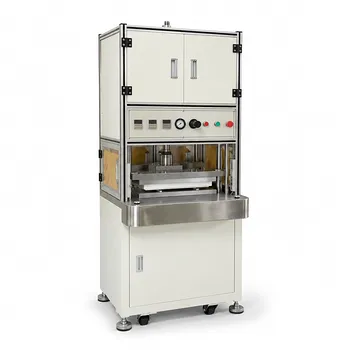
Polymer Lithium Battery Electrode Sheet Manual Punching Machine
Manual punching machine for polymer lithium battery electrode sheets combines 10T pneumatic hydraulic force, precise platen parallelism, adjustable timing, dual-button operation, and light-curtain safety for consistent laboratory electrode die cutting.