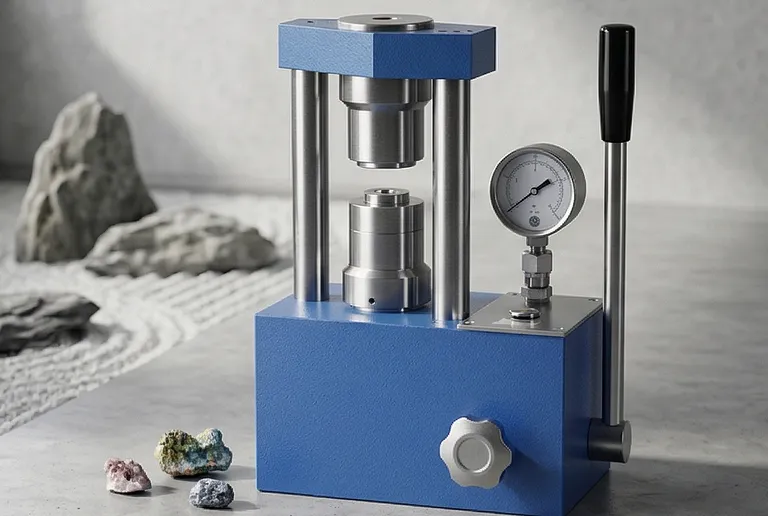
The Invisible Flaw
In advanced material science, the most dangerous defects are the ones we cannot see. When stacking Aluminum Oxynitride (AlON) tapes, we are essentially building a skyscraper out of thin, brittle sheets.
Without intervention, these layers remain strangers to one another. They touch, but they do not bond. In the intense heat of the sintering kiln, these invisible interfaces become sites of catastrophic failure—delamination, warping, and light-scattering voids.
To achieve optical transparency and structural armor, we must erase these boundaries. This is the role of the laboratory hot press.
The Thermoplastic Pivot
The transition from a stack of tapes to a "green body" is not merely mechanical; it is a behavioral shift of the organic binders.
At room temperature, binders are rigid. They hold the ceramic particles in place but refuse to negotiate. When we introduce heat—typically around 100°C—we reach the glass transition temperature.
Why Temperature Matters
- Mobilization: The binders enter a thermoplastic state, becoming a viscous medium.
- Reorientation: Particles are no longer locked; they can move, slide, and pack more tightly.
- The Flow: This "softening" allows the material to behave like a single entity rather than a deck of cards.
Erasing the Interface Through Axial Force
A laboratory hot press provides the essential synergy of heat and axial pressure. This isn't just about compression; it is about "physical interlocking."
As pressure is applied to the heated stack, the binder-rich surfaces of adjacent layers diffuse into one another. The boundary disappears. This process creates a monolithic green body where the internal density is uniform.
| Feature | Action during Warm Pressing | Impact on Final Ceramic |
|---|---|---|
| Binder State | Shifts to thermoplastic flow | High initial green density |
| Interfaces | Physical interlocking/diffusion | Prevents delamination |
| Particle Packing | Elimination of microscopic gaps | Enhanced mechanical strength |
| Void Reduction | Removal of interlaminar air | Maximum optical transparency |
The Engineer’s Dilemma: Precision vs. Pressure
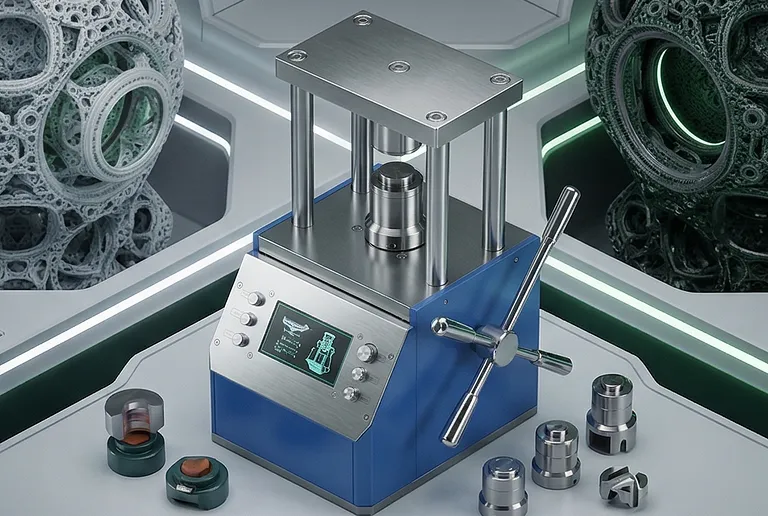
In the pursuit of density, more is not always better. The process is governed by a delicate "processing window."
If the temperature is too low, the binder remains a solid wall, leading to a weak bond. If the temperature is too high, the binder may "squeeze out" or degrade, leaving the ceramic particles unsupported.
Similarly, pressure must be applied with extreme precision. Laboratory hot presses are designed to mitigate pressure gradients—the tendency for the center of a sample to feel less force than the edges. For AlON, where even a microscopic pore can ruin optical clarity, this uniformity is the difference between a lens and a piece of scrap.
Designing the Outcome
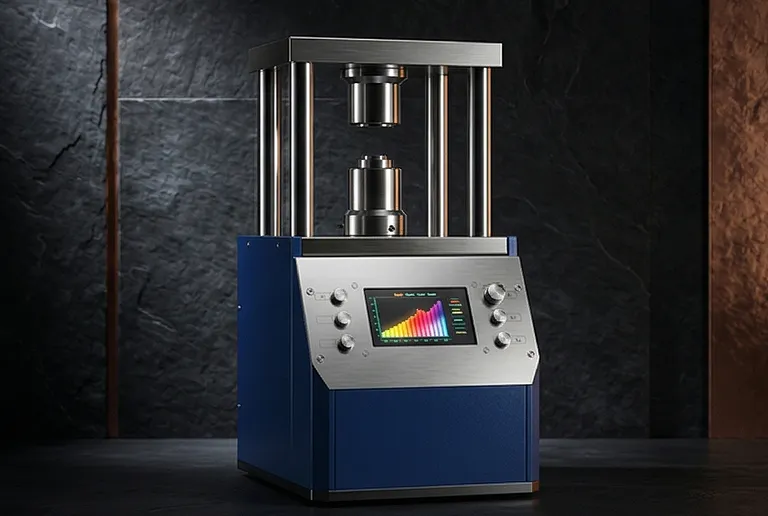
The way you configure your pressing cycle dictates the material's future performance:
- For Optical Clarity: Prioritize thermal soak time. Ensure every binder molecule has reached the thermoplastic state to eliminate every possible light-scattering interface.
- For Structural Armor: Focus on the pressure profile. Achieving the highest possible green density minimizes the internal stresses that cause cracks during the final sintering shrink.
- For Research Agility: Use a system that allows for rapid iteration. Finding the specific "sweet spot" for your binder-to-ceramic ratio requires a press that can maintain repeatable, minute adjustments.
The Foundation of Density
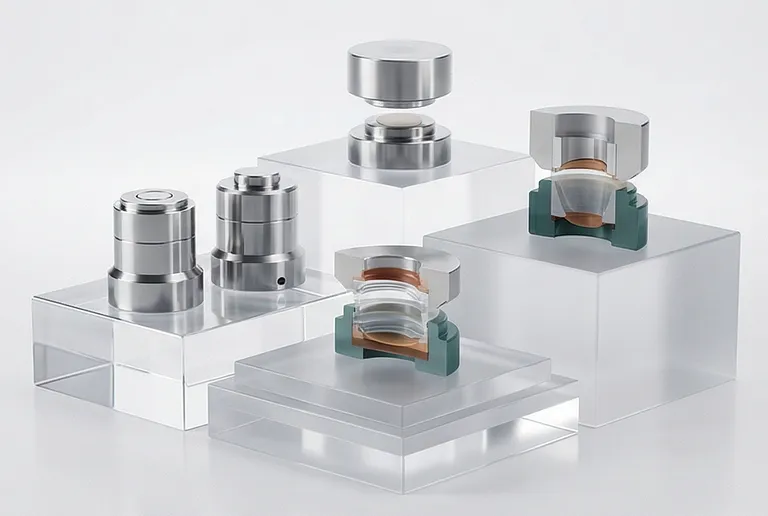
At KINTEK, we understand that the final product is only as good as the green body it started from. We build the tools that make this "erasing of the interface" possible.
Whether you are developing next-generation transparent armor or high-performance battery components, our pressing solutions provide the control required for systemic success:
- Heated & Automatic Presses: Precise control over the thermal-pressure synergy.
- Isostatic Solutions: Both cold and warm models for 360-degree densification.
- Specialized Environments: Glovebox-compatible systems for sensitive material research.
The integrity of your ceramic begins in the press. To discuss how our technology can refine your lamination process, Contact Our Experts
Related Products
- Automatic High Temperature Heated Hydraulic Press Machine with Heated Plates for Lab
- Automatic Heated Hydraulic Press Machine with Hot Plates for Laboratory
- Lab Heat Press Special Mold
- Heated Hydraulic Press Machine with Heated Plates for Vacuum Box Laboratory Hot Press
- 24T 30T 60T Heated Hydraulic Lab Press Machine with Hot Plates for Laboratory
Related Articles
- The Architecture of Slow: Why Physical Precision Dictates Chemical Destiny
- The Architecture of Certainty: Why the Laboratory Press is the Anchor of Material Science
- The Vanishing Boundary: The Hidden Thermodynamics of LTCC Lamination
- The Alchemy of 160°C: Why Precision Pressing is the Silent Backbone of Rubber Science
- The Invisible Forge: Why the Laboratory Press is the Soul of Nano-Composites



















