The Silent Crisis of the Interface
In the world of conventional lithium-ion batteries, liquid is the great equalizer. Liquid electrolytes flow into every crack, wetting every surface, and ensuring that lithium ions have a bridge to cross.
In all-solid-state batteries (ASSBs), that luxury vanishes.
We are left with solids pressing against solids. Without a medium to bridge the gap, the smallest microscopic void becomes an impassable canyon for an ion. The challenge of the solid-state revolution isn't just chemistry; it is a challenge of mechanical intimacy.
The Engineering of Contact: Beyond Loose Powders
To build a silicon anode that actually works, you must first solve the problem of "separation." Loose powders are chaotic. They contain air, gaps, and high resistance.
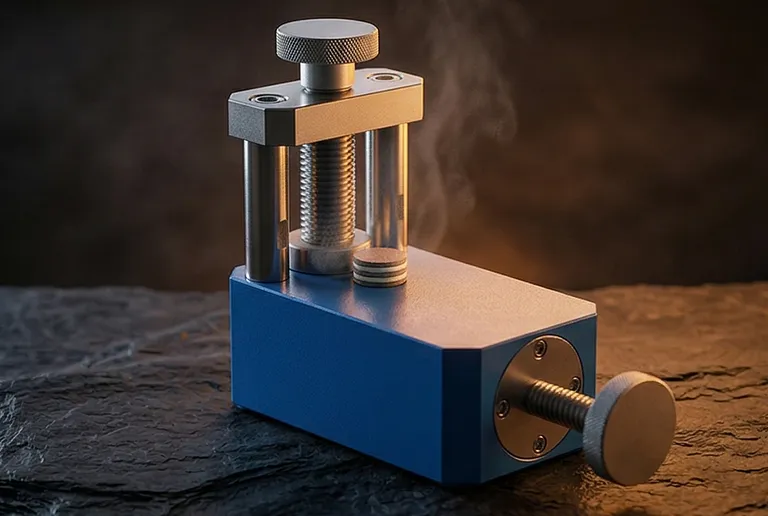
The laboratory high-pressure hydraulic press is the tool that imposes order on this chaos. By applying axial pressure—often exceeding 380 MPa—we aren't just squashing material. We are performing a "cold-pressing" alchemy that transforms a heap of dust into a singular, cohesive electrochemical unit.
The Mechanics of "The Press"
- Deformation: Under extreme force, particles plastically deform, molding into one another.
- Interlocking: Active silicon materials and solid electrolytes physically weave together.
- Reduction of Resistance: Grain boundaries are crushed until the resistance to ion flow drops to a fraction of its unpressed state.
The Physics of Densification: Eliminating the Void
In a solid-state system, porosity is the enemy of performance. If 20% of your electrode is air, 20% of your battery is effectively dead space that resists charging.
Recent research shows that high-intensity pressure can reduce porosity to levels as low as 3.71%. This isn't just "compacting"; it is the creation of a dense, multi-layer pellet where the anode, electrolyte, and cathode function as a single physical body.
| Feature | Impact of High Pressure ( >350 MPa) | The Resulting Benefit |
|---|---|---|
| Porosity | Dramatically reduced to <4% | Higher energy density and ion flux |
| Grain Boundaries | Minimized via "cold-welding" effect | Lower internal resistance ($R_{int}$) |
| Layer Integrity | Multi-layer fusion | Prevention of delamination during cycling |
| Form Factor | Precise axial uniformity | Consistent current distribution |
The Paradox of Force: Stability vs. Destruction
In engineering, as in psychology, more is not always better. There is a "Goldilocks zone" for pressure.
If you apply too little pressure, the ion transport channels never form. The battery "chokes" on its own internal resistance.
However, if the pressure exceeds the structural limits of the material, the brittle solid electrolyte or the silicon particles will fracture. These micro-cracks act as new barriers, ironically increasing the very resistance you sought to eliminate. The laboratory press, therefore, must be a tool of precision, not just brute strength.
Strategic Pressure: A Researcher’s Playbook
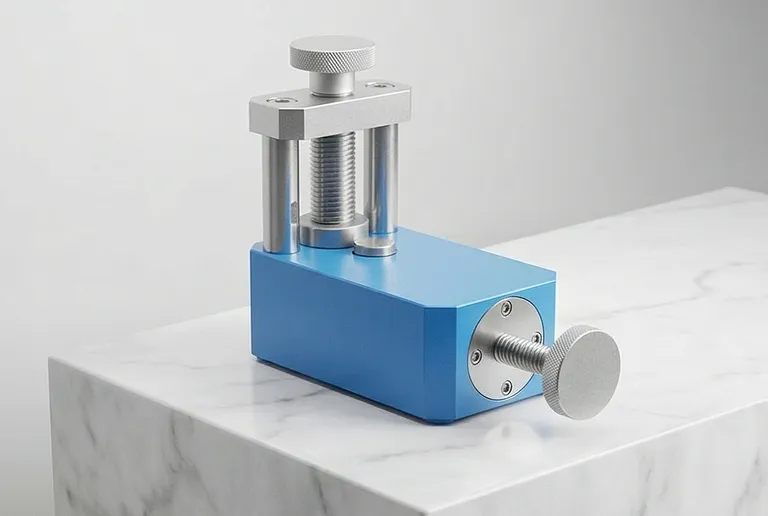
How you apply pressure defines the life of the battery. Different research goals require different mechanical strategies:
- For Conductivity Optimization: Focus on the higher thresholds (350–440 MPa). This maximizes the "crush" and eliminates the last vestiges of porosity.
- For Cycle Longevity: A moderate approach (100–300 MPa) may be superior. It ensures contact while preserving the mechanical "slack" needed for silicon's inevitable expansion during lithiation.
- For Prototyping: The focus shifts to the speed and repeatability of the multi-layer pellet formation, ensuring each test cell is identical to the last.
Engineering the Heart of the Battery
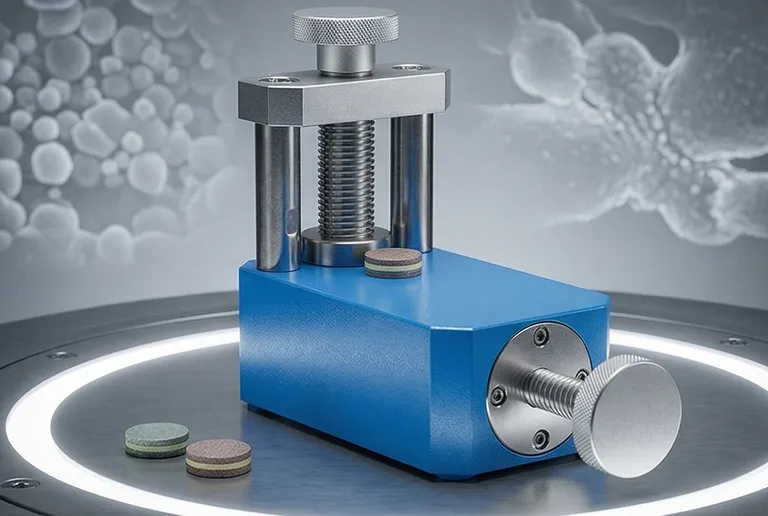
The hydraulic press is often the most overlooked piece of equipment in the lab, yet it is the primary mechanism that makes solid-state electrochemistry possible. It is the bridge between a collection of interesting materials and a functional energy storage device.
At KINTEK, we understand that the interface is where the battle for the next generation of batteries will be won. We specialize in the precision tools required to win that battle—from manual and automatic presses to specialized glovebox-compatible and isostatic systems designed for the extreme demands of silicon anode research.
Achieving perfect solid-to-solid contact requires more than just force; it requires the right system. Contact Our Experts
Related Products
- Automatic High Temperature Heated Hydraulic Press Machine with Heated Plates for Lab
- 24T 30T 60T Heated Hydraulic Lab Press Machine with Hot Plates for Laboratory
- Heated Hydraulic Press Machine with Heated Plates for Vacuum Box Laboratory Hot Press
- Heated Hydraulic Press Machine With Heated Plates For Vacuum Box Laboratory Hot Press
- Laboratory Split Manual Heated Hydraulic Press Machine with Hot Plates
Related Articles
- The Architecture of Slow: Why Physical Precision Dictates Chemical Destiny
- The Architecture of Certainty: Why the Laboratory Press is the Anchor of Material Science
- The Vanishing Boundary: The Hidden Thermodynamics of LTCC Lamination
- The Alchemy of 160°C: Why Precision Pressing is the Silent Backbone of Rubber Science
- The Invisible Forge: Why the Laboratory Press is the Soul of Nano-Composites



















