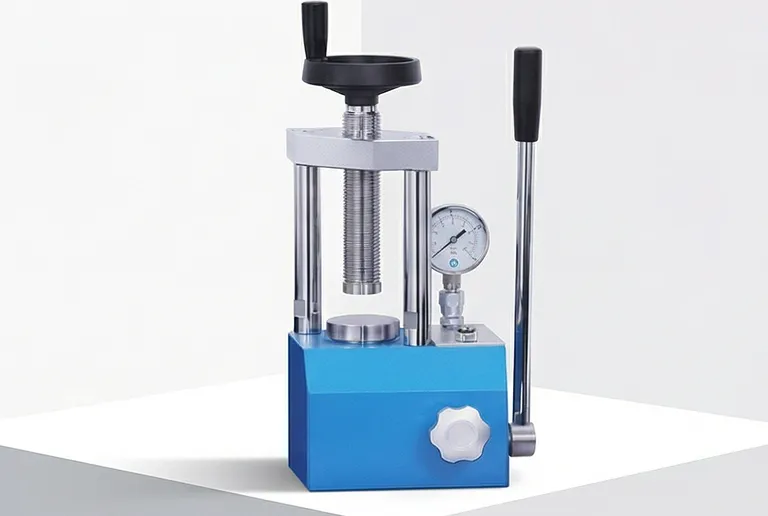
The Invisible Forge of Nanocomposites
At its core, material science is a battle against chaos. A raw fluoroelastomer compound is essentially a soft, plasticized mixture—unstructured and vulnerable. To transform it into a high-performance nanocomposite capable of withstanding extreme environments, we rely on a specific type of controlled violence: the synchronized application of heat and pressure.
The high-pressure heated flat vulcanizing press is not just a piece of machinery; it is the essential catalyst. It provides the environment where chemistry and physics meet to forge a three-dimensional molecular network.
The Alchemy of the 3D Network
In the molding of fluoroelastomers, heat is the messenger of change. When the press reaches its target temperature—often around 177°C—it triggers a peroxide-initiated crosslinking reaction.
Inducing Chemical Transformation
Thermal energy breaks down chemical initiators, forcing individual polymer chains to stop sliding past one another. This is the moment the material loses its "memory" of being a liquid and begins its life as an elastomer.
Defining the Molecular Web
Linear macromolecules are forced into a stable, three-dimensional spatial network. This transition determines the final material's:
- Elasticity: The ability to return to shape after deformation.
- Flame Retardancy: The density of the network resists thermal breakdown.
- Structural Integrity: The resistance to chemical swelling and mechanical wear.
The Eradication of Internal Voids
Pressure is the silent architect of density. While heat facilitates the chemistry, the 10 MPa of mechanical pressure performs a critical physical task: the elimination of space.
Eliminating Failure Points
In high-performance applications, an air bubble is a death sentence. High pressure forces the elastomer compound into every microscopic crevice of the steel mold, purging air bubbles and internal voids. This ensures the final specimen is homogeneous and free of "soft spots."
Achieving High Structural Density
By tightly arranging polymer chains and nanoparticle fillers, the press optimizes the dielectric response and mechanical durability. A dense material is a predictable material.
The Delicate Balance of Thermal Management
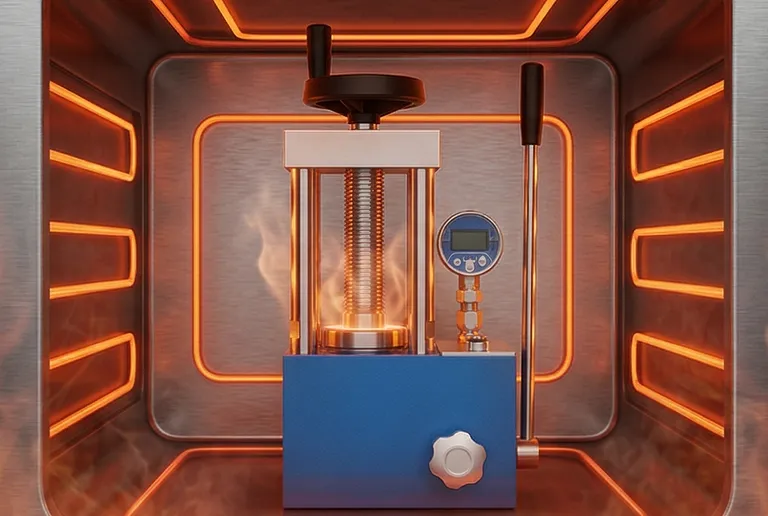
In engineering, every solution carries a trade-off. Precision in vulcanization is a game of margins. If the system fails, the material fails.
| Risk Factor | Root Cause | Consequence |
|---|---|---|
| Thermal Gradient Imbalance | Uneven heating plate temperatures | Localized internal stresses and uneven curing. |
| Pressure Sensitivity | Excessive mechanical force | Mold overflow (flash) and wasted material yield. |
| Thermal Degradation | Excessive cure time | Breaking of polymer chains, leading to brittleness. |
Designing for Success: A Calibration Guide
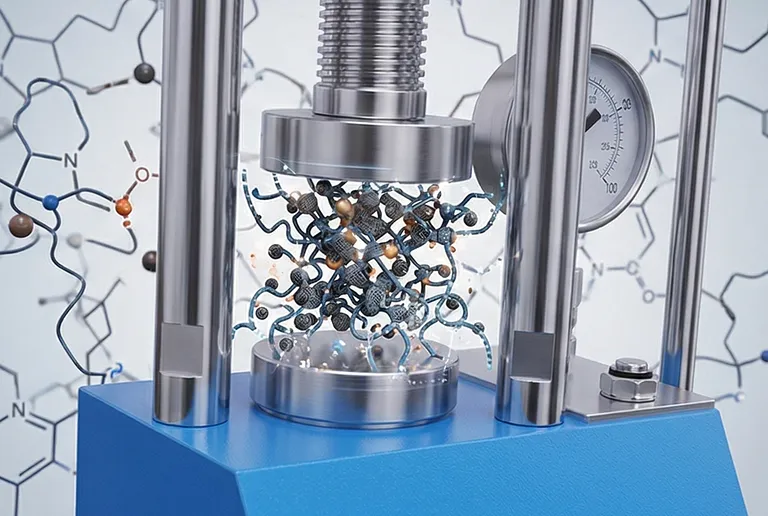
To achieve the "perfect" specimen, the operator must choose a primary objective and calibrate the press accordingly.
- For Maximum Mechanical Strength: Prioritize pressure stability (e.g., 10 MPa) to ensure zero voids and maximum densification.
- For Chemical Resistance: Focus on the precision of the thermal field (e.g., 177°C) to guarantee a complete and uniform crosslinking network.
- For Nanoparticle Integration: Use synchronized thermopressure to "lock" the nanoparticle network within the matrix, preventing agglomeration.
Elevate Your Laboratory Precision
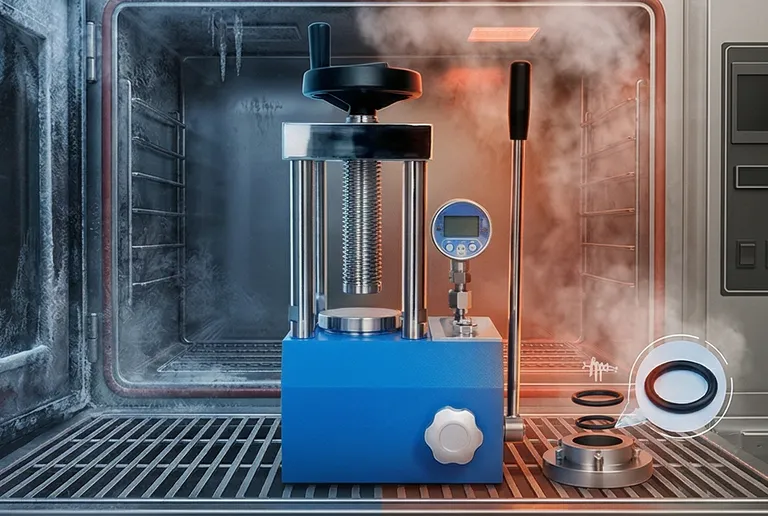
The difference between a failed experiment and a breakthrough often lies in the equipment's ability to maintain a perfectly uniform environment. At KINTEK, we design our pressing solutions to eliminate the variables that compromise research.
Our portfolio supports the entire lifecycle of advanced material development:
- Manual & Automatic Heated Presses: For repeatable, high-precision vulcanization.
- Glovebox-Compatible Models: Essential for sensitive battery and chemical research.
- Cold & Warm Isostatic Presses (CIP/WIP): Engineered for the densification of advanced ceramics and complex composites.
Master the variables of heat and pressure to unlock the next generation of fluoroelastomer performance.
Related Products
- Automatic Laboratory Hydraulic Press for XRF and KBR Pellet Pressing
- Laboratory Hydraulic Pellet Press for XRF KBR FTIR Lab Press
- Automatic High Temperature Heated Hydraulic Press Machine with Heated Plates for Lab
- Manual Laboratory Hydraulic Press Lab Pellet Press
- Automatic Laboratory Hydraulic Press Lab Pellet Press Machine
Related Articles
- The Physics of Transparency: Why Pressure is the Silent Architect of Spectroscopic Clarity
- The Architecture of Density: Why Pressure is the Silent Architect of Solid-State Batteries
- The Architecture of Density: Why Pressure is the Foundation of Precision
- The Architecture of Heat: Why Sample Density Dictates the Truth in Metal Hydride Research
- The Geometry of Electrons: Why Surface Precision is the Silent Partner in SECM Research



















