In materials science, we are often seduced by the data at the end of the experiment—the peak force on a graph, the sudden snap of a bond, the "aha" moment of a successful test.
But for the engineer, the truth isn't in the result. The truth is in the sample.
When testing the adhesion of polypropylene (PP) composite films, the most dangerous variable is the one you cannot see: the inconsistency of the film itself. If your film varies by a mere 10 microns, or if a microscopic air bubble is trapped within the matrix, your data is no longer a reflection of the material’s properties.
It is a reflection of a flawed process.
The Geometry of Truth: Thickness and Surface
Reliable adhesion testing, specifically peel strength evaluation, is a game of extreme sensitivity. If the substrate is not uniform, the physics of the peel changes entirely.
Eliminating the Thickness Tax
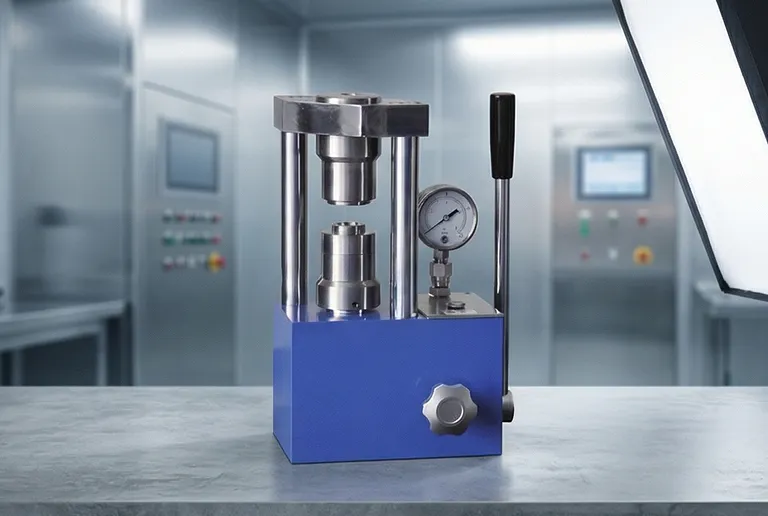
A high-precision laboratory hot press acts as a stabilizer. By maintaining a specific thickness—often around 200 µm—with tolerances as tight as +/- 5 µm, it removes "thickness interference." Without this control, thicker sections of the film will resist bending differently than thinner sections, creating artificial noise in your force data.
Preparing the Canvas
Adhesion often requires secondary treatments like corona discharge or chemical functionalization. These processes demand a mirror-flat surface. Precision platens apply uniform pressure across the entire surface area, ensuring that when the treatment hits the film, it hits a perfectly level plane. Macroscopic irregularities are the enemies of uniform energy distribution.
The Microscopic Landscape: Beyond What We See
The internal state of a polymer is as important as its external dimensions. Under the hood of a polypropylene matrix, a battle is fought between density and defects.
Purging the Silent Saboteurs
Between 190°C and 210°C, polypropylene enters a molten state. A high-precision press uses this window to purge air bubbles and internal voids. These tiny pockets of air are silent saboteurs; they act as stress concentrators. During a mechanical test, the film will fail at these points prematurely, leading to a false "weak" reading for a material that might actually be robust.
Forcing Structural Integration
Precision control allows the PP matrix to flow into every crevice of its fillers or fibers. This creates a dense microstructure. When the material is pressed at upwards of 30 MPa, it stops being a collection of components and starts acting as a single, cohesive unit. This internal integrity is what allows you to measure true interfacial adhesion later.
Thermal Discipline and the Ghost of Stress
Material memory is a real phenomenon. How you cool a film is just as important as how you heat it.
- Residual Stress: Rapid, uneven cooling traps internal energy. This "frozen-in" stress can cause the film to warp or become brittle as soon as it is removed from the press.
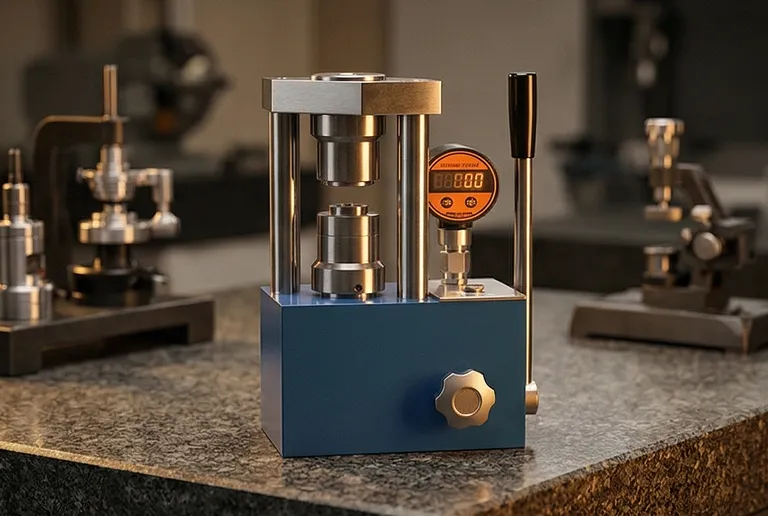
- Programmable Cooling: High-end presses utilize staged cooling. By allowing the polymer chains to stabilize gradually, you produce a sample that is dimensionally stable and "relaxed," ensuring that the mechanical properties you measure are inherent to the chemistry, not the cooling rate.
The Engineering Trade-off: Precision vs. Practicality
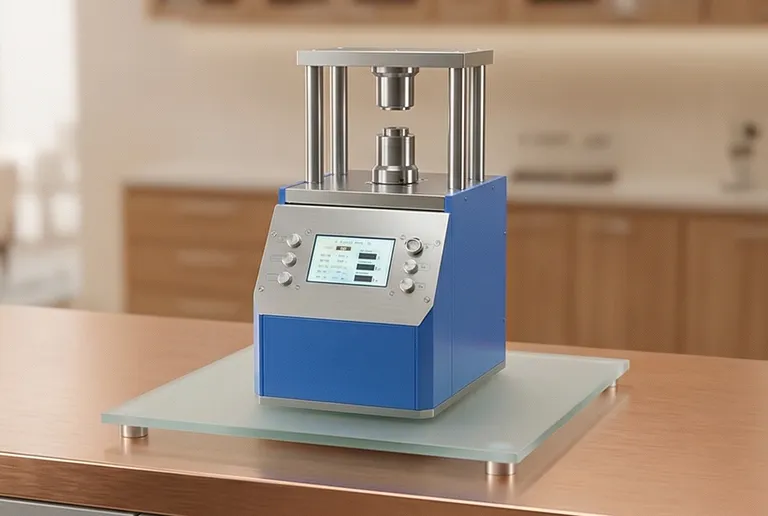
Achieving this level of control requires a shift in mindset. Precision is not free; it comes with specific operational realities.
| Feature | Impact on Adhesion Testing | The Precision Requirement |
|---|---|---|
| Thickness Control | Prevents variability in peel strength data | Tolerances of +/- 5 µm |
| Surface Quality | Ensures uniform contact for treatments | Mirror-flat, irregularity-free platens |
| Void Elimination | Removes stress concentrators | Sustained high-pressure flow (30 MPa) |
| Thermal Stability | Prevents warping and brittleness | Programmable cooling cycles |
The cost of this precision is complexity and time. Achieving a void-free, stress-free film often requires longer, staged cycles. However, in the context of high-stakes research—such as battery development or advanced polymer engineering—the cost of "fast" is "unreliable."
The Path to Definitive Data
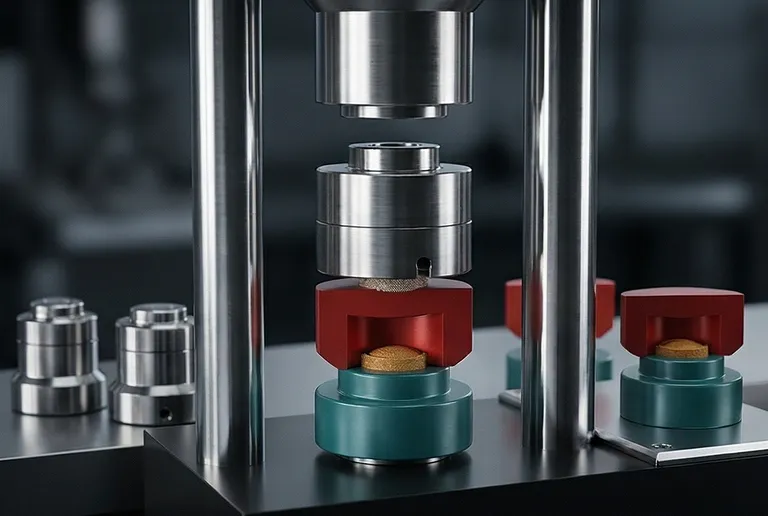
Standardizing your sample preparation transforms your laboratory results from mere observations into reproducible science. To choose the right path, align your equipment to your specific goal:
- For Peel Strength: Prioritize thickness consistency and surface smoothness.
- For Mechanical Reinforcement: Prioritize high-pressure stages to ensure a dense matrix.
- For Surface Science: Prioritize platen flatness for uniform treatment.
Engineering is often about the mastery of small things to achieve great ones. In the world of composite films, the hot press is the foundation upon which that mastery is built.
Elevate Your Research with KINTEK Precision
At KINTEK, we understand that your data is only as good as your sample. We specialize in laboratory pressing solutions designed to eliminate variables and deliver the uniformity required for world-class research. From manual and automatic models to specialized glovebox-compatible and isostatic presses for battery research, our equipment provides the thermal and mechanical discipline your materials deserve.
Ready to eliminate the invisible variables in your lab? Contact Our Experts
Related Products
- Heated Hydraulic Press Machine with Heated Plates for Vacuum Box Laboratory Hot Press
- Automatic High Temperature Heated Hydraulic Press Machine with Heated Plates for Lab
- Heated Hydraulic Press Machine With Heated Plates For Vacuum Box Laboratory Hot Press
- Laboratory Manual Heated Hydraulic Press Machine with Hot Plates
- Laboratory Split Manual Heated Hydraulic Press Machine with Hot Plates
Related Articles
- The Architecture of Slow: Why Physical Precision Dictates Chemical Destiny
- The Architecture of Certainty: Why the Laboratory Press is the Anchor of Material Science
- The Vanishing Boundary: The Hidden Thermodynamics of LTCC Lamination
- The Alchemy of 160°C: Why Precision Pressing is the Silent Backbone of Rubber Science
- The Invisible Forge: Why the Laboratory Press is the Soul of Nano-Composites



















