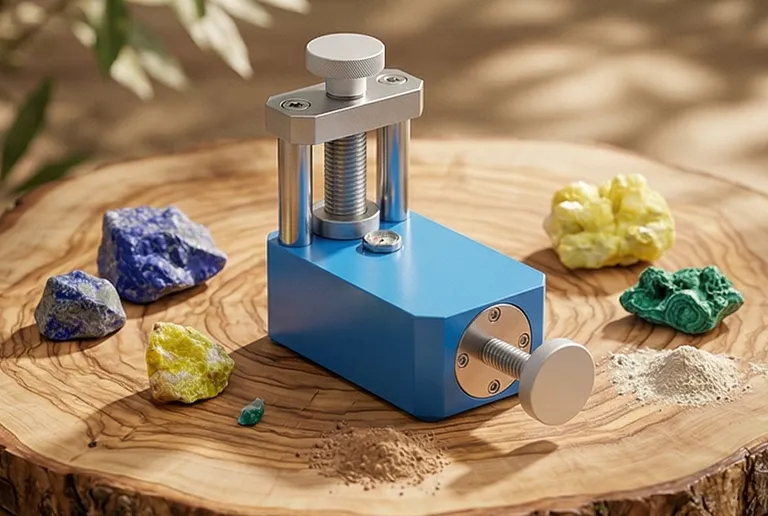
The Invisible Engine of Material Synthesis
In the world of advanced materials, the transition from a liquid monomer to a high-performance composite is not merely a manufacturing step. It is a synchronized event of chemistry and physics.
At the heart of Thermoplastic Resin Transfer Molding (TP-RTM) lies the heated hydraulic press. It is more than a tool; it is the system's "thermal and mechanical engine." It manages the delicate balance between the flow of liquid and the rigidity of the final polymer.
To master this process, one must understand that every pound of pressure and every degree of heat carries a consequence.
Driving the Chemical Synthesis
In TP-RTM, the "mold" is actually a chemical reactor. The heated hydraulic press provides the thermodynamic energy required to initiate life within the matrix.
Initiating In-Situ Polymerization
The process typically utilizes caprolactam monomers. These liquids are transformed into solid polyamides via anionic polymerization. Without a precise, sustained temperature—typically between 130-180 °C—this reaction simply stalls. The press provides the spark that begins this molecular assembly.
The Quest for Thermal Uniformity
Consistency is the engineer’s greatest challenge. If one corner of the platen is cooler than the other, the polymerization rate fluctuates. This creates "internal memory" within the material—residual stresses that lead to warping or premature failure. High-quality heated platens ensure a uniform temperature field, treating every fiber and molecule exactly the same.
Managing the Viscosity Threshold
Before the resin solidifies, it must flow. Heat lowers the viscosity, allowing the liquid to saturate the dense fiber preform. If the heat is poorly managed, the resin may solidify too early, leaving "dry spots" that compromise the entire structure.
The Mechanics of Structural Integrity
While heat drives the chemistry, the hydraulic system dictates the geometry and density of the part.
The Clamping Force
Injecting resin creates internal pressure that wants to force the mold apart. The hydraulic press must provide a massive, unwavering clamping force to prevent "flash"—the leakage of resin that ruins dimensional accuracy.
Controlling Fiber Volume Fraction
The strength-to-weight ratio of a composite is determined by its fiber volume fraction. By precisely controlling the gap between platens, the press dictates exactly how much fiber is packed into how much space.
Eliminating the Invisible: Densification
Internal pores and microscopic voids are the enemies of structural integrity. Through continuous pressure-holding, the hydraulic system forces the resin into every microscopic gap, achieving material densification that meets aerospace and automotive standards.
The Engineer’s Dilemma: Navigating Trade-offs
Engineering is the art of managing trade-offs. In the TP-RTM process, every benefit comes with a hidden cost.
- Thermal Inertia: Heavy, durable platens ensure uniformity but are slow to change temperature. This increases cycle times, forcing a choice between quality and throughput.
- The Degradation Risk: Excessive heat accelerates polymerization, but stay too long at peak temperature and the polymer chains begin to break down.
- Pressure Deflection: Even steel bends. Achieving perfectly even pressure across a large surface area requires a machine designed to resist the subtle deflections that cause thickness variations.
Strategic Decision Making in the Lab
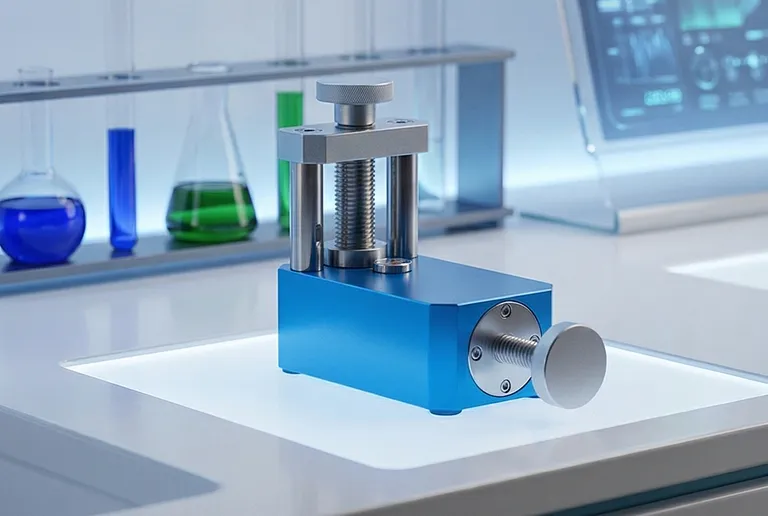
How you configure your pressing solution depends entirely on your project’s ultimate objective:
| Priority | Focus Area | Technical Requirement |
|---|---|---|
| Structural Strength | Densification | High pressure-holding stability to eliminate all voids. |
| Production Speed | Reaction Kinetics | High-accuracy temperature control to push the limits of polymerization. |
| Dimensional Accuracy | Displacement Control | Precision-guided platens to maintain consistent part thickness. |
The KINTEK Advantage in Advanced Pressing
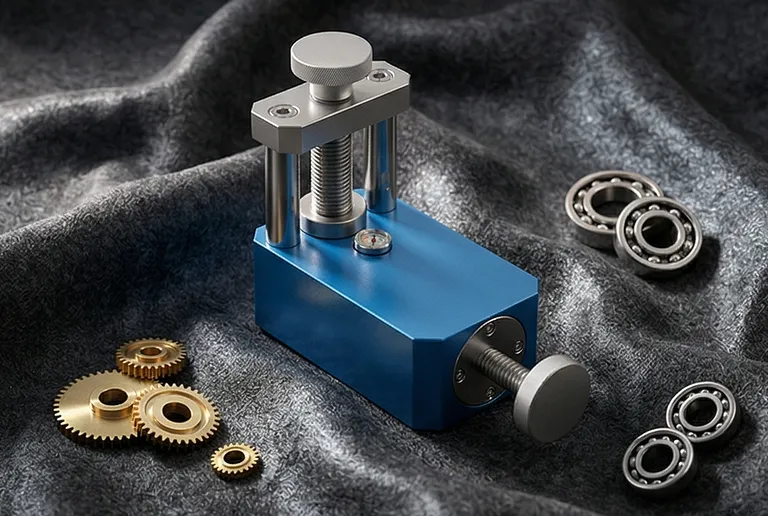
For those working at the frontier of battery research and material science, the equipment is the variable that must remain constant. KINTEK provides the specialized laboratory pressing solutions needed to eliminate uncertainty.
From automatic and heated models to specialized glovebox-compatible and isostatic presses, KINTEK equipment is built for the "engineer’s romance"—the pursuit of the perfect, repeatable result. Whether you are developing the next generation of solid-state batteries or high-performance thermoplastics, our systems provide the precise thermal and mechanical control your research demands.
To find the specific configuration that will drive your next breakthrough, Contact Our Experts.
Related Products
- Automatic High Temperature Heated Hydraulic Press Machine with Heated Plates for Lab
- Automatic Heated Hydraulic Press Machine with Hot Plates for Laboratory
- Automatic Heated Hydraulic Press Machine with Heated Plates for Laboratory
- 24T 30T 60T Heated Hydraulic Lab Press Machine with Hot Plates for Laboratory
- Manual Heated Hydraulic Lab Press with Integrated Hot Plates Hydraulic Press Machine
Related Articles
- The Architecture of Slow: Why Physical Precision Dictates Chemical Destiny
- The Architecture of Certainty: Why the Laboratory Press is the Anchor of Material Science
- The Vanishing Boundary: The Hidden Thermodynamics of LTCC Lamination
- The Alchemy of 160°C: Why Precision Pressing is the Silent Backbone of Rubber Science
- The Invisible Forge: Why the Laboratory Press is the Soul of Nano-Composites



















