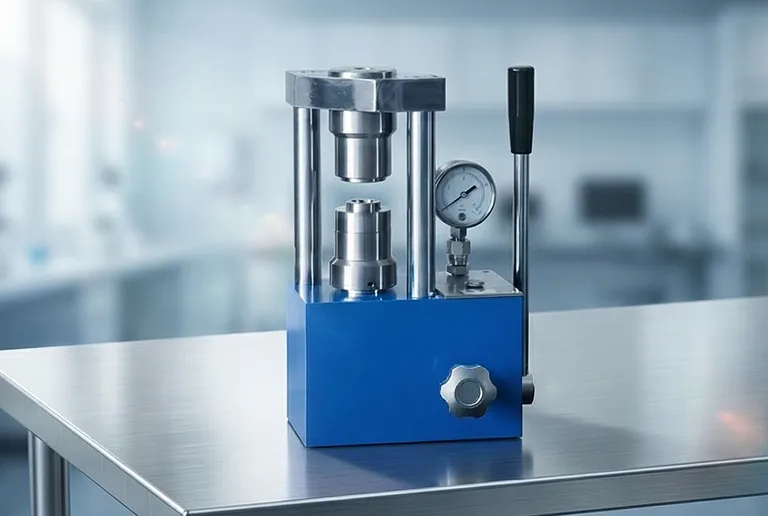
In the world of materials science, we often celebrate the extremes. We talk about kilonewtons of force and temperatures that mimic the interiors of industrial furnaces. Yet, the success of a high-performance composite often depends on something far more humble: a thin, transparent film no thicker than a human hair.
In the fabrication of continuous fiber reinforced thermoplastics (CFRTs), the release film is the "silent guardian." It is the invisible boundary that ensures the transition from a molten stack of raw materials to a precision-engineered part is a success rather than a permanent bond to the machine.
The Sticky Trap of Thermal Processing
To create a composite, we must push materials to their limits. Continuous fiber reinforced thermoplastics require temperatures frequently exceeding 200°C. At this threshold, the polymer matrix—polypropylene, PEEK, or specialized resins—loses its solid identity and becomes a viscous, aggressive adhesive.
Without a physical barrier, this molten matrix does what it is designed to do: it bonds. But instead of bonding to the fibers alone, it bonds to the precision-ground metal plates of your laboratory press.
The release film acts as a chemically inert isolation layer. It allows the polymer to flow and impregnate the fiber architecture while ensuring that, once cooled, the part separates cleanly. In engineering, the goal is often "total integration," but in processing, "total isolation" of the tool from the work is what saves the experiment.
Mechanical Integrity Under Pressure
It is a mistake to think of the release film as a simple "non-stick" sheet. In a high-temperature press, that film is subjected to a violent environment.
- High-Pressure Impregnation: Modern presses apply tens of kilonewtons of force to drive plastic into the microscopic pores of fiber bundles.
- Compressive Strength: A release film must possess the mechanical "backbone" to resist being torn or embedded into the composite surface under these loads.
- Thermal Stability: It must maintain its structural identity at temperatures where the composite itself is melting. If the film fails, the "clean demolding" becomes a destructive extraction.
The film must also be thin enough to not interfere with heat transfer. If the barrier is too thick, it becomes an insulator, creating "cold spots" that lead to incomplete wetting of the fibers.
The Aesthetics of Structural Integrity

In high-stakes research, surface quality is not just about aesthetics; it is a proxy for internal health. A "resin-rich" spot or a surface pit is a stress concentrator—a place where a crack could start.
Protecting Fiber Orientation
Continuous fibers are delicate. If the matrix sticks even slightly to the mold during separation, the resulting "pull-out" forces can misalign the fibers. This destroys the precise orientation that gives the composite its strength.
Eliminating the Void
A smooth release film facilitates the even flow of resin across the fabric. This "even wetting" helps evacuate air trapped between layers. By reducing internal voids, the film indirectly increases the final mechanical performance of the part.
Choosing the Right Boundary
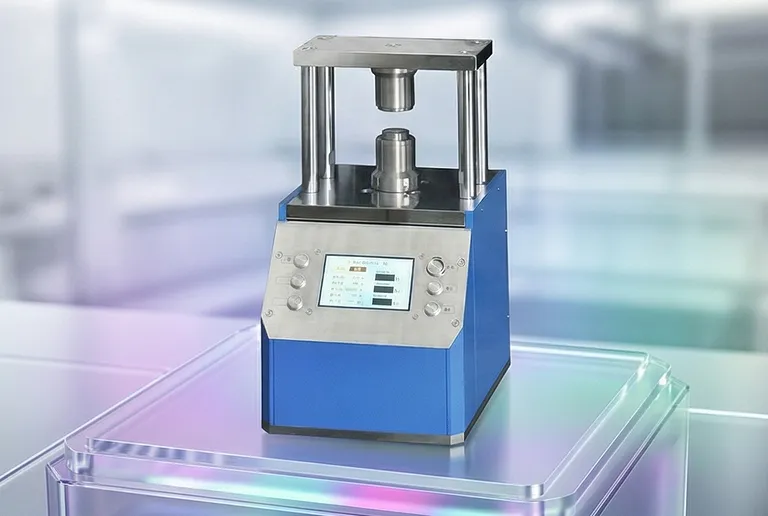
Not all boundaries are created equal. The choice of film is a trade-off between thermal limits and mechanical toughness.
| Capability | Requirement | Critical Outcome |
|---|---|---|
| Thermal Threshold | Must exceed 230°C for advanced resins. | Prevents film-matrix fusion. |
| Surface Energy | Low enough to prevent all adhesion. | Ensures non-destructive demolding. |
| Dimensional Stability | Resistance to wrinkling under heat. | Eliminates surface irregularities. |
Systems Thinking in the Lab
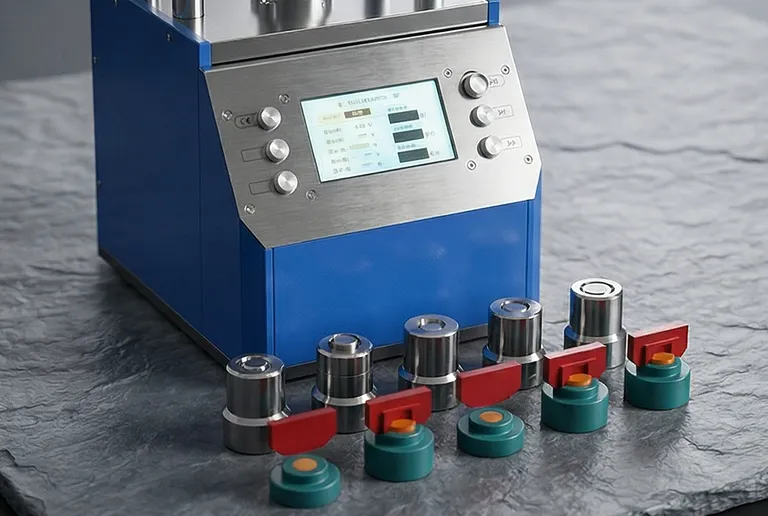
An engineer knows that a high-performance film is only as good as the press that applies it. If the heat distribution of the press is uneven, the film may fail in "hot spots." If the pressure application is jerky rather than smooth, the film may wrinkle or tear.
The relationship between the release film, the thermoplastic matrix, and the laboratory press is a system. When these three elements are in sync, the result is a sample that meets the highest performance reference standards.
Precision Solutions for Demanding Research
At KINTEK, we understand that your research depends on the stability of this system. We provide the high-precision hardware necessary to manage these extreme variables.
From heated and automatic presses that provide uniform thermal distribution to isostatic presses designed for complex battery research, our equipment is built to be the foundation of your composite workflow. We ensure that when you apply kilonewtons of force at 300°C, the result is a perfect sample, not a stuck mold.
Refine your process and protect your structural integrity with KINTEK’s advanced pressing solutions.
Ready to optimize your pressing workflow? Contact Our Experts
Related Products
- Lab Polygon Press Mold
- Automatic High Temperature Heated Hydraulic Press Machine with Heated Plates for Lab
- Lab Round Bidirectional Press Mold
- Special Shape Lab Press Mold for Laboratory Applications
- Lab Heat Press Special Mold
Related Articles
- Leverage in Miniature: The Physics and Psychology of the Compact Lab Press
- The Geometry of Energy: Why Graphite is the Soul of Advanced Sintering
- The Architecture of Pressure: Why Precision is the Only Truth in Material R&D
- The Last Millimeter: Why Physical Constraints Define Material Integrity
- The Glass Transition Ritual: Why Heat is the Secret Language of High-Density Materials







